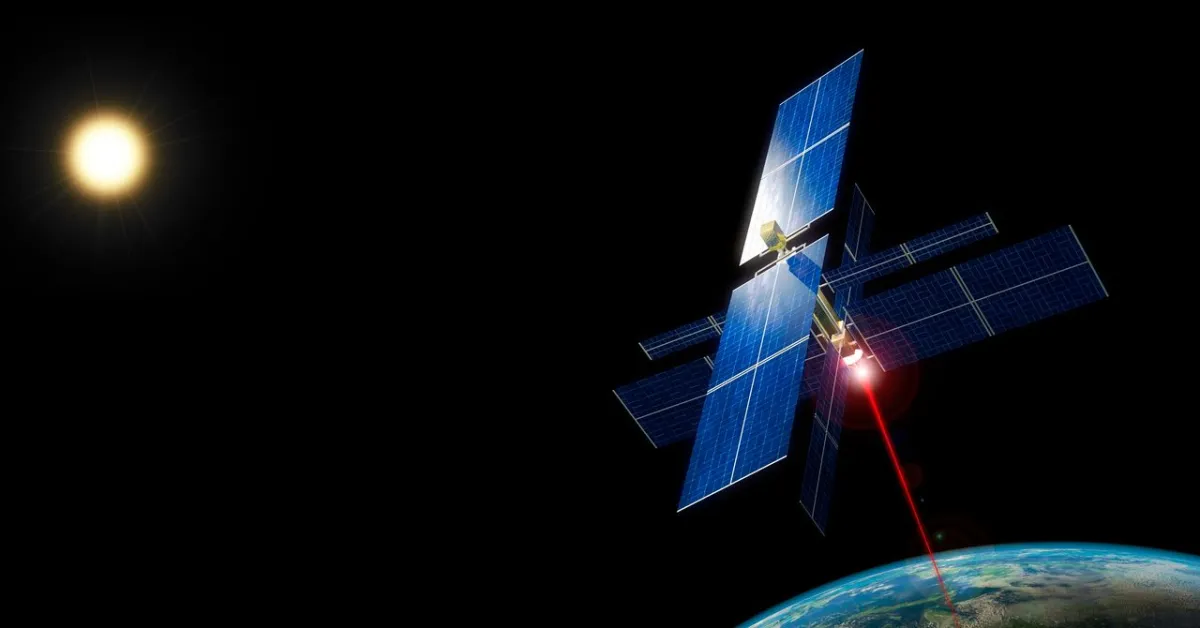
The US Federal Communications Commission (FCC) has officially authorized Reflect Orbital to launch and operate a pioneering mirror satellite, Eärendil-1, designed to reflect sunlight onto Earth's surface during the night. This decision marks a significant step for the controversial project, which aims to provide artificial daylight for various applications.
The experimental satellite, set to orbit at approximately 625 kilometers, features an 18-meter reflector capable of illuminating areas 5 to 6 kilometers in diameter for short periods. Reflect Orbital's ambitious goal, initially reported by WIRED in September 2024, is to create a continuous light source for solar panel installations, thereby overcoming a key limitation of renewable energy. The authorization from the FCC allows the company to test the technical feasibility of its ultrathin, highly reflective film reflector.
Reflect Orbital expressed gratitude for the FCC's approval, calling the ruling "hugely validating" and a testament to America's leadership in innovative space technology. The company envisions diverse applications for its technology, including illuminating disaster zones for search-and-rescue missions, supporting critical infrastructure during emergencies, extending the operational hours of solar energy facilities, and lighting remote construction sites without traditional generators.
However, the project has faced considerable opposition from astronomers and environmental advocates. Critics, including the American Astronomical Society and DarkSky International, warn of potential disruptions to astronomical observations, nocturnal ecosystems, and aviation safety. Concerns have been raised about increased light pollution and the potential transformation of the night sky, with some researchers calling it an "existential threat" to optical astronomy. Additionally, potential flashes of reflected light could impact pilots, drivers, and wildlife.
Despite these objections, the FCC stated that its review focused solely on a single experimental satellite, not a commercial constellation. The agency concluded that Eärendil-1 is a limited-duration technology demonstration and that any future deployment of multiple satellites would require separate regulatory approvals. The FCC also noted that concerns regarding impacts on optical astronomy fall outside the scope of their review for this initial authorization.
Reflect Orbital has pledged to engage with stakeholders and the scientific community, committing to precise control of reflected sunlight, limiting its brightness and duration, and coordinating with affected parties. The company aims to demonstrate the technology's viability and potential impacts through real-world testing, with a willingness to adjust its plans based on evidence.