A recent, limited cabinet reshuffle by Yemen's Presidential Leadership Council (PLC) Chairman, Rashad al-Alimi, has ignited considerable political and media controversy. Critics argue that the changes reflect ongoing disarray in state institutions and a perpetuation of job rotation, rather than addressing the nation's unprecedented political, economic, and military challenges.
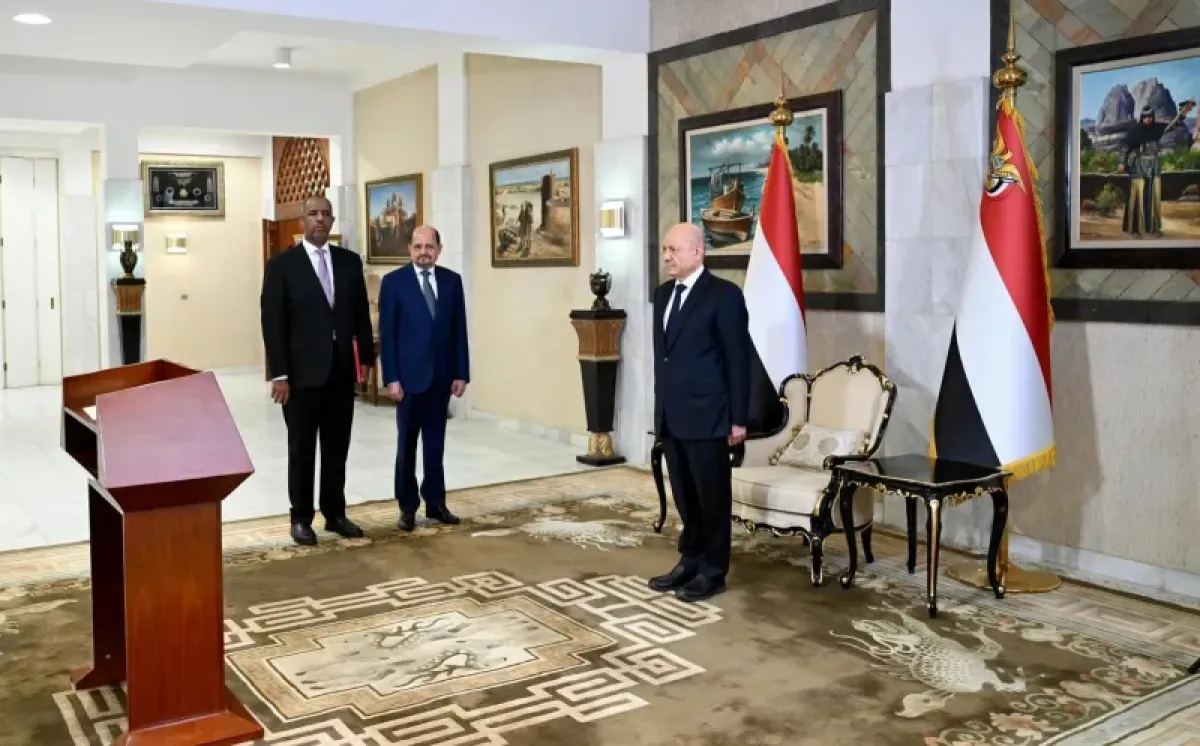
The PLC issued a decree late Thursday announcing minor changes to the government led by Prime Minister Saeed Abdulaziz Al-Doba'i. The modifications included the appointment of Dr. Afrah Abdulaziz Al-Zouba as Minister of Foreign Affairs and Expatriates, Eng. Badr Mohammed Mubarak Baslama as Minister of Planning and International Cooperation, and Dr. Ahed Mohammed Salem Ja'sous as Minister of Local Administration.
This decision followed months of criticism regarding the Prime Minister holding both his current role and the Foreign Ministry portfolio simultaneously. Observers viewed this dual responsibility as a contributing factor to the perceived weakness in diplomatic performance amidst complex foreign affairs requiring dedicated political and diplomatic attention. However, ending the Prime Minister's dual role did not quell the debate, as scrutiny shifted to the nature of the appointments themselves. Politicians and media figures suggested that the core issue was not the vacant position but a lack of clear criteria based on competence, experience, and specialization for filling sovereign ministerial roles.
The appointment of Dr. Afrah Al-Zouba as Foreign Minister drew significant criticism, given the ministry's sensitive role as the primary political and diplomatic interface for Yemen, responsible for managing international relations, garnering support, and navigating regional and international issues related to the ongoing conflict. Critics contend that the current phase demands an individual with extensive experience in diplomacy and international relations to address challenges related to maintaining international support, advancing political initiatives, and responding to rapid regional shifts. Political activist Dr. Abdulqader Al-Kharrnaz described the decision as raising "many question marks," noting that Al-Zouba's performance at the Ministry of Planning had previously faced criticism. He questioned the rationale for her transfer to a more critical ministry without addressing the efficiency concerns from her prior tenure, especially regarding the management of international grants.
Similarly, politician Kamel Al-Khoudani criticized what he termed the use of sovereign positions for "experiments," emphasizing that Yemen is navigating one of its most perilous political and military phases. He stressed the necessity of relying on individuals with specialized expertise in negotiation, diplomacy, and crisis management. Al-Khoudani argued that the country requires officials capable of representing Yemen effectively on the international stage, rather than appointments that foster further controversy and division within the political landscape. Journalist Mohammed Saeed Al-Sharabi posited that the problem extends beyond individuals to the methodology governing state institutions, lamenting the continued rotation of the same figures in senior positions, albeit with shifting support networks.
The timing of the appointments also drew criticism. Politician Fahmi Marsh suggested that the decrees were issued while liberated governorates are experiencing escalating public protests demanding improved services, an end to economic collapse, and decisive action against Houthi militias. He asserted that the Yemeni public was anticipating measures to address declining electricity, currency depreciation, and living conditions, rather than a redistribution of ministerial portfolios, making the reshuffle appear detached from citizens' priorities. Conversely, the official Yemen News Agency (SABA) defended the appointments, framing them as a historic step in empowering Yemeni women. It highlighted that Dr. Al-Zouba's appointment marks the first time a woman has led the Foreign Ministry, and Dr. Ja'sous the first to head the Ministry of Local Administration, reflecting a directive to broaden women's participation in decision-making roles.
While some circles welcomed the increased female representation, critics maintain their objections are not against women's empowerment but rather emphasize that competence and experience should be the primary criteria for sovereign positions, irrespective of gender. Observers note that the government needed to present a clear vision for administrative reform and conduct a comprehensive evaluation of ministerial performance, rather than merely reassigning portfolios, particularly amidst persistent economic and service sector decline and waning public trust in the legitimacy institutions.