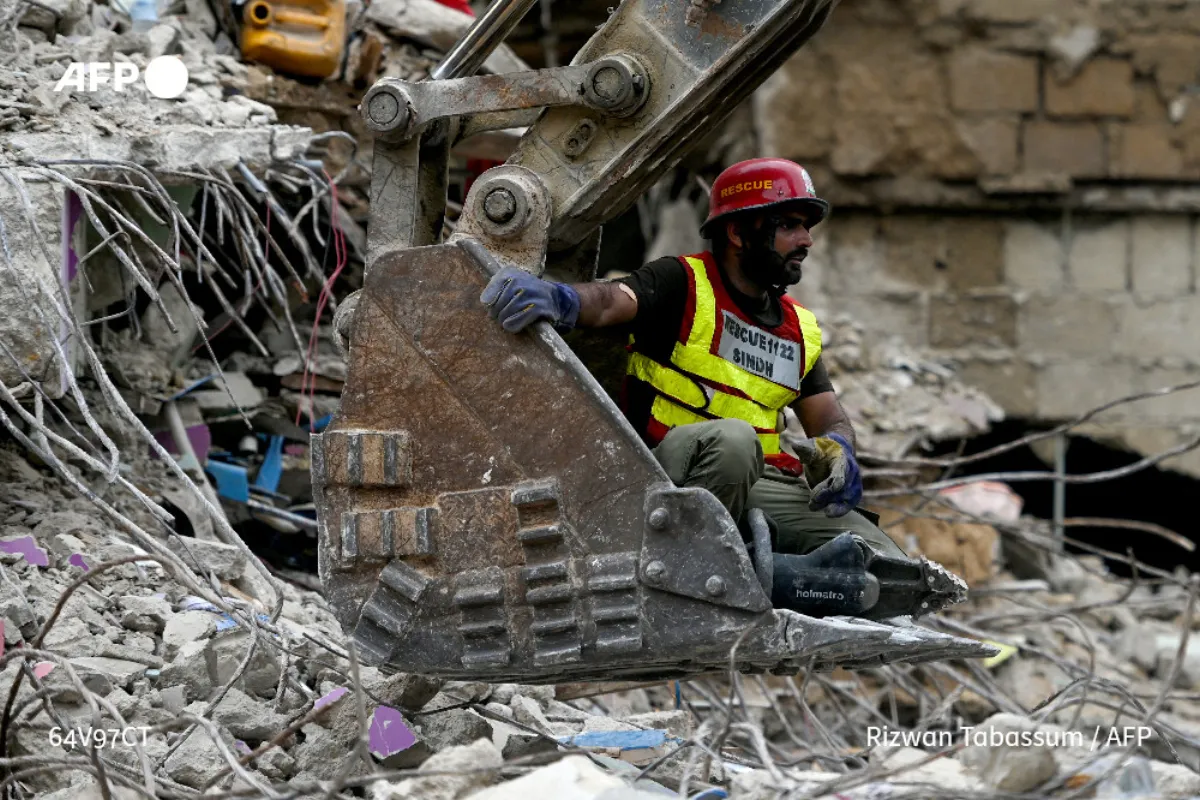
Millions of people have been left without healthcare access in Pakistan after floods ravaged swathes of the country, damaging around 10 percent of the country’s health facilities, the World Health Organization’s chief said in a speech on Tuesday.
“Approximately 10 percent of all of Pakistan’s health facilities have been damaged, leaving millions without access to health care,” WHO chief Dr. Tedros Adhanom Ghebreyesus.
“Stocks of essential medicines and medical supplies are limited or have been washed away, damaged roads and bridges are impeding access to services and supplies, and disease surveillance and referral mechanisms have been severely disrupted,” he added.
In recent weeks, an intense and long monsoon lead to three times more rainfall in Pakistan, causing major flooding which killed more than 1,500 people including 551 children, according to the latest estimates of the country’s disasters management agency.
Hundreds of thousands have been displaced by the floods and are living in the open. Officials have said that although the stagnant waters are beginning to subside, it could take two to six months before they recede completely, AFP reported last month.
Ghebreyesus’ comments came during a speech he gave at a United Nations Office for the Coordination of Humanitarian Affairs (OCHA) briefing on the emergency flood response in Pakistan on Tuesday.
The WHO chief said he was particularly concerned about the outbreak of water-borne diseases like cholera, malaria and dengue fever which have spread rapidly over the past few weeks.
“The water has stopped rising, but the danger has not. We are on the verge of a public health disaster,” he said.
“There are now outbreaks of malaria, cholera and dengue, an increase in skin infections, and we estimate that more than 2000 women are giving birth every day, most of them in unsafe conditions.”
Ghebreyesus said that an “urgent and robust response, supported by sustainable funding” was needed to control the spread of these diseases, support “routine immunization,” and address severe acute malnutrition.
“The government is understandably overwhelmed and needs our support,” he said, urging donors and partners to support their efforts in the flood-ravaged country.
“Even as we respond to the emergency in Pakistan, we must remember that unless we address the existential threat of climate change, we will be responding to emergencies like this and worse more often.”
Millions left without healthcare access in aftermath of Pakistan floods: WHO
3 years ago