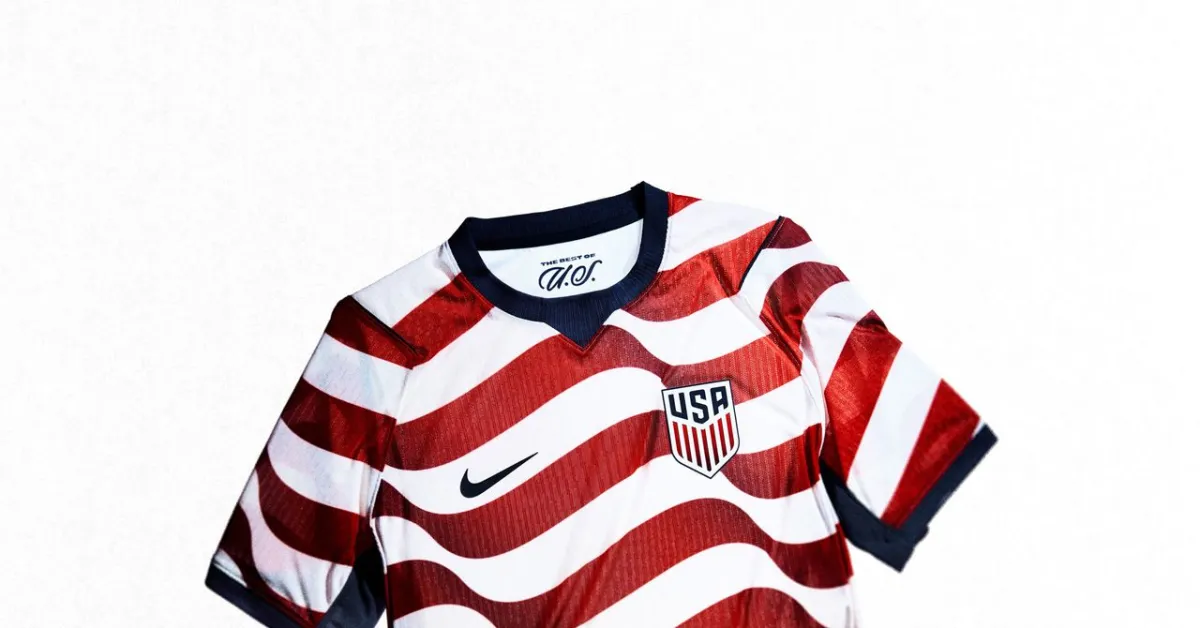
Nike is launching World Cup uniforms made from 100 percent textile waste, touting it as a major leap for sustainable fashion. However, the reality behind "circular" clothing is far more complex, with experts questioning the scalability and immediate availability of chemically recycled fabrics for everyday consumers.
The sportswear giant claims to have used "advanced chemical recycling" to create its elite performance apparel from old clothes and scraps. While Nike executives and some media suggest this marks a turning point towards truly recyclable clothing for everyone, industry insiders and researchers paint a more nuanced picture. Despite significant investments from fashion brands, chemically recycled garments are unlikely to hit store shelves anytime soon.
Veena Singla, an environmental health researcher at UC San Francisco, expressed skepticism about the widespread adoption of this technology for consumers. While technically feasible, she doubts it will become a reality in a way that allows for a continuous cycle of buying, wearing, and recycling clothes. The more immediate application appears to be in using industrial fabric scraps, but even then, the scale might not be enough to counteract the massive growth in textile production.
The fashion industry faces a sustainability crisis, producing over 100 billion garments annually, contributing significantly to greenhouse gas emissions and waste. Most textiles end up in landfills or incinerated, with nearly 70 percent derived from fossil fuels like polyester. Nike and others are pushing for "circularity" in polyester, primarily through recycling, as traditional mechanical recycling degrades fiber quality, requiring substantial amounts of virgin material.
Chemical recycling, which breaks down fibers into their base chemical components, offers a more promising "circular" solution, theoretically allowing polyester shirts to be recycled into new ones indefinitely without loss of quality. However, researchers like Diana Ferreira point out that this process is most effective with clean, sorted textile waste. Post-consumer clothing, often a mix of materials, dyes, and contaminants, presents significant challenges, requiring extensive sorting and pretreatment.
While companies like Gap, H&M, and Levi's are partnering with chemical recycling startups, significant hurdles remain. Establishing the infrastructure to collect and process used clothing on a large scale is a major undertaking, with unclear responsibility for its development. Furthermore, even optimistic targets for chemically recycled polyester production by the early 2030s are projected to be dwarfed by overall polyester manufacturing. Critics argue that chemical recycling could become an excuse to maintain high production levels rather than addressing the core issue of overconsumption and "fast fashion."
Adding to the opacity, Nike, Syre, and Loop Industries declined to comment on specific details, raising concerns about transparency. Loop Industries has faced scrutiny over its financial performance and representations of its technology, while Syre's plans for a large-scale factory in Vietnam raise questions about processing imported used apparel. For now, chemically recycled polyester seems destined for niche applications, like the World Cup uniforms, rather than a mainstream solution.