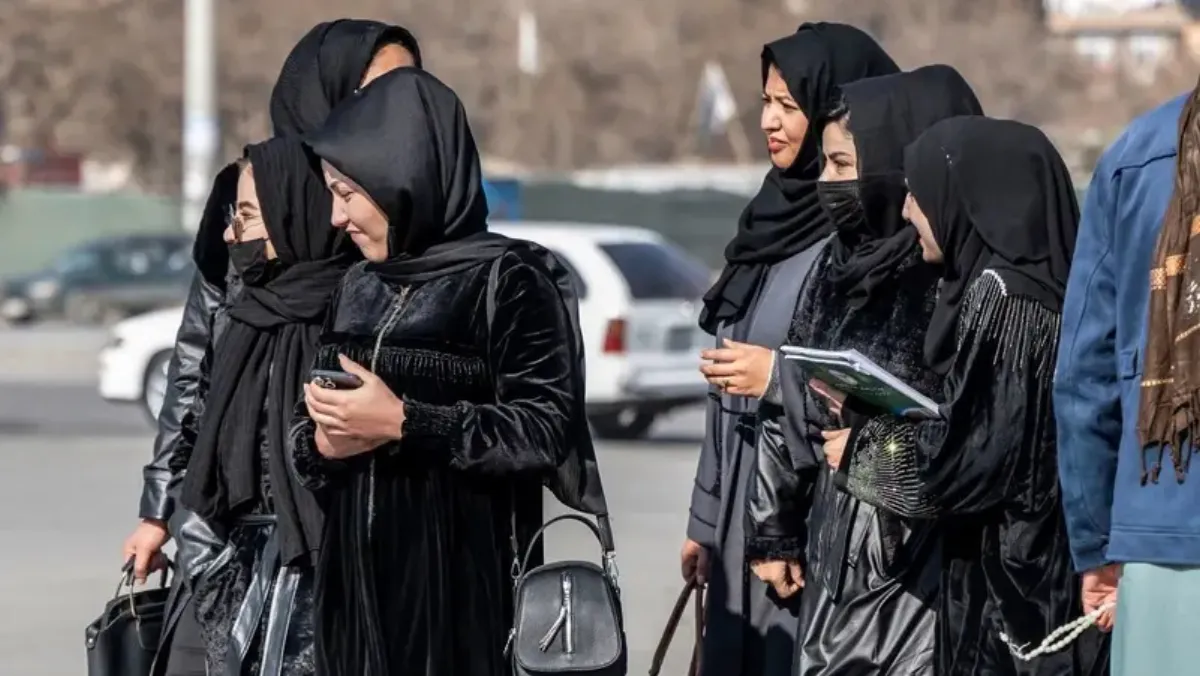
The economic and social situation in Afghanistan could worsen as a result of the latest laws imposed on women by the ruling Taliban, Afghan former member of parliament and former ambassador to Norway Shukria Barakzai told Al Arabiya English’s Riz Khan.
“A female doctor will not be anymore there. Not a female journalist, not a female engineer, nor the female entrepreneurs. So, this is how the contribution of economy is not only coming by men. Every society, every country, every bird needs to fly with two wings,” Barakzai said.
The economic and social situation in Afghanistan could worsen as a result of the latest laws imposed on women by the ruling Taliban, Afghan former member of parliament and former ambassador to Norway Shukria Barakzai told Al Arabiya English’s Riz Khan.
“A female doctor will not be anymore there. Not a female journalist, not a female engineer, nor the female entrepreneurs. So, this is how the contribution of economy is not only coming by men. Every society, every country, every bird needs to fly with two wings,” Barakzai said.
“…Women in Afghanistan, we are not the second citizen. We are not the third citizen. We are not a citizen at all,” the former lawmaker said.
Barakzai called the new situation a “great loss” to her country.
“We lost Afghanistan. We lost our achievement. We lost who we were. We lost our dignity. We lost our contribution in our society with the with this entire work…The history, the pride the position, the hopes, the dreams for generations,” she said.
Barakzai who now lives in the UK said that there have been several failed attempts on her life.
Comparing the situation with the first rule of the Taliban over large parts of Afghanistan from 1996 to 2001, she stated that since their return matters have become even worse.
When also speaking to Al Arabiya's Riz Khan, Dorothy Estrada Tanck, Chair of the United Nations Working Group on Discrimination against Women and Girls, reiterated Barakzai’s call to brand the Taliban’s acts and new laws as crimes against humanity and "gender apartheid."
A shred of hope
Beyond that, Estrada Tanck stressed the rejection of the new legislation by some Islamic scholars, including within the country.
“Even being in Afghanistan, we actually met with religious scholars. So, they weren't an ulema or the religious leaders of community, but they were scholars with great experience and understanding of Islamic law. And they were saying, this is not the correct interpretation.”
For her part, Barakzai expressed hope that the new grip on Afghanistan might eventually trigger popular resistance against their rule and emerging divisions within their own ranks.
“But I think now people are realizing, now the people are standing against them. Now they are losing their own commanders. Now you can see division among the Taliban leadership, one saying ‘school needs to be open’ and others say ‘no’.”
Afghanistan faces decline as Taliban’s anti-women laws spark resistance: Expert
1 year ago