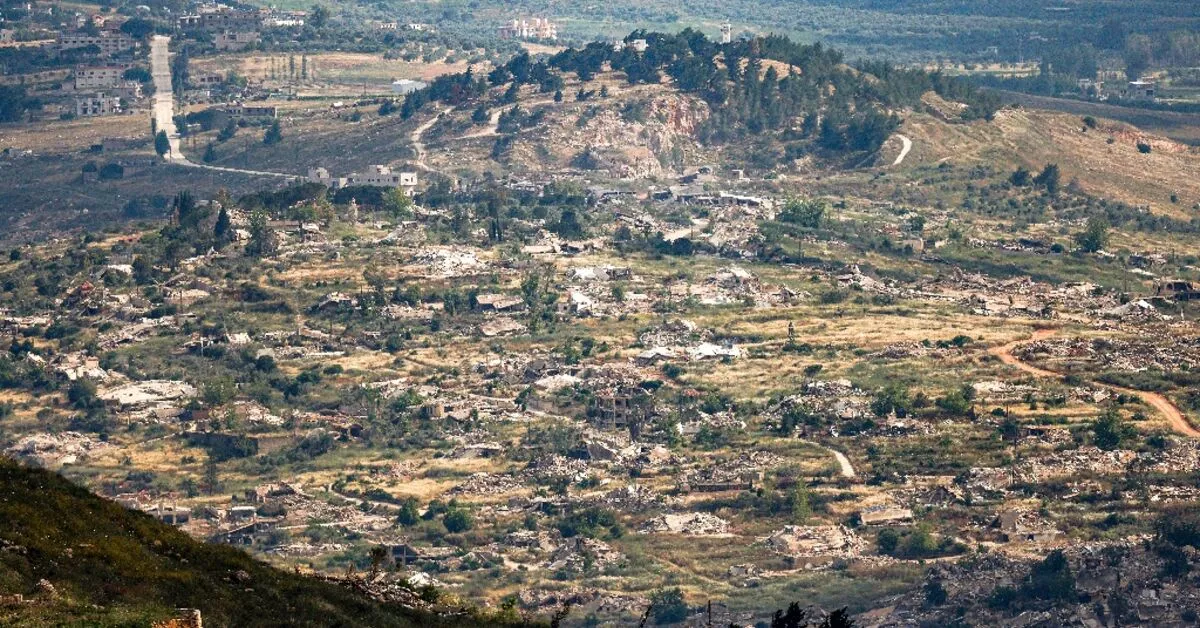
Israel conducted strikes across southern Lebanon on Saturday, following orders for evacuations from multiple locations. This escalation occurred a day after the Israeli premier stated that Israeli forces had advanced deeper into Lebanese territory, while Lebanon's army reported that two soldiers were wounded by a targeted Israeli strike.
The military engagement follows landmark security talks between Israeli and Lebanese military delegations in Washington, held ahead of US-brokered negotiations scheduled for early next week. These discussions represent the fourth round of talks since the current conflict between Israel and Hezbollah began. Lebanon's state-run National News Agency reported several Israeli strikes in the south, including artillery fire near the historic Beaufort castle.
Lebanese officials expressed concern over the impact of Israeli attacks on cultural heritage. The Lebanese presidency announced that President Joseph Aoun and Prime Minister Nawaf Salam had agreed to "intensify contacts to put an end to these condemned Israeli practices" before the upcoming talks. They specifically discussed the expansion of Israeli attacks to southern cities and villages, including the districts of Tyre and Nabatieh, and the ongoing destruction of homes and historical sites.
The Pentagon's second-in-command, Elbridge Colby, described the recent military discussions as "productive" but did not mention a ceasefire, a key demand from Lebanon. Meanwhile, the Lebanese army stated that two of its soldiers were seriously wounded by a hostile Israeli drone near Nabatieh. An unofficial truce that took effect on April 17 has reportedly not been observed, with both Israel and Hezbollah accusing each other of violations.
Evacuation warnings issued by the Israeli military on Saturday included villages near Nabatieh and in eastern Lebanon. Hezbollah, in response, claimed responsibility for firing rockets at the northern Israeli town of Kiryat Shmona and for ambushing Israeli soldiers near Ghandouriyeh. Israeli Prime Minister Benjamin Netanyahu announced on Friday that Israeli forces had advanced beyond the Litani River, stating they were "hitting Hezbollah head on."
According to the health ministry in Beirut, Israeli strikes killed 11 people on Friday. The ministry asserts that over 3,300 people have been killed since March 2, when Hezbollah initiated hostilities in support of Iran. Hezbollah has stated its attacks are retaliation for the death of Iran's supreme leader in US-Israeli strikes at the outset of the wider regional conflict.