One consequence of the October 7, 2023 Hamas attack on Israel, which sparked the war in Gaza and further tensions across the Middle East, has been the considerable weakening of Iranian deterrence.
In under a year, Israel assassinated several senior Iranian Islamic Revolutionary Guard Corps (IRGC) commanders, attacked an Iranian diplomatic site, assassinated the leader of Hamas Ismail Haniyeh while he was in the Iranian capital, and killed Hezbollah leader Hassan Nasrallah, a revered figure among Iranian regime supporters, some of whom considered him a candidate for Iran’s next supreme leader.
On Saturday, Iran suffered another serious setback when the conflict reached its own soil – a scenario Tehran has long sought to avoid. In an unprecedented move, Israel overtly attacked military sites, including missile factories, in Iran. The airstrikes killed at least four soldiers and one civilian, according to Iran.
It was the first overt, large-scale attack on Iran by a state actor since the Iran-Iraq war of the 1980s. It was also the most significant operation – whether overt or covert – carried out by Israel against Iran to date.
The Israeli attack “represents the breaking of a major taboo and is a disturbing development that could be a harbinger of more such attacks in the future,” Farzan Sabet, senior research associate at the Geneva Graduate Institute, told Al Arabiya English.
This transition from indirect to direct conflict began with Iran’s unprecedented missile and drone strike on Israel in April, in response to a deadly attack on Iran’s consulate in Damascus, widely attributed to Israel.
Analysts now suggest this shift may have backfired on Iran.
“Iran’s strategic shift in April was always a gamble, and it appears to have backfired. By taking its confrontation with Israel out of the shadows, Iran exposed itself to a conventional military exchange – one where it is at a disadvantage,” Gregory Brew, senior analyst at Eurasia Group, told Al Arabiya English.
After Iran’s April attack on Israel, explosions rocked Iran’s Isfahan province in what was reportedly an Israeli retaliatory strike. Israel did not claim responsibility, while Iran downplayed the incident, and that exchange came to an end.
Then, on October 1, Iran launched another missile barrage against Israel, retaliating for the killings of Nasrallah, Haniyeh and IRGC commander Abbas Nilforoushan.
Israel said that, as in April, most of the approximately 200 missiles Iran fired on October 1 were intercepted.
This time, Israel responded overtly. Israeli jets conducted three waves of airstrikes early on Saturday, targeting missile factories and other sites in Iran’s western regions and near Tehran. Israel declared its operation successful, saying that it achieved all objectives.
Immediately following the attack, Iranian state media downplayed and even mocked the attack, but analysts noted a subtle shift in rhetoric afterward.
“Just looking at Iranian media, it is clear that there is an ongoing debate as to whether and how to respond, but the rhetoric is shifting from downplaying the attack to promising a response,” Michael Horowitz, head of intelligence at Le Beck International, a security and risk management firm based in Bahrain, told Al Arabiya English.
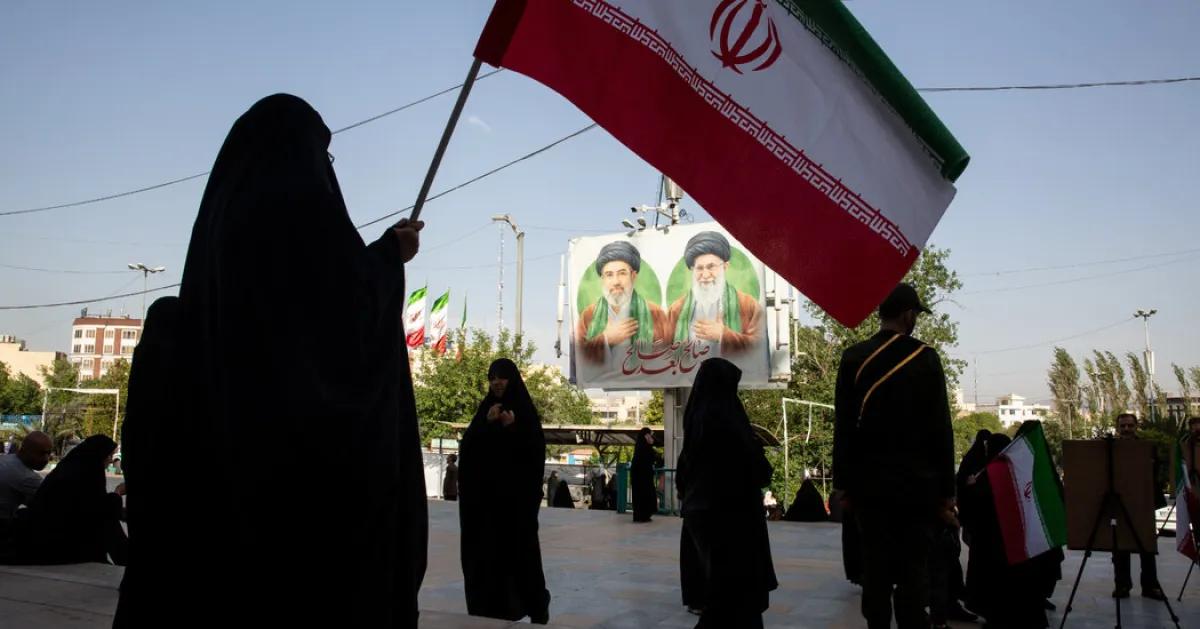
This shift seemed to follow remarks by Iran’s highest authority, Supreme Leader Ali Khamenei, whose statements often set the tone for officials and state media. In his first comments on the Israeli strikes, Khamenei said on Sunday that the attack “should neither be downplayed nor exaggerated.”
Hours later, Iranian President Masoud Pezeshkian vowed that Tehran would deliver an “appropriate response” to Israel’s attack. The next day, Hossein Salami, head of the IRGC, warned of “bitter and unimaginable” consequences for Israel.
Khamenei stopped short of calling for immediate retaliation, but he said that Israel must be made to understand the “power of the Iranian nation.”
The supreme leader’s “choice of somewhat vague and general language likely reflects the fact that the regime has not decided upon a response, and is weighing its options,” Brew explained.
Jason Brodsky, policy director at United Against Nuclear Iran (UANI), told Al Arabiya English that Khamenei’s lack of a firm public pledge for retaliation does not mean there will not be one.
“Let’s not forget that after Nasrallah was eliminated, Khamenei never made a firm pledge to respond. But only days later, Tehran attacked Israel again with little notice,” Brodsky pointed out.
Iran’s dilemma
Iran’s options to respond are few, and none of them are good, analysts say.
Choosing not to respond risks further weakening Iran’s deterrence and credibility and could encourage more Israeli attacks down the line.
If Tehran opts to strike Israel for a third time, it risks a stronger Israeli response, potentially targeting critical infrastructure, such as energy facilities or nuclear sites. Iran’s air defenses, already weakened by Saturday’s strikes, leave it more vulnerable to Israeli attacks.
Israeli Defense Minister Yoav Gallant reinforced this message, saying on Monday that Israel’s recent attack puts Iran at a disadvantage that Israel could exploit in the future.
“You have conducted accurate strikes on their radars and air defense systems, which creates a huge disadvantage for the enemy when we will want to strike later,” a statement released by Gallant’s office quoted him as saying during a meeting with air force chiefs.
Some analysts believe that Iran’s earlier missile strikes on Israel were more symbolic than destructive, meant to signal strength without provoking escalation. But even if Tehran had the capability to cause significant harm to Israel, it is unlikely to want to do so. Iran’s leadership prioritizes regime preservation above all else and is cautious of triggering a response that could endanger its survival.
“The Israeli attack on October 26 hints at the possibility that Israel will escalate, if Iran responds,” Horowitz said.
“Israel hit air defenses close to key economic sites, including the Abadan refinery for instance. It also hit a site that was used by Iran for its nuclear program in the past – in what I think is a message to Tehran,” he added.
A middle ground for Iran might involve a “small and largely symbolic” response, perhaps through its regional proxies, to try to “maintain a semblance of deterrence without triggering escalation,” suggested Brew.
Even a limited Iranian response, however, risks further Israeli strikes.
Iran could escalate indirectly by advancing its nuclear program or altering its nuclear doctrine, a step that Iranian officials have previously threatened. However, such actions risk eliciting strong responses from Israel and possibly the US, both of which are staunchly opposed to Iran’s acquisition of nuclear weapons.
Iran could also choose to repeat what it did following Haniyeh’s killing: promise retaliation but not take any action. This approach, however, did not work out well for Tehran, as Israel went on to assassinate both Nasrallah and Nilforoushan shortly afterward, compelling Iran to respond and setting off the current cycle of escalation.
Future dynamics
The direct confrontation between Iran and Israel suggests overt military exchanges could become a regular feature of their rivalry. However, analysts agree Iran would prefer to avoid this outcome.
“Iran’s advantage is highest when violence is in the gray zone, below the threshold of direct warfare,” said Thomas Juneau, an associate professor at the University of Ottawa in Canada.
“At some point, Iran will want to bring the confrontation back to this level, where its weaknesses are less apparent, and where it can maximize its remaining strengths,” Juneau told Al Arabiya English.
Sabet agreed, saying that Iran would seek to avoid a situation where overt Israeli attacks become normalized.
“Tehran will try to find a way to deter Israel again from conducting such overt attacks, whether that’s through rebuilding the ‘Axis of Resistance’ in the Levant, strengthening its conventional military capabilities, seeking to ‘break out’ or ‘sneak out’ to nuclear weapons, a combination of all of the above, or possibly moving toward a diplomatic resolution of this conflict,” he said.
Analysis: Iran’s options after Israel’s attack, and why none of them are good
1 year ago