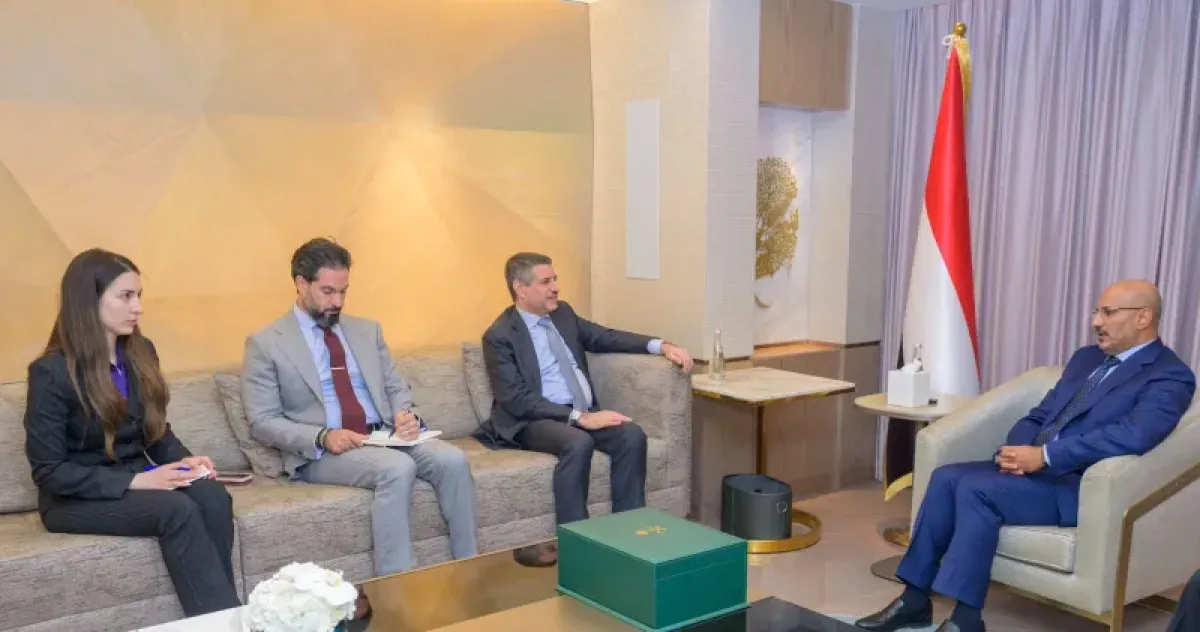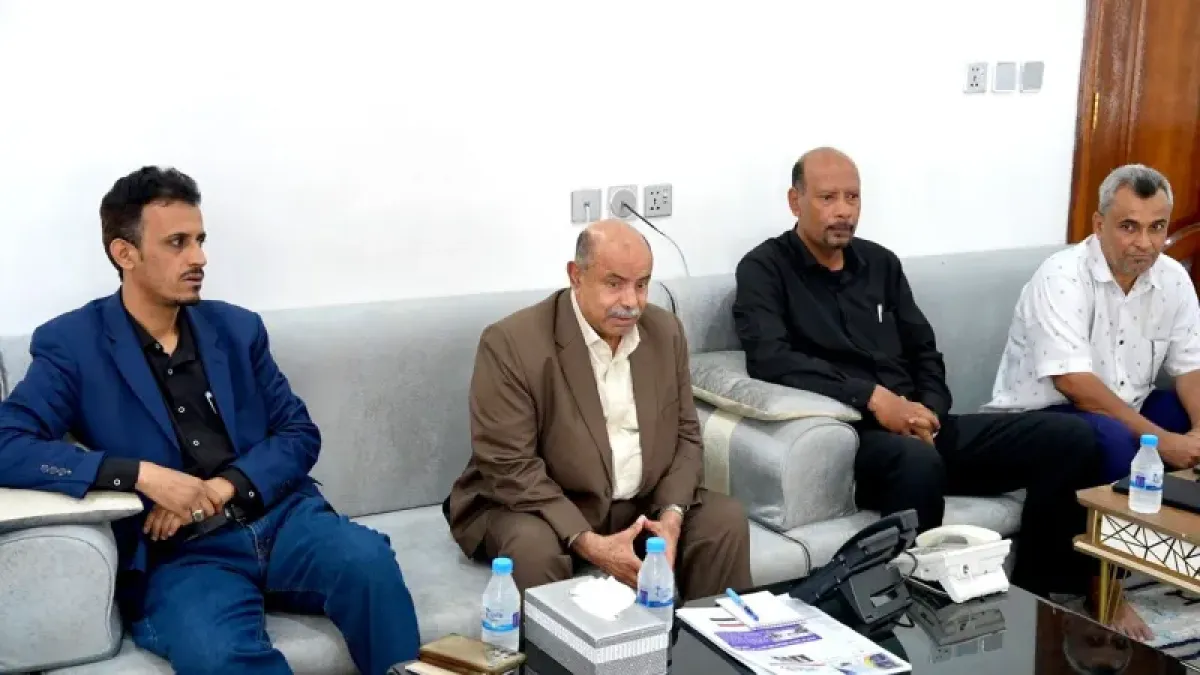
Statements made by Salem Al-Khabashi, member of the Presidential Leadership Council and Governor of Hadramaut, during his appearance on "Yemen Podcast" have ignited significant political and media controversy. Critics argue his remarks reveal contradictions in his understanding of the current political and economic landscape and reignite historical conflicts affecting Yemen's national scene.
Despite Al-Khabashi's attempt to project an optimistic outlook on the Presidential Leadership Council's performance and emphasize its increased cohesion, his discourse implicitly acknowledged the difficulties in achieving consensus within the council and the existence of multiple decision-making centers. Observers have identified this as a primary weakness in the current governance structure.
Al-Khabashi suggested that Yemen needs "one rooster to crow over the country," implying that the multiplicity of leadership within the Presidential Leadership Council obstructs decision-making. He posited that a single leadership might be more effective than the current eight-member composition. Analysts suggest this perspective reopens discussions on the efficacy of the arrangements underpinning Yemen's legitimacy since the council's formation in 2022, amidst persistent indications of division and divergent views among its members, despite official rhetoric promoting unity.
Regarding the economy, Al-Khabashi admitted to the ongoing deterioration of living standards and the widening gap between income and prices. However, he attributed these issues to external factors, global economic crises, increased shipping and insurance costs, and exchange rate fluctuations. Critics view this explanation as an attempt to deflect responsibility from internal failures, including accumulated administrative and financial shortcomings.
His statements concerning the electricity sector and the oil production of the PetroMasila Company also drew considerable reactions. Al-Khabashi asserted that a significant portion of the daily fuel production is directed to governorates outside Hadramaut, while the governorate itself struggles to meet its energy needs during peak demand periods. Political analyst Majed Al-Daeiri commented that Al-Khabashi's remarks indicate a reordering of priorities for oil resource allocation, potentially placing Hadramaut's needs ahead of external commitments, amidst rising service demands within the governorate. Al-Daeiri also noted Al-Khabashi's omission of the crude oil stored at the Al-Dhaba and Masila facilities, which could offer a potential solution to support Aden's main power station, stating that this matter falls outside his direct purview.
In the political sphere, Al-Khabashi's accounts of events in Hadramaut earlier this year generated further debate. His disclosures about prior meetings with Southern Transitional Council leaders and warnings against deploying forces into the governorate were perceived by activists as reopening sensitive contentious issues. Yaqoub Al-Sufyani, director of the South24 Center for News and Studies, sharply criticized Al-Khabashi, asserting that his positions reflect the continued influence of past conflicts on his current decisions, particularly concerning the legacy of political division prior to Yemen's 1990 unification and subsequent internal violence.
Al-Sufyani described Al-Khabashi's discourse as revealing "chronic historical complexes" that shape his assessment of Southern political forces, his comparisons between Aden and Sana'a, and inconsistencies in his views on the prevalence and influence of certain political components in Hadramaut. He further suggested that Al-Khabashi's proposals regarding the restructuring of Southern forces appear to stem from protracted political disputes rather than reformist visions for complex security and military issues. Al-Sufyani also observed that Al-Khabashi's rhetoric indicated political polarization inconsistent with his role in the Presidential Leadership Council, which should aim to reconcile differing viewpoints rather than perpetuate conflicts.
Observers note that the interview, intended to offer a clear vision for Hadramaut's future and the federal state, ultimately highlighted the extent of divergence within the legitimate government's camp regarding resource management, the form of the state, and the nature of relationships among political and military powers. While Al-Khabashi concluded by calling for peace, an end to the war, and the adoption of a multi-regional federal state model, his critics maintain that his expressed positions underscore the persistent structural crisis within the legitimate institutions, reigniting old questions about the Presidential Leadership Council's capacity to navigate a highly complex phase that demands a unified vision and a more cohesive political will.