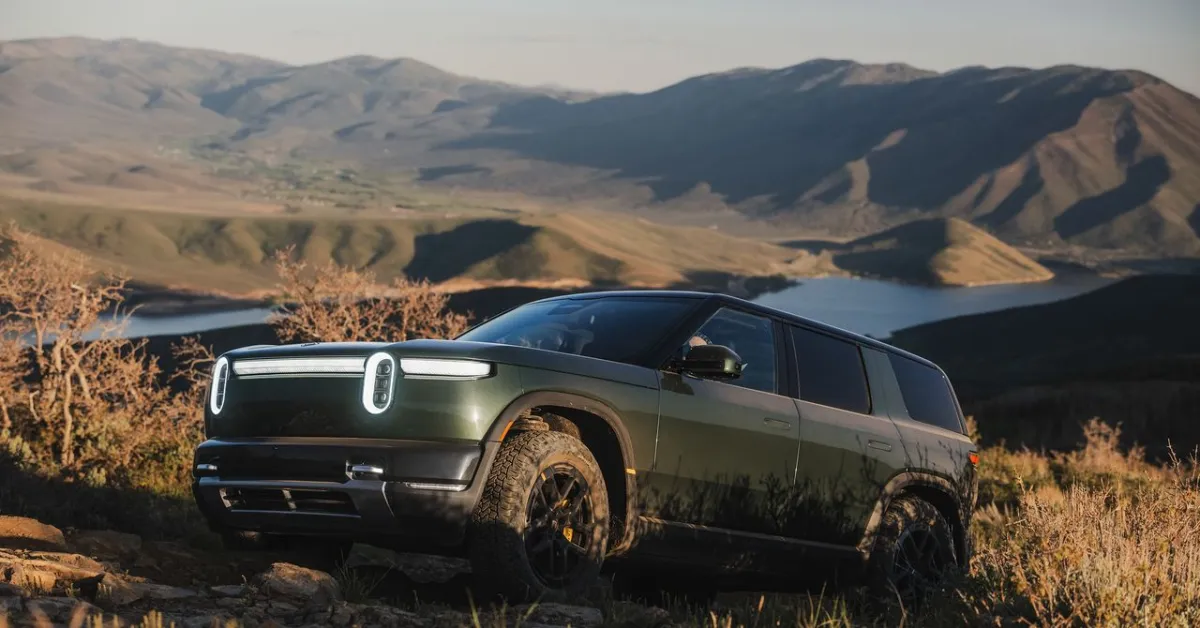
Rivian is finally aiming for the mainstream with its new R2 SUV, a more accessible electric adventure vehicle designed for volume sales, starting at a competitive $45,000.
For years, Rivian's core message was that serious all-electric adventure vehicles required a serious price tag. While capable, models like the R1S, starting at $75,900, weren't exactly mass-market. The R2 is Rivian's direct answer to this challenge. Built on an all-new platform, this five-seat midsize SUV is a fresh take on what a Rivian can be, with the primary goal of achieving significant sales numbers.
The company, which began life as Mainstream Motors in 2009, has invested heavily, burning through nearly $25 billion in cash over eight years. Despite this, its stock price has seen a significant drop, and its sales figures, while growing, lag far behind competitors like Tesla. The R2 arrives at a critical juncture, aiming to be the make-or-break budget EV that can propel Rivian forward.
Rivian is rolling out the R2 cautiously, with four trims available through late 2027. The initial launch model is the Performance variant at $57,990, featuring a dual-motor AWD setup producing 656 horsepower, a 330-mile estimated range, and a 0-60 mph time of just 3.6 seconds. While not cheap, it offers more power than the base R1S for a considerably lower price.
Subsequent trims include the Premium, Standard Long Range, and the most affordable Standard model at $45,000, set to arrive in late 2027 with an estimated 275-mile range. All R2 models will feature a native North American Charging Standard (NACS) connector for access to Tesla's Supercharger network, with a claimed 10-to-80 percent charge time of 29 minutes.
However, early R2 buyers might not get the absolute latest tech. Rivian's new RAP1 processor and upcoming Gen 3 autonomy features, including lidar, won't be available until late 2026. This means initial models will have Gen 2 hardware and L2+ autonomy, rather than the promised L3 capabilities of the later builds. Rivian assures that early models will still receive software updates to enable advanced driving features, but the hardware difference remains a consideration.
Despite the tech rollout strategy, the R2 impresses. Its exterior design mirrors the R1's rugged yet cheerful aesthetic, cleverly scaled down without feeling compromised. The rear windscreen retracts fully, and a single button can lower all five windows. The interior offers ample headroom and legroom, good storage, and a premium feel, even with cost-saving material choices. A standout feature is the new haptic Halo wheels on the steering wheel, offering an intuitive and tactile way to control climate, music, and drive modes.
On the road, the Performance R2 is swift, though the default regenerative braking is quite aggressive. While it handles well and feels planted on highways, the vehicle's weight is noticeable in tighter corners compared to some rivals. Off-road, the R2 proves more than capable, tackling challenging terrain with confidence, especially in the AWD configuration.
Real-world efficiency figures observed during testing were lower than expected, but this was attributed to aggressive driving and off-road use. Charging times are competitive, though slightly slower than some newer EVs. The R2's advanced AI driving assistant and Level 3 autonomous driving system are still pending rollout, meaning a full assessment of its technological prowess will require a later revisit.
Overall, the R2 successfully balances capability, a comfortable ride, and appealing handling at a more accessible price point. If Rivian can deliver on its next-generation tech promises, the R2 has the potential to be the crucial sales driver the company desperately needs.