The United States faces a more resilient Iran as negotiations for a potential agreement progress, suggesting a shift in the Islamic Republic's governance and its nuclear ambitions.
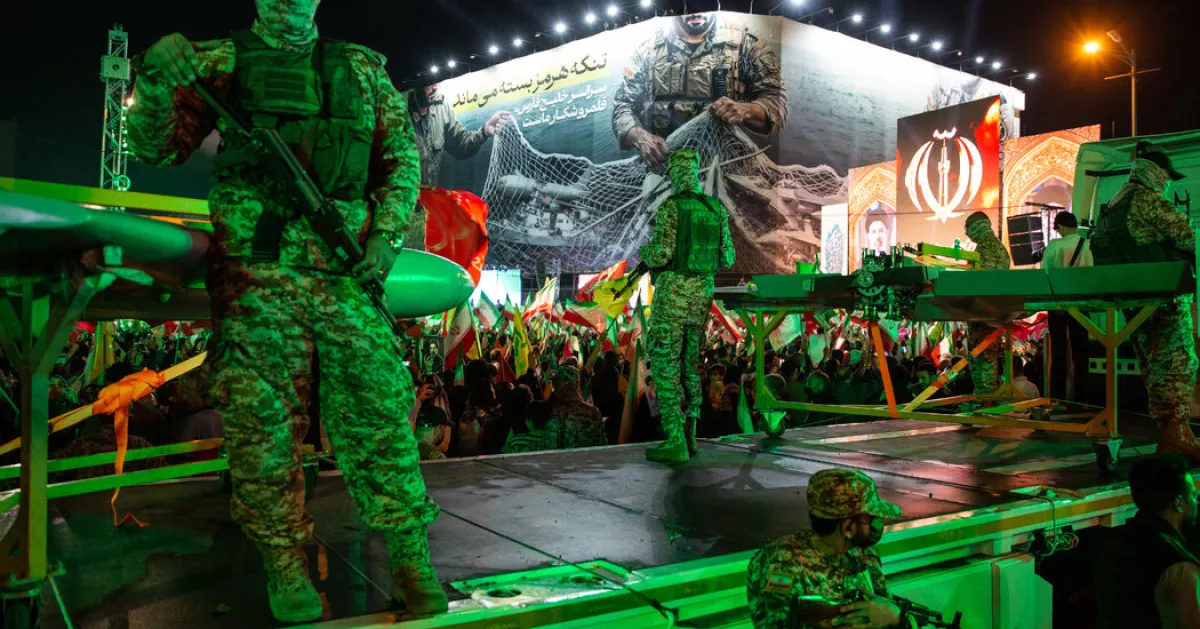
Following a period of conflict, Iran has seen a transformation, with some observers characterizing it as "Islamic Republic 3.0." This evolving state is now perceived as less of a theocracy and more of a military junta, significantly influenced by the powerful Islamic Revolutionary Guards Corps.
Simultaneously, efforts to curb Iran's nuclear program appear to have yielded a nation that, while wounded, is increasingly inclined to take risks and advance its nuclear objectives. This development complicates the diplomatic landscape for both Washington and Jerusalem.
Despite mutual accusations of duplicity, officials in Tehran and Washington indicated late last week that a deal was nearing finalization. While an initial memorandum of understanding has not been formally concluded, Iranian Foreign Minister Abbas Araghchi stated that an agreement was "never been closer."
Any preliminary agreement is expected to leave Tehran with considerable leverage as substantive negotiations commence on Iran's nuclear program and its strategic role in the Strait of Hormuz. These complex discussions are slated to occur over a 60-day period, with an uncertain outcome.
Throughout this period, Iran has transitioned from a position of perceived weakness to one of survival, maintaining crucial military and nuclear capabilities. Its comprehensive security apparatus appears to exert firm control over governance, societal matters, and foreign policy.
Sanam Vakil, Director of the Middle East and North Africa Program at Chatham House, described the current leadership as a "younger, more brazen generation in power." Aaron David Miller, a former American diplomat at the Carnegie Endowment, characterized this shift as a "transition from divine power to hard power."