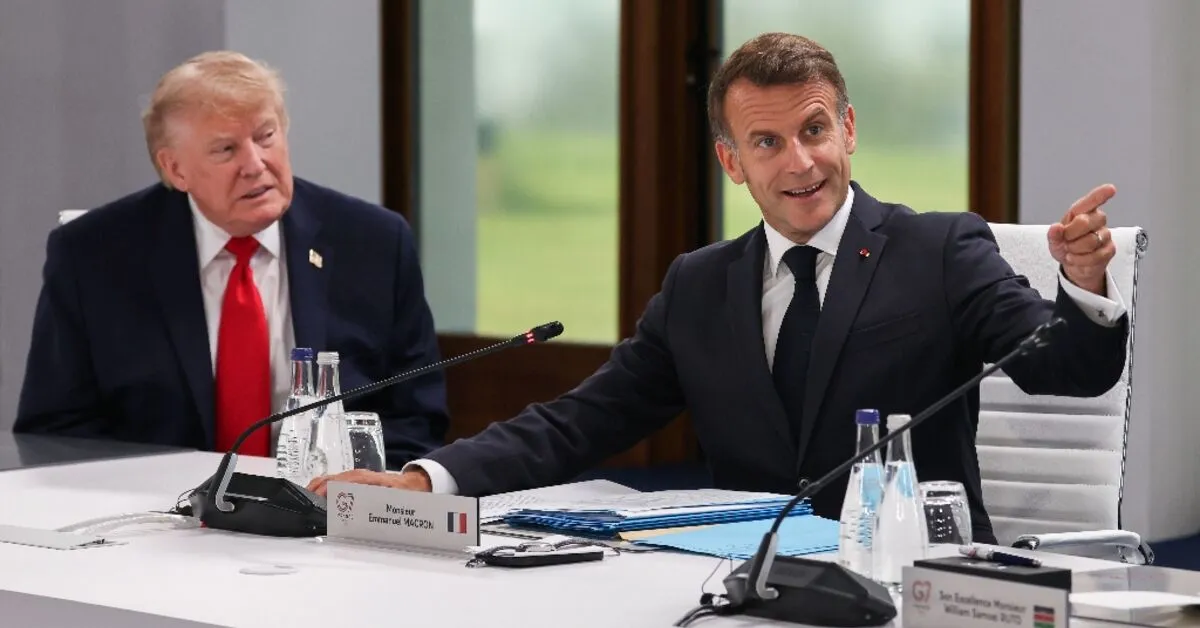
The G7 summit concluded today with leaders addressing the security implications of artificial intelligence and social media, a final day overshadowed by discussions surrounding U.S. President Donald Trump, who was scheduled to dine with host French President Emmanuel Macron at the Palace of Versailles.
The three-day gathering of leaders from Canada, France, Germany, Italy, Japan, Britain, and the United States had primarily focused on President Trump's agreement concerning Iran and efforts to encourage Russia's role in brokering peace in Ukraine. However, the final day shifted focus to the digital realm, with certain European G7 nations advocating for enhanced security measures, a stance that had reportedly caused friction with the U.S.
Key figures in the artificial intelligence sector, including Sam Altman of OpenAI, Dario Amodei of Anthropic, and Arthur Mensch of Mistral AI, were in attendance at a working lunch with the heads of state. This discussion occurred shortly after British Prime Minister Keir Starmer announced a ban on social media use for individuals under 16 in the United Kingdom, with France reportedly considering similar measures.
President Macron had stated in a pre-summit video that the G7 discussions would concentrate on improving cybersecurity and safeguarding children and democratic institutions. Final deliberations on critical global issues were expected, with the seven major economies aiming to reach consensus on joint statements regarding the Middle East and Ukraine before individual press conferences commenced.
Throughout the summit, President Trump had been a central figure. French officials expressed satisfaction that the U.S. President completed the entire event, contrasting with his early departure from the previous G7 summit in Canada. In a notable gesture, President Macron extended an invitation to President Trump for a private dinner at Versailles following the summit's conclusion.
The summit also addressed the Iran nuclear deal, with allies keen to understand President Trump's strategy. President Trump indicated that the U.S. had no obligation to invest in Iran post-agreement, emphasizing the primary goal of preventing Iran from acquiring nuclear weapons. Regarding Ukraine, President Trump adopted a firmer stance against Moscow, urging Russia to negotiate peace and suggesting the potential re-imposition of sanctions. He also offered critical remarks concerning Israeli Prime Minister Benjamin Netanyahu's conduct in Lebanon, suggesting the military campaign against Hezbollah had been protracted.