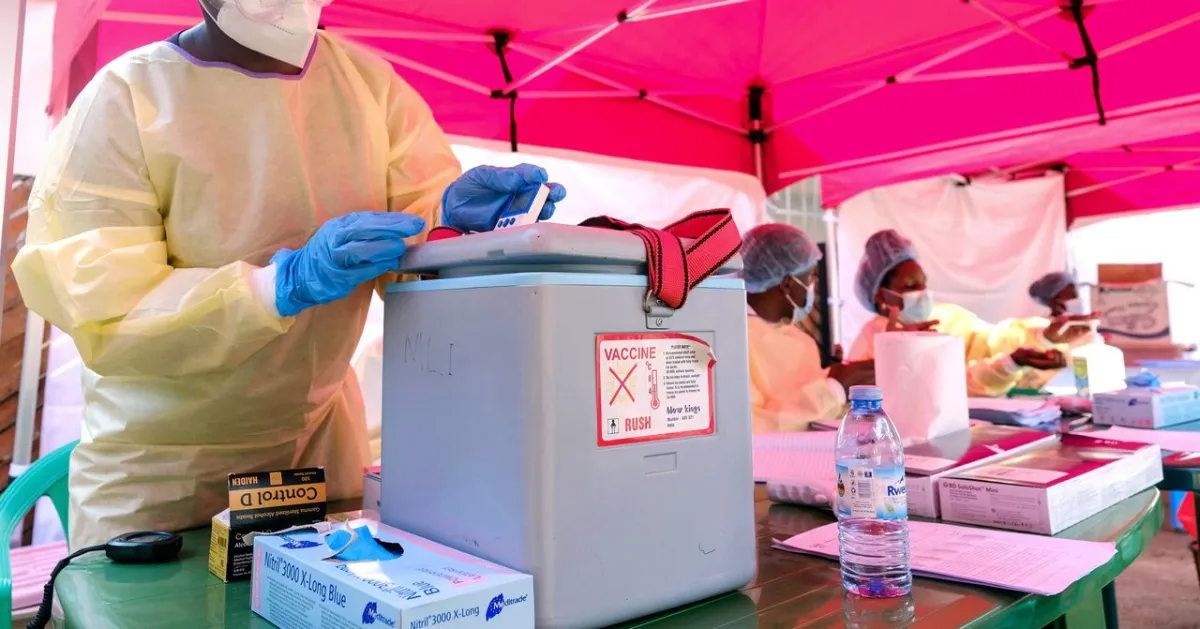
A highly promising Ebola vaccine, developed over 15 years ago and proven effective in primates, remains untested in humans due to a lack of funding and commercial interest, despite a current outbreak in Central and East Africa.
In 2011, virologist Thomas Geisbert confirmed a vaccine he developed protected crab-eating macaques from the Bundibugyo strain of Ebola. While unvaccinated monkeys succumbed to the aggressive virus, those that received the vaccine showed no symptoms. This success suggested strong potential for human protection, yet the vaccine has never progressed to human trials or deployment, even as the Bundibugyo virus causes significant suffering and deaths in the current outbreak.
"We've got the rVSV Bundibugyo vaccine sitting on the shelf," Geisbert, an immunology professor at the University of Texas Medical Branch, stated. The recombinant vesicular stomatitis virus (rVSV) vaccine uses a harmless virus to deliver genetic instructions for fighting the disease. Public health officials are now scrambling for a solution, with the World Health Organization identifying Geisbert's vaccine as a top candidate.
Geisbert's initial work began in the early 2000s, funded by the US Army's biodefense program amid concerns about biological weapons. His early breakthroughs showed a single injection could protect monkeys. However, a lack of commercial interest stalled further development, as Ebola vaccines weren't seen as profitable. This led Geisbert to explore a universal vaccine against multiple Ebola strains, achieving success in tests published in 2009.
Interest surged during the 2013-2016 West Africa Ebola epidemic, which spurred the development of other vaccines, like Merck's Ervebo. Geisbert's initial research had excluded the Bundibugyo strain due to its lower fatality rates and fewer outbreaks. However, his prediction proved wrong when the strain emerged again. Concerned, he revisited and modified the vaccine, leading to the 2011 primate study that confirmed its efficacy against Bundibugyo.
Now, with the current outbreak mirroring the scale of the 2013-2016 epidemic, efforts are intensifying. The WHO favors Geisbert's vaccine, partly due to the success of similar rVSV-based vaccines. A 2023 study further supported its potential for "ring vaccination," where contacts of infected individuals are vaccinated, by showing monkeys were protected even after exposure if vaccinated. Despite this, funding remains a major hurdle, with developers noting that "nobody really makes money off these vaccines."
The nonprofit Coalition for Epidemic Preparedness Innovations (CEPI) has offered funding to prepare the vaccine for testing, a crucial first step toward human trials. While the vaccine shows promise, challenges remain, including obtaining a live Bundibugyo virus sample for current strain testing due to resource limitations and logistical complexities. Scientists are hopeful that even if not used in this outbreak, the developed vaccine material can be ready for future ones, acknowledging that the virus "will probably pop up again."