Allies of U.S. President Donald Trump sought to reassure Israelis this week, addressing public anxiety over an interim deal with Iran and recent White House criticism that has signaled potential strains in the long-standing U.S.-Israel alliance.
The U.S.-Israel relationship has experienced fluctuations, marked by initial confidence following joint actions against Iran, but has also seen public disagreements between President Trump and Prime Minister Benjamin Netanyahu regarding the approach to the ongoing four-month conflict. Many Israelis, including Netanyahu, perceive the U.S. memorandum of understanding with Iran as potentially empowering a state considered their greatest adversary and limiting Israel's capacity to counter threats from Iran-backed Hezbollah in Lebanon.
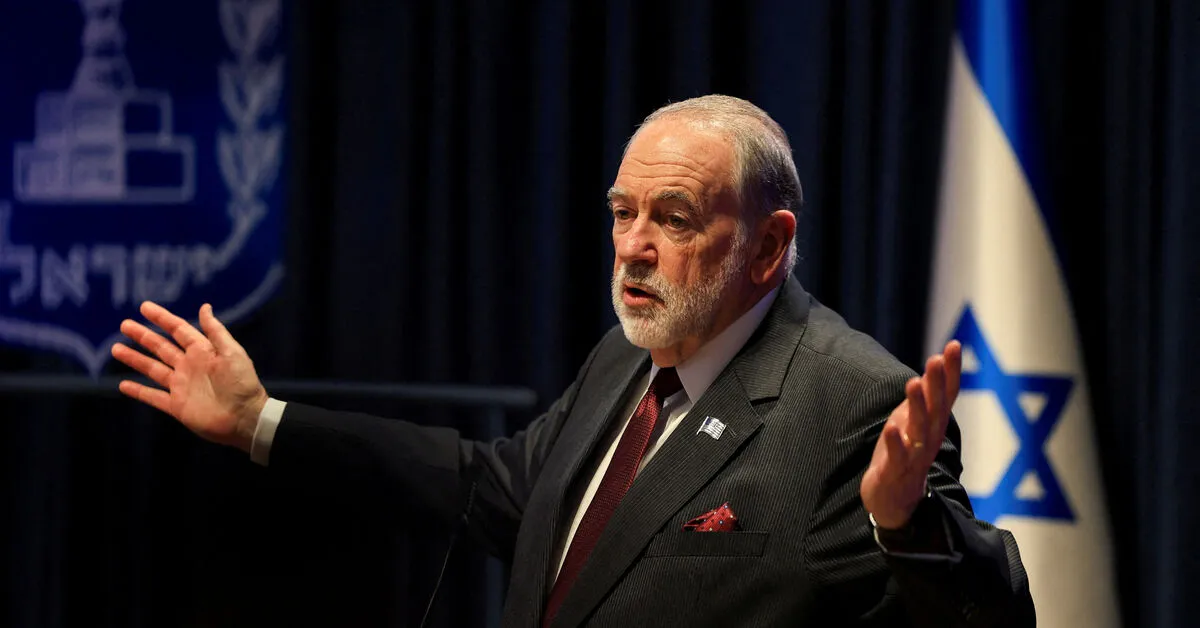
A growing sense of strain on the U.S. alliance, a cornerstone of Israel's strategic policy, is evident as opinion polls indicate increasing American dissatisfaction with Israel, and a perceived distancing from their strongest advocate in Washington. Mike Huckabee, the U.S. ambassador to Israel, acknowledged significant anxiety surrounding the bilateral relationship, stating at a foreign policy conference in Jerusalem that "The United States and Israel have an unbreakable bond."
Concerns among Israelis extend beyond the specifics of the Iran deal to President Trump's emphasis on a ceasefire with Hezbollah in Lebanon and his critical remarks directed at Netanyahu's resistance to these directives. Recent public statements from Trump have included sharp language, and Vice President JD Vance has adopted a more critical stance, asserting that Trump is the sole head of state globally sympathetic to Israel, while cautioning against dismissing all criticism of Israel as antisemitism.
The issuance of such pointed views from President Trump's Republican Party is particularly concerning for many Israelis, especially given that Democratic politicians have become more vocal in their criticism of Israel in recent years. Conservative New York radio host Sid Rosenberg advised Israelis that despite their reservations about Trump, he remains their most viable option. Younger conservative Americans, unlike older generations, have shown a growing critical view of Israel, with a Reuters/Ipsos poll revealing a majority of Republicans aged 18-49 hold unfavorable opinions of the nation.
Many Americans, including prominent Democrats, expressed outrage over the extensive casualties and destruction in Gaza following the October 7th Hamas attacks and the subsequent Israeli military campaign. Israel has also faced international criticism for its joint decision to engage in the conflict, which is broadly unpopular in the United States, including among Trump's conservative base. Victoria Coates, vice president at the Heritage Foundation and a former Trump national security adviser, suggested that while the U.S.-Israel relationship is strained, she is confident that leaders on both sides will steer it back on course.
Previously, Trump was widely regarded in Israel as its most supportive White House ally, notably for recognizing Jerusalem as Israel's capital, asserting Israeli sovereignty over the Golan Heights, and playing a key diplomatic role in hostage releases. Two Israeli officials close to Prime Minister Netanyahu indicated that he is not concerned by the comments from Trump and Vance, viewing them as potentially aimed at appeasing voters ahead of the U.S. midterm elections amid public frustration over the war. This environment has prompted some Israeli figures to advocate for greater national self-reliance and the cultivation of new alliances, preparing for a future with potentially less supportive U.S. leadership.