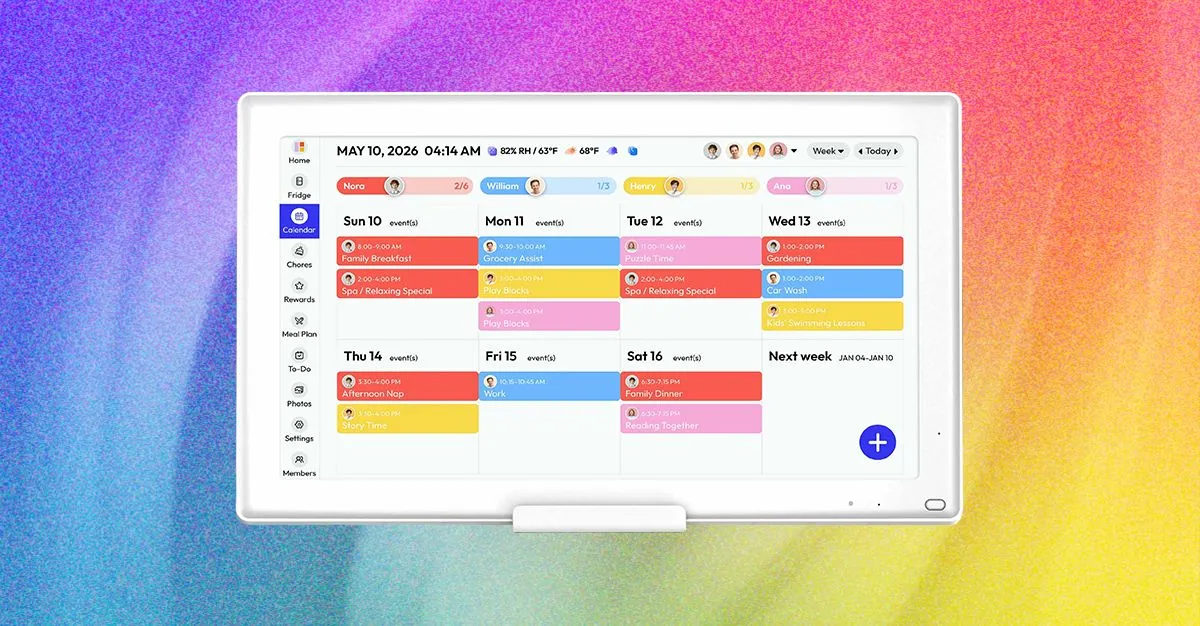
Initially, the idea of a digital wall calendar seemed like just another piece of tech clutter, but after testing several models, these smart displays have surprisingly become indispensable for managing daily life. They seamlessly integrate online calendars into a physical, always-visible format, moving beyond simple scheduling to offer features like meal planning and chore tracking.
These gadgets sync with popular calendar apps like Google Calendar, Apple Calendar, and Microsoft Outlook, displaying your schedule on a dedicated screen. While early experiences, like with the Hearth Display, were disappointing due to high cost and difficult setup, the market has evolved significantly. Now, these devices often double as digital photo frames, chore charts, and meal planners, effectively replacing traditional smart displays for some users.
The appeal lies in the convenience of seeing your entire family's schedule at a glance without needing to pull out a phone. Features like color-coding events make it easy to distinguish activities and responsibilities. Many models can be mounted on a wall or placed on a tabletop, offering flexibility in how they fit into your home's layout. Some even come with tabletop stands, though they can often be propped up without one.
Beyond basic scheduling, digital wall calendars aim to be central hubs for family management. Functions like meal planning, to-do lists for multiple users, and even digital chore charts with reward systems are common. While some advanced features might require a subscription, the core functionality of displaying your digital calendar remains a significant draw. Devices like the Skylight Calendar 2 stand out with integrated photo screensavers and intuitive interfaces, though access to all features often necessitates a "Plus" subscription.
For those seeking subscription-free options, the Everblog HomeCal and Apolosign Digital Calendar offer robust features. The Everblog HomeCal provides a familiar interface, though syncing can sometimes be slow, and it lacks a dedicated recipe section. The Apolosign, running on Android OS, offers extensive customization in its Android mode and no subscription fees, but can be less intuitive to set up and may have compatibility issues with iPhones due to its Android base.
Ultimately, these digital wall calendars have proven their worth by offering a tangible, accessible way to stay organized. The ability to plan meals, track chores, and view schedules collectively makes them a powerful tool for modern households, bridging the gap between digital convenience and physical presence in the home.