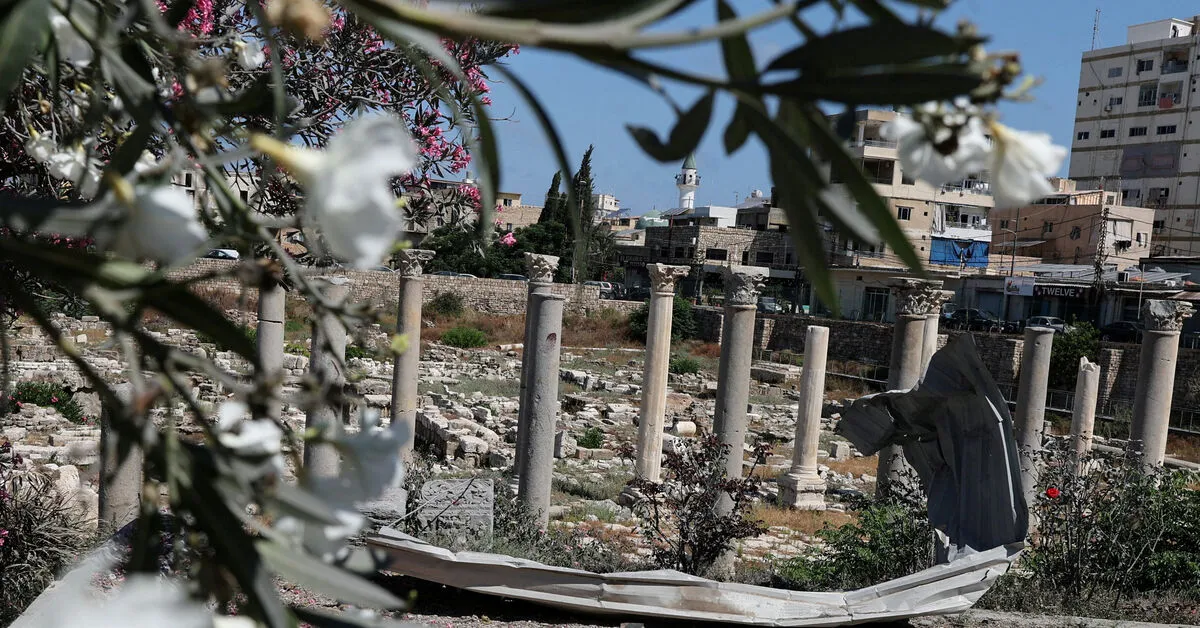
Lebanese Culture Minister Ghassan Salame has stated that Israel's nearly four-month military campaign in southern Lebanon has resulted in the damage or destruction of revered heritage sites, including ancient ruins, historical buildings, and places of worship.
The minister informed Reuters that sites in the UNESCO-listed city of Tyre, a pilgrimage location for both Muslims and Christians, and the Mamluk-era market in Nabatieh have been affected by Israeli strikes. Troops have also reportedly razed centuries-old Lebanese border towns. Salame indicated that a full assessment of the damage is ongoing, complicated by Israeli troop occupation of a zone approximately 10 kilometers deep into Lebanon, which remains inaccessible to Lebanese authorities.
"We cannot work under the shadow of occupation," Salame stated, noting that this zone includes the medieval Beaufort Castle and numerous ancient villages that housed diverse religious communities and their places of worship. He described some villages as having been "completely bulldozed." Even areas outside the occupation zone, such as Tyre and Nabatieh, sustained heavy bombing, with fears for the Crusader fortress in Tebnin as well.
The Lebanese culture minister emphasized that heritage encompasses more than just ancient antiquities, extending to historic buildings, archaeological sites, and structures of cultural significance. In response to inquiries, the Israeli military stated its operations aim to avoid excessive damage to civilian infrastructure and are conducted out of military necessity, with consideration for its citizens' safety. The military also claimed to take into account "sensitive sites" and follow a rigorous approval process.
Lebanon, a crossroads of civilizations including Phoenician, Byzantine, Mamluk, and Crusader influences, boasts a rich historical tapestry. The ancient city of Tyre, nearly 5,000 years old, is renowned for its Roman ruins. Despite its history of surviving conflict, recent hostilities have left much of the city in rubble, with protective barriers for ancient ruins reportedly blown into the sites they were intended to shield.
The United Nations Educational, Scientific and Cultural Organization (UNESCO) has previously expressed concern over the state of conservation in Tyre, a World Heritage Site with enhanced protection status. Following the recent bombing of Tyre's ruins, Minister Salame requested UNESCO to reclassify the site as a "UNESCO World Heritage Site in Danger" to invoke greater international protection responsibilities. He also expressed fears that Israel's campaign could systematically erase centuries of Lebanese history.