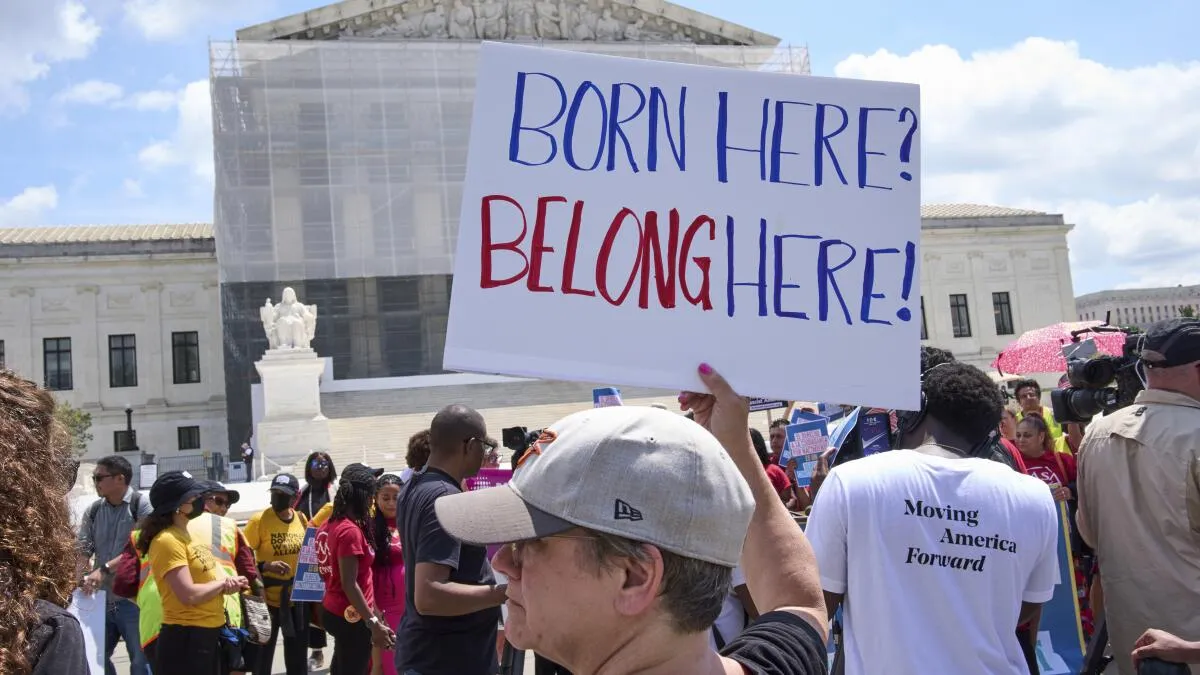
A recent narrow Supreme Court decision upholding birthright citizenship has been met with praise for affirming American democratic principles, yet it has also highlighted divisive rhetoric from some political factions seeking to challenge its historical interpretation.
Following the ruling, figures associated with the "MAGA world," including Trump surrogates and elected officials, have expressed sentiments that critics deem extremist and anti-immigrant. These sentiments have extended to proposals such as barring pregnant women from entering the United States to prevent births on American soil, and even, as one commentator suggested, the sterilization of female immigrants. Stephen Miller, former Homeland Security advisor under the Trump administration, articulated a view that the children of immigrants might not be "qualified to carry on or capable of executing the inheritance of this country," questioning the integration of individuals from nations he characterized as less advanced.
Justice Ketanji Brown Jackson's written opinion, while concurring with the majority, offers a profound perspective that serves as a warning against the political manipulation of historical narratives. Jackson emphasized the arduous process and high stakes involved in the creation of the 14th Amendment in 1866, which has long been understood to grant citizenship to all born on U.S. soil. She argued that despite the challenging post-Civil War context, the amendment was intended to foster inclusivity, driven by the advocacy of newly freed Black individuals who "fought for the shared humanity of all people."
The case centered on an alternative interpretation of the 14th Amendment, particularly within the "MAGA world" discourse. This interpretation posits that the amendment's authors intended citizenship primarily for formerly enslaved people and their descendants, and not as broadly as commonly understood. Jackson, in her separate concurrence, underscored the critical role of the Black experience in shaping American values and fostering the empathy necessary for a pluralistic society. She contended that excluding non-white history, particularly the history of resistance and recovery from oppression, leaves a void in understanding the nation's development and its capacity for inclusivity.
Jackson directly addressed the "MAGA version of events," refuting the notion that advocates of the 14th Amendment pitted Black Americans against immigrants. She highlighted that freed Black individuals and their allies advocated for the "shared humanity of all people," a "universalist vision of belonging and citizenship" that ultimately prevailed. Historical records indicate that Senator Lyman Trumbull, a key drafter of the amendment, drew heavily on the legal arguments of Black intellectuals like Frederick Douglass and intended the amendment to be inclusive, even for groups facing intense discrimination, such as Chinese immigrants and Romani people, referring to the child of an Asiatic as being "just as much a citizen as the child of a European."
The debate continues, with former President Trump suggesting legislative action could undo birthright citizenship, a possibility some pundits believe is achievable given his past successes. Meanwhile, Stephen Miller has characterized the ruling as an "abomination" and expressed a determination to continue the fight to end birthright citizenship. Justice Jackson's opinion serves as a crucial reminder that historical facts, particularly those derived from the broad spectrum of American experiences, must be preserved against political revisionism, as their erasure carries significant peril for the nation's democratic foundations.