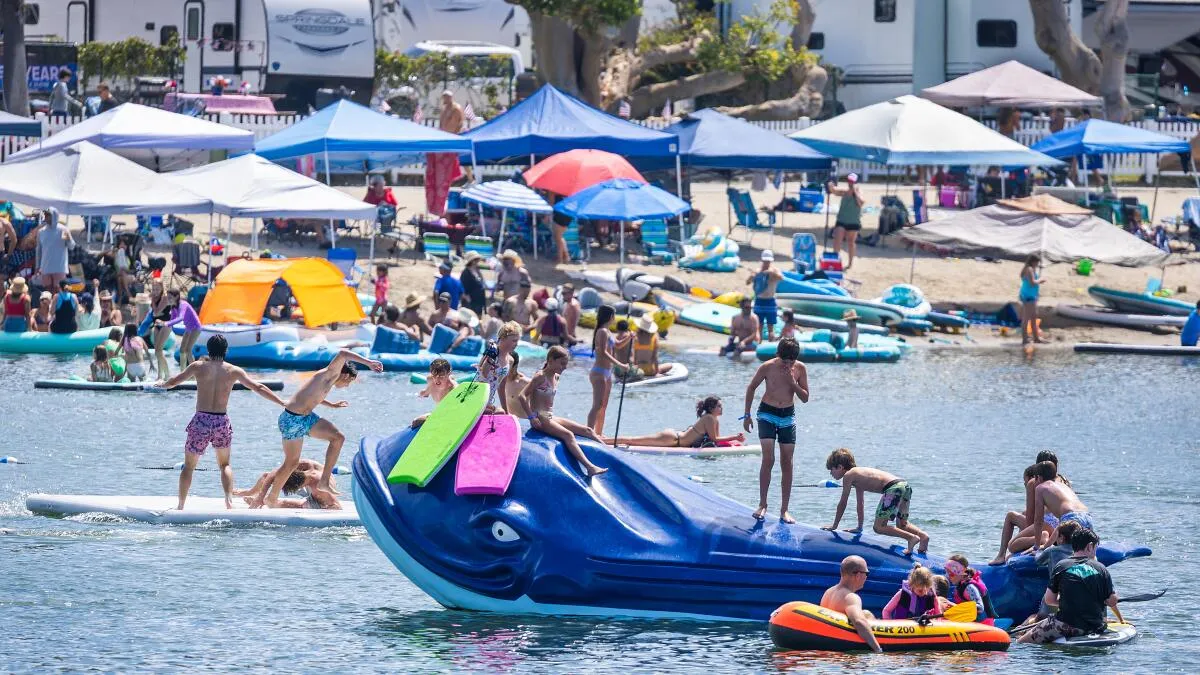
Southern California beach communities are implementing stricter regulations on large canopies and shade structures, citing safety concerns and the need to maintain unobstructed views for lifeguards. These measures aim to prevent elaborate setups that can resemble "living rooms on the sand" and ensure public safety.
Cities such as Newport Beach and Laguna Beach have recently introduced or reinforced rules limiting the size and placement of shade structures. Newport Beach now prohibits canopies larger than 6 feet by 6 feet and mandates that they not be connected. Laguna Beach has further restricted these structures to specific beach sections and imposed fines of up to $500 for violations, aiming to improve the beach ambiance and safety.
Lifeguard officials emphasize that large, interconnected shade coverings can create significant visibility barriers, hindering their ability to monitor swimmers and respond quickly to emergencies. Newport Beach Lifeguard Captain Natalie May stated that clear lines of sight are crucial for lifeguards to effectively observe beach activity and for emergency responders to access the shoreline without delay.
The crackdown reflects a broader trend seen in other coastal areas, including the Jersey Shore, Ocean City, Maryland, and Myrtle Beach, South Carolina, which have also introduced restrictions on tents and large shade structures to enhance safety and manage crowds. These regulations are particularly relevant during peak season when beaches experience a substantial influx of visitors.
While some beachgoers argue that the new rules are overly restrictive, particularly for families requiring extensive shade, officials maintain that the safety and accessibility of beaches are paramount. The measures are part of ongoing efforts by beach communities to balance public enjoyment with the need for order and safety, especially during busy summer months and holiday weekends.