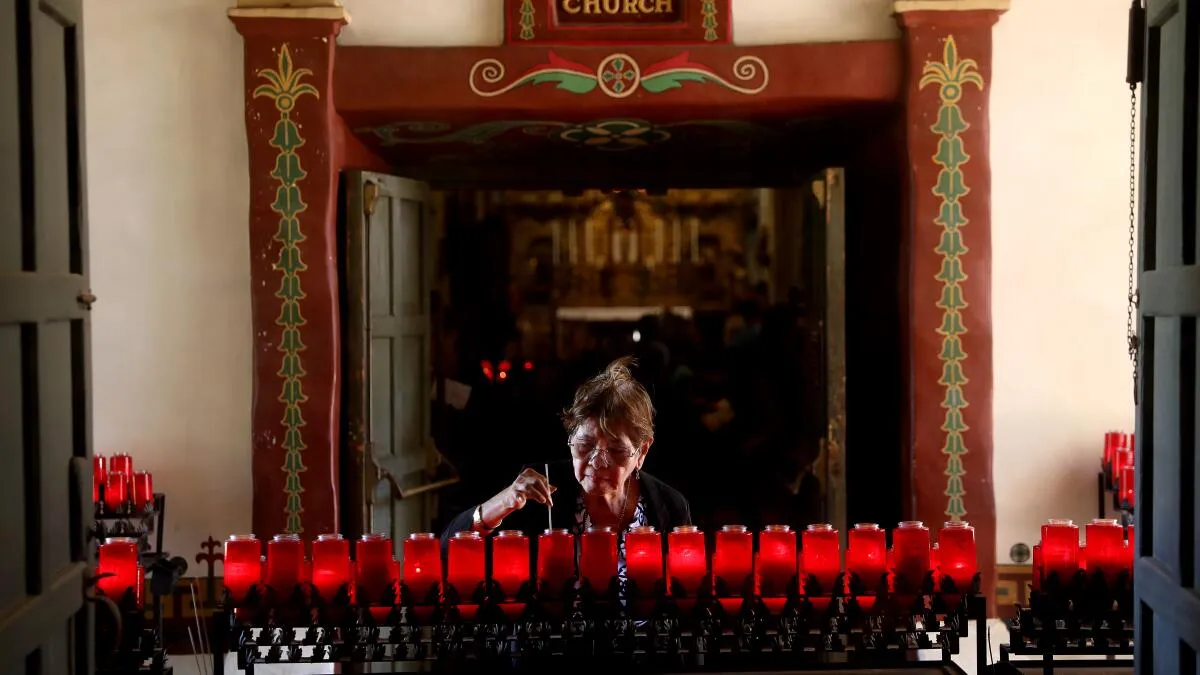
Mission San Juan Capistrano, a historic landmark celebrating its 250th anniversary concurrently with the United States, offers a complex reflection of American history and its ongoing evolution, particularly in Orange County, California. Once idealized as a symbol of a romanticized past, the mission is now presenting a more nuanced narrative that acknowledges its challenging legacy, serving as a metaphor for the nation's need for honest historical reckoning.
The author's visit to San Juan Capistrano, described as a city "stuck in its past," coincided with a period of political polarization, evident in the pro-Trump sentiment displayed by some residents. The mission, historically a central feature of the region, is juxtaposed with the encroaching signs of suburban development. The 250th birthday, celebrated by both the mission and the nation, has been co-opted by some to signify nationalistic fealty, a trend the author links to a broader political strategy of historical revisionism.
Recalling a fourth-grade visit, the author contrasts the simplified, sanitized history then taught—focusing on Spanish conquest and taming the land—with the more complete, albeit difficult, story now being presented. This updated narrative includes the devastating impact of European diseases on Native Americans, the forced assimilation and serfdom imposed by Franciscan friars, and the decline of natural habitats for migratory birds. This aligns with the author's critique of historical distortion, comparing it to a political tactic that celebrates only triumphs while downplaying or erasing struggles and injustices faced by minority groups.
The contemporary exhibits at Mission San Juan Capistrano now address environmental degradation, the compromised choices of Indigenous peoples, and the profound societal shifts experienced by the Acjachemen people under Spanish rule. A letter from the mission's executive director acknowledges that well-intentioned missionary efforts led to significant challenges and devastating consequences. While not explicitly described as "woke," these exhibits offer a more critical perspective, even in rooms dedicated to figures like Father Junípero Serra, who has faced criticism for his treatment of Native Americans. This historical introspection at the mission suggests that such re-evaluation is possible anywhere.
The author draws a parallel between the mission's evolving narrative and the broader American experience, advocating for honest historical reflection rather than the triumphalism promoted by some political figures. Personal anecdotes of family history in Orange County illustrate how acknowledging past discrimination and struggles, rather than fostering resentment, can fuel a drive for progress and a stronger commitment to the nation's ideals. The author argues that embracing change, even when difficult, is essential for strengthening the nation's foundations, likening the process to building a democracy with the "mortar of our past."
The article concludes with an example from the local culinary scene, where a barbecue restaurant owned by a person of mixed heritage has overcome initial skepticism to become a successful, diverse establishment. The owner views his restaurant as a microcosm of America, where people from various backgrounds are compelled to come together and create something new, even if the process is imperfect. This ongoing effort to integrate and build a shared future, much like the evolving historical understanding at Mission San Juan Capistrano, offers a hopeful perspective on the nation's path forward.