Iran's Revolutionary Guards announced on Wednesday that they had targeted U.S. military installations in Bahrain and Kuwait in response to a series of U.S. airstrikes on Iranian territory. The retaliatory actions followed U.S. strikes aimed at Iran in the aftermath of attacks on tankers in the Strait of Hormuz.
The Islamic Revolutionary Guard Corps stated that a joint missile and drone operation was conducted against key U.S. military locations, including Bandar Salman, Bahrain's Fifth Naval District, and Ali Al Salem Air Base in Kuwait. The Guards also claimed to have downed a U.S. MQ9 drone that reportedly attempted to interfere with the operation. Air raid sirens were heard in Bahrain and Kuwait, with the Kuwaiti army confirming that air defenses were engaged in confronting "hostile" missile and drone attacks.
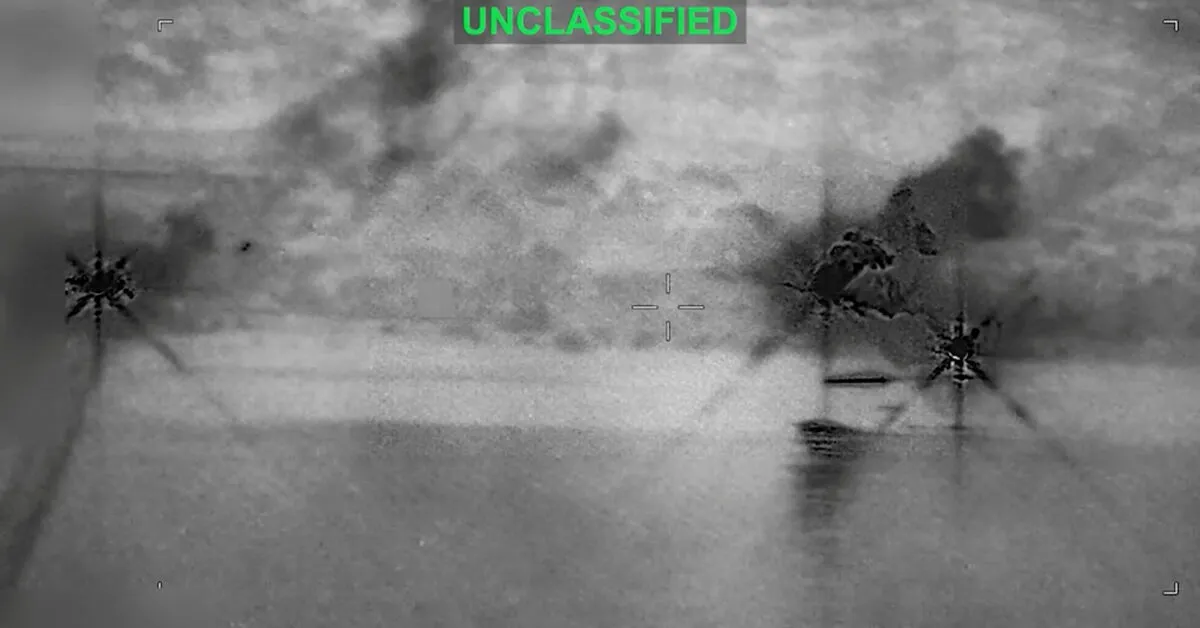
Earlier, the United States had launched fresh military strikes and rescinded a license permitting Iran to sell oil, citing Iran's attacks on three tankers in the Strait of Hormuz. The U.S. Central Command indicated that over 60 small boats belonging to the Islamic Revolutionary Guard Corps were among the targets, intended to impose significant costs on Iran for maritime attacks that violated the ceasefire. CENTCOM described the Iranian actions as an "unwarranted aggression" and a "clear and dangerous violation of the ceasefire" that undermined freedom of navigation.
Iran's top joint military command, Khatam al-Anbiya Central Headquarters, denounced the U.S. strikes as an "act of aggression" and threatened a "crushing response," warning against U.S. interference in the management of the Strait of Hormuz. Iranian parliament speaker Mohammad Baqer Qalibaf accused the U.S. of breaching the ceasefire agreement through its military actions, renewed oil sanctions, and alleged Israeli attacks against Lebanon. Qalibaf asserted that "the era of bullying and extortion is over" and that Iran would not yield.
U.S. officials reported that the strikes targeted Iranian air defense systems, coastal surveillance systems, surface-to-air missiles, anti-ship cruise missiles, and drone launch sites. While no civilian deaths were reported in Iran, an Iranian state TV reporter indicated that several individuals were injured by shrapnel from an "enemy projectile" that struck a commercial pier in Sirik. Reports also suggested that strikes hit fishing piers in Sirik and Bandar Abbas.
These developments represent a significant threat to the fragile ceasefire agreement brokered last month. The U.S. decision to revoke the oil sales license, a key concession, has led to a more than 3% rise in oil prices. Analysts suggest Tehran utilizes attacks on shipping to underscore its leverage during negotiations for a long-term peace deal. Under an interim agreement, Iran had been permitted to sell oil until August 21, with the U.S. revoking the license and setting a wind-down period until July 17.