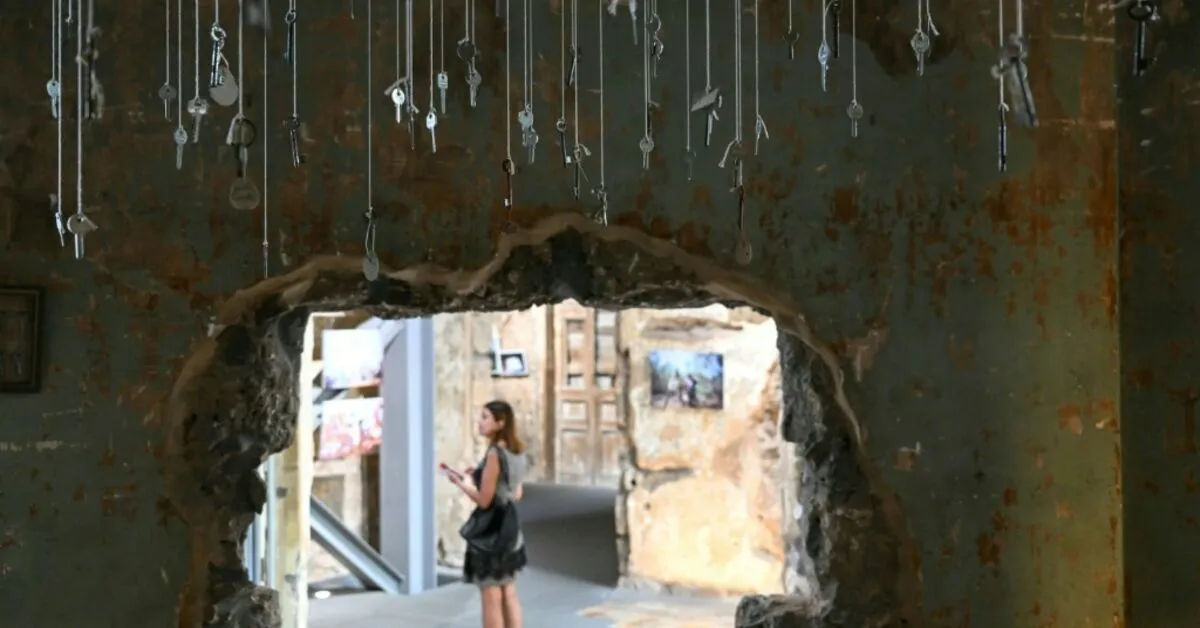
An art exhibition in Beirut is drawing attention to the widespread destruction of homes in southern Lebanon, with symbolic "keys without homes" representing houses lost to conflict. The exhibition, titled "Hkeeli ya Jnoub" (Tell me, O South), features various artistic expressions including photographs, videos, and recreated domestic spaces, aiming to preserve the memory of southern Lebanon and provide a platform for displaced residents.
Fatima Hajj Ali, a resident of southern Lebanon, expressed profound sadness viewing the keys, each symbolizing a home, like her own, destroyed by Israeli actions. She is among thousands who lost their residences in recent conflicts between Israel and Hezbollah. "We were supposed to go home and open the door with the key, but there is no door anymore," Hajj Ali stated. Despite a recent lull in fighting following a memorandum of understanding between the United States and Iran, intermittent Israeli strikes and demolitions persist, impeding the return of many to their damaged villages.
The exhibition includes a project titled "Keys Without Homes" by artist Adeeb Farhat. This installation features videos of three individuals who have kept the keys to their now-nonexistent houses. Farhat, a native of southern Lebanon, conceived the idea during a previous conflict, fearing for his own home and contemplating his future relationship with his house key, drawing a parallel to the Palestinian tradition of retaining keys to homes lost during the Nakba in 1948.
Within the museum, recreated domestic settings such as a bedroom, living room, and kitchen, complete with everyday items, offer a glimpse into the lives of southern Lebanese families. The exhibition also presents historical photographs of cities like Tyre and Nabatieh, alongside visitor notebooks filled with personal memories. Sama Beydoun's work, "What Remains," displays blurred photographs of her grandfather's destroyed home in Bint Jbeil, evoking a dreamlike quality and reflecting on the passage of time and generational continuity within the family home.
Another contribution, Rawan Mazeh's photo essay "Manufacturing Estrangements," chronicles the story of a couple detained in Khiam Prison during Israel's occupation of southern Lebanon. Mazeh described the exhibition as creating a "comfortable place where people could come and feel close to their land," offering a space for shared experience and remembrance amidst displacement and destruction.