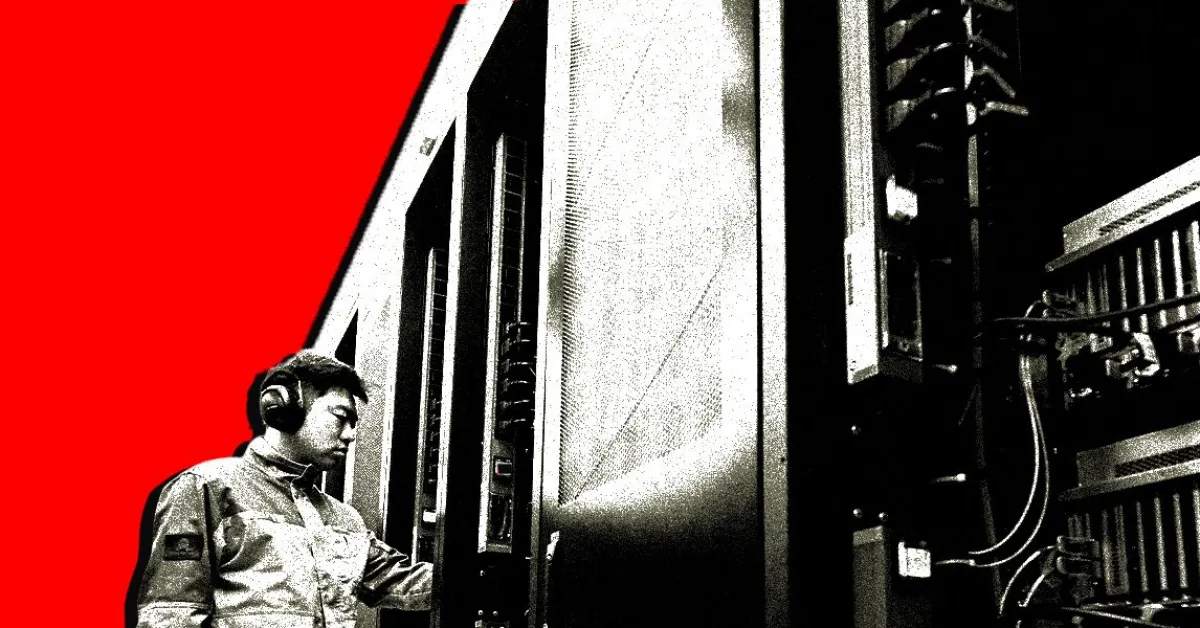
Ulanqab, a city in Inner Mongolia, has unexpectedly become a major hub for China's booming AI industry, attracting massive investment in data centers despite its remote, arid landscape. Once known for sheep farming and coal, the region is now home to nearly 100 data centers, with companies pledging enormous compute capacity, positioning it as one of Asia's fastest-growing compute clusters.
Several factors are driving this surge. Ulanqab's high elevation and cold winters significantly reduce the energy needed for cooling, a crucial cost-saver for data centers. Its proximity to Beijing also minimizes data transmission latency. However, the most compelling draw is the remarkably low electricity cost, fueled by robust wind and solar energy growth alongside abundant coal supplies.
Significantly, Chinese AI firms like DeepSeek, ByteDance, Alibaba, and Xiaohongshu are now investing heavily in their own infrastructure, a departure from their previous reliance on cloud rentals. This shift signals a major catch-up effort by Chinese AI companies, which have historically invested less in physical infrastructure compared to their American counterparts, despite developing sophisticated AI models.
However, a significant challenge looms: water scarcity. Ulanqab faces limited rainfall, and the local government is already struggling to meet existing resident demand, even before the full impact of the new data centers. While these centers require less water for cooling during winter, the sheer scale of new construction poses a substantial environmental hurdle for the region.
Historically, Inner Mongolia has been a data center location due to initiatives like the "Eastern Data, Western Compute" project. Initially, the remoteness led to latency issues, limiting their use to backup storage. The rise of AI in 2022 transformed this, as AI model training, which is less time-sensitive, found these remote centers ideal for utilizing their capacity, effectively giving them a new purpose.
The region's appeal is further bolstered by improved connectivity. Dedicated fiber optic cables built in 2017 and 2019 have slashed average latency to under five milliseconds, enabling real-time data exchanges crucial for AI inference. Unlike other Chinese hubs driven primarily by government investment, Ulanqab's growth appears to be more market-driven, fueled by commercial demand from AI startups serving a growing user base.
The Chinese government also sees Ulanqab as a strategic location to absorb excess renewable energy capacity, creating a win-win scenario to boost data center construction and renewable energy demand. Companies like Envision are directly linking new data centers to their clean power supplies. Yet, experts caution that the energy mix isn't purely green, with coal still a significant contributor to Ulanqab's power grid, highlighting the ongoing transition from fossil fuels to renewables in the region.