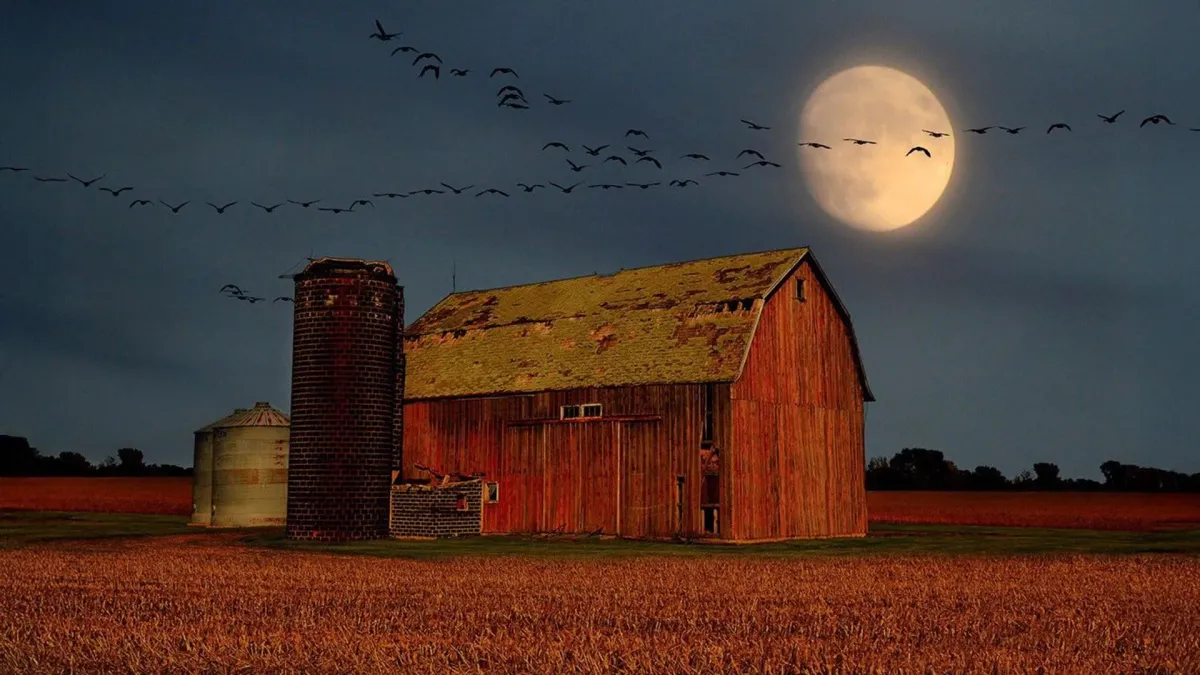
Get ready, skygazers! September is packing a celestial punch with a dazzling Venus, a Harvest Moon hanging out with Saturn and Neptune, the official start of the equinox, and even a chance to use the Moon as your cosmic guide to stars and the Milky Way.
Throughout the month, the evening sky is putting on a show. The Moon will guide you to a star pattern resembling a celestial teapot, Venus will reach its brightest point, and the seasons will officially change. Plus, the Harvest Moon arrives with a couple of planetary buddies.
From September 14 to 20, keep an eye on the Moon as it moves across the sky after sunset. It’ll pass close to Antares, a vibrant red star marking the heart of the Scorpius constellation. Look nearby for the Teapot asterism in Sagittarius – its distinct shape makes it easy to spot. If you're under very dark skies, you might catch a faint, cloudy glow rising from the Teapot's spout – that’s the direction of the Milky Way’s center.
Mark your calendars for September 18: Venus will be at its absolute brightest in the western sky shortly after sunset. You can’t miss it – it’ll be the most intensely bright point of light low on the horizon, outshining every star around. Make sure you have a clear view of the horizon to catch it before it dips out of sight.
September 19 is International Observe the Moon Night, a global event encouraging everyone to take a moment to gaze at our lunar neighbor, learn about its science, and appreciate its historical and cultural significance. You can find local events or discover how to participate from anywhere at go.nasa.gov/ObserveTheMoon.
The seasons officially shift on September 22 with the September equinox. In the Northern Hemisphere, it's the start of fall, while the Southern Hemisphere welcomes spring. This is when the Sun aligns directly over Earth's equator, making day and night roughly equal in length across most of the planet.
Finally, on September 26, the Harvest Moon takes center stage, rising in the east soon after sunset. Look for bright Saturn nearby, and if you're lucky and have good conditions, you might spot the much dimmer Neptune forming a wide triangle with the Moon and Saturn. Saturn is easy to see with the naked eye, but spotting Neptune will require binoculars or a telescope due to its faintness.