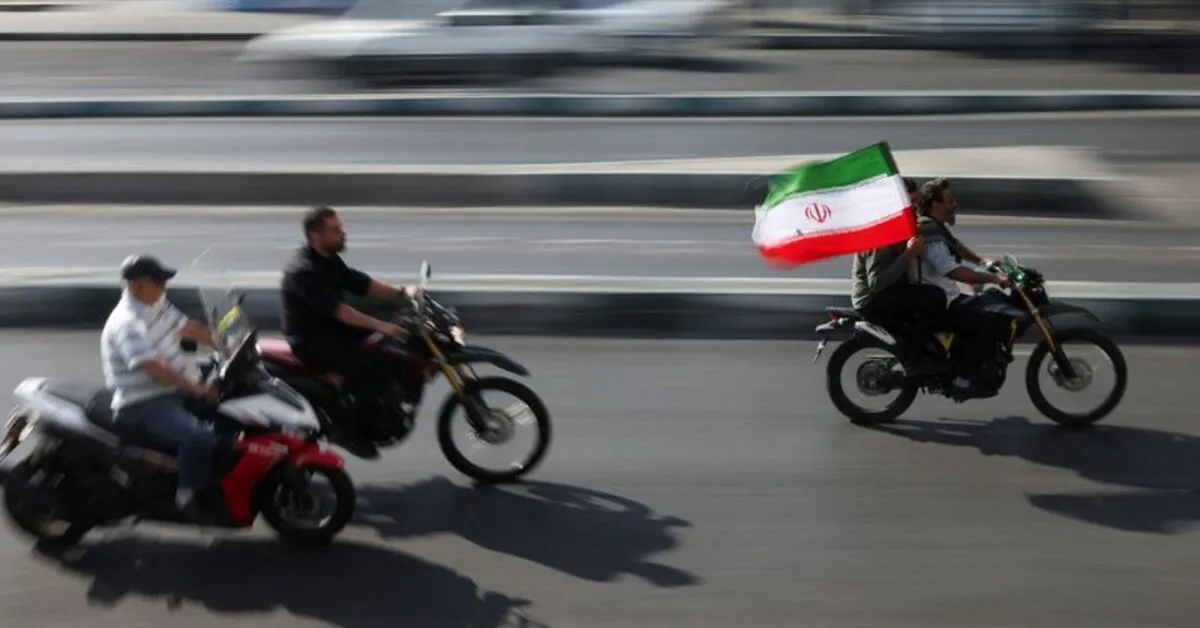
Iran's Islamic Revolutionary Guard Corps has appealed to American voters to remove President Donald Trump's allies from Congress, coinciding with the scheduled withdrawal of U.S. forces from their final bases in Iraq. Tehran has framed this departure as a significant victory. Concurrently, Qatar is continuing its mediation efforts to end the seven-month conflict between Iran and the United States, with President Trump reiterating predictions of Iran's imminent surrender.
The Guard's 26-page letter, released Tuesday, calls on Americans to exercise their political influence to replace current leadership and to reject U.S. support for Israel and overseas military interventions. While the appeal's impact on U.S. voters is uncertain, it highlights issues that political analysts suggest are detrimental to Trump and the Republican Party in the upcoming November 3 congressional elections, where Democrats could regain control of one or both legislative chambers, potentially hindering Trump's policy agenda.
"Remove from power the evil, deceitful, and violent politicians who are responsible for America’s current state," the letter stated. "Make sure your politicians understand that the world has changed." President Trump's campaign pledge to avoid new wars and de-escalate existing conflicts has been challenged by the ongoing war with Iran, which has contributed to increased global fuel prices and regional instability. A recent Reuters/Ipsos poll indicated low approval for Trump's handling of cost-of-living issues and strikes against Iran.
The withdrawal from Iraq, agreed upon by former President Joe Biden, marks a significant shift 23 years after the U.S.-led invasion that overthrew Saddam Hussein. The conflict has drawn in regional Iranian allies, including the Houthis in Yemen and Hezbollah in Lebanon. Iran views the U.S. withdrawal from Iraq as a triumph for its "axis of resistance" and maintains its objective is to compel American forces out of the entire Middle East. Despite ongoing negotiations and ceasefires, no agreement has been reached to reopen the strategic Strait of Hormuz, a critical global energy transit route.
Qatar has re-emerged as a key mediator, facilitating communication between the parties. U.S. and Iranian officials held separate discussions with Qatari mediators recently, aiming to establish common ground for a deal. President Trump has maintained that Iran must not acquire nuclear weapons and has expressed confidence that the war will conclude swiftly. Despite the conflict's strain on Iran's military and economy, Tehran has retaliated with missile and drone strikes on U.S. allies and has restricted traffic in the Strait of Hormuz, impacting global energy prices.
Iran recently proposed a peace plan involving a seven-day countdown to reopening the Strait and a pause in fighting, a proposal President Trump rejected. However, Iranian Foreign Minister Abbas Araqchi indicated that the U.S. rejection had not been officially relayed through mediators. President Trump has cited weakening Iran's nuclear capabilities and its regional influence as war objectives, while Iran denies seeking nuclear weapons and asserts its right to peaceful nuclear technology.