Iran's top diplomat has asserted that a military solution is not viable for the ongoing conflict involving the United States and the Islamic Republic, as diplomatic efforts to end the hostilities appear to be stalled.
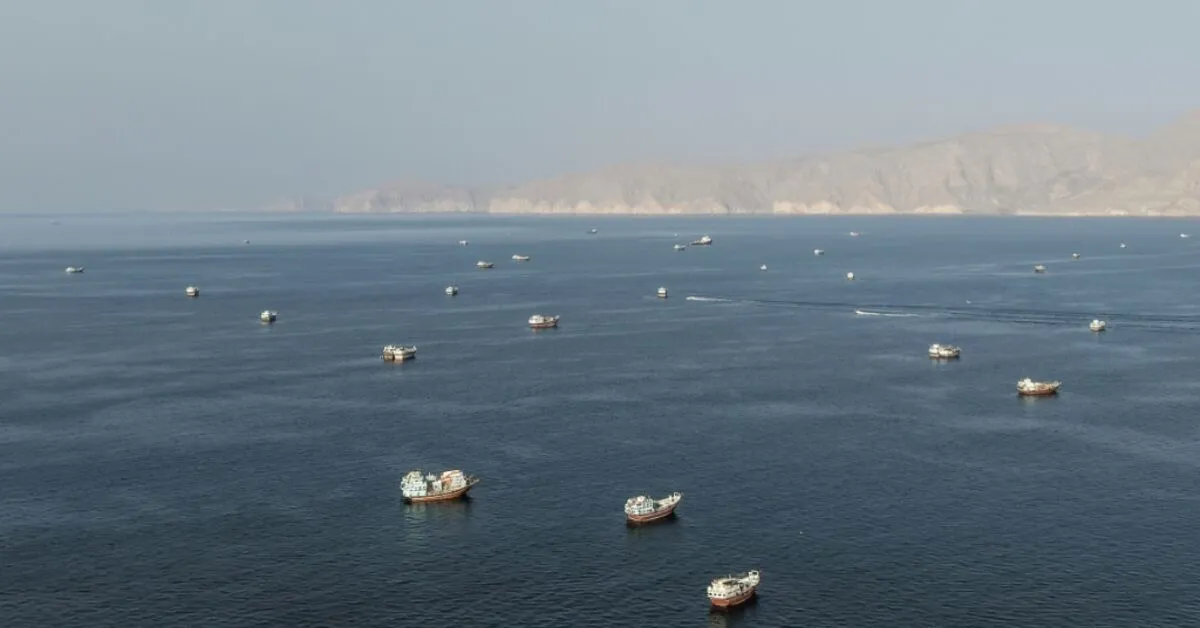
Following a period of intense bombardment that failed to decisively conclude the war initiated by the US and Israel in late February, Washington has recently shifted its strategy towards economic pressure. A significant point of contention remains Iran's attempts to blockade the Strait of Hormuz, a critical transit route for global oil and gas. The situation was underscored by a report from a UK maritime agency on Sunday detailing another tanker strike by an unidentified projectile.
"If our enemies again choose the path of military confrontation, our response will be stronger than before, and we will defend ourselves with even more force," stated Iranian Foreign Minister Abbas Araghchi to a gathering of foreign ambassadors. He emphasized, "There is no military solution, nor any solution based on new sanctions. Only negotiations based on justice and fairness can end the conflict."
While an agreement on a memorandum of understanding in June outlined a framework for a lasting resolution, Iranian attacks on vessels transiting the Strait of Hormuz prompted a resumption of US military operations. Iran has sought to assert control over this vital shipping lane since the war's inception, targeting vessels attempting to pass without authorization. In response, the US has implemented its own counterblockade of Iranian ports and has targeted vessels accused of violations.
The British maritime security agency UKMTO reported on Sunday that a tanker in the Strait of Hormuz "reported being struck by an unknown projectile, causing damage to the engine room." The agency noted that the crew was safe and no environmental impact was recorded, but did not specify the date, origin, destination, or type of vessel involved.
Indirect talks between Iranian and US officials last week at the UN General Assembly saw Tehran present seven conditions for reopening the strait, including a ceasefire, the unfreezing of assets, the lifting of oil sanctions, and an end to the US naval blockade. President Trump reportedly rejected this proposal while leaving avenues open for further discussions or renewed military action.
Iranian Foreign Ministry spokesman Esmaeil Baqaei characterized the latest US counterproposal as consistent with previous positions on nuclear issues. He stated, "We have clearly indicated that we are focusing on the issue of the Strait of Hormuz," adding that reopening the waterway necessitates "an end to the disruptions to Iranian commercial maritime traffic and the lifting of sanctions."
The United States and Israel have maintained that the war is necessary to prevent Iran from acquiring nuclear weapons, a claim Iran denies. However, the focus shifted to reopening the Strait of Hormuz after its closure significantly impacted global energy markets. While the US has not conducted strikes against Iran since September 1, it has recently increased its military presence in the region, reportedly deploying additional Patriot missile batteries to Saudi Arabia and Qatar and rerouting the USS Theodore Roosevelt aircraft carrier and its strike group to the Middle East.