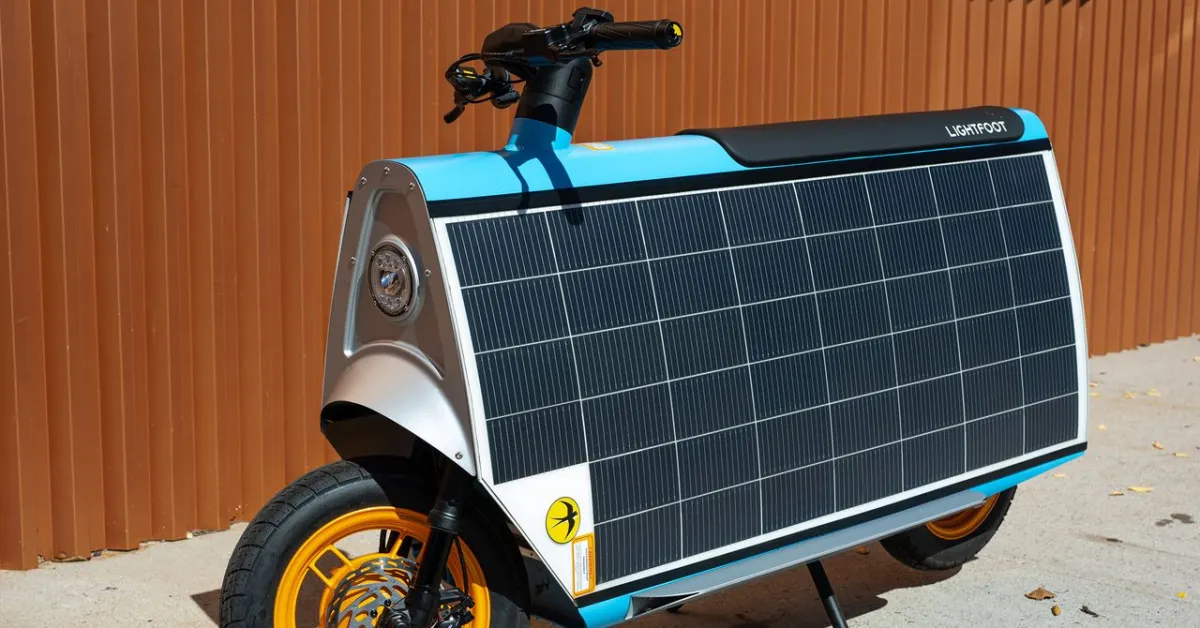
Hopping onto the Lightfoot, a solar-powered two-wheeler that looks straight out of a sci-fi garage project, immediately draws attention. Its funky, rectangular design with prominent solar panels and a bench seat makes it a head-turner, prompting curious questions from passersby about its unique origins.
Designed for bike lanes, the Lightfoot operates as an electric scooter with a top speed of 20 mph. Its maker, Otherlab, founded by inventor Saul Griffith, dubbed it the "smile machine" because of the sheer delight and amusement it sparks. The vehicle's unusual appearance guarantees it commands more attention than any other ride the author has experienced, with people frequently stopping to snap photos.
The inspiration for the Lightfoot stems from data showing a significant portion of short car trips could be replaced by simpler, self-recharging vehicles. Griffith believes solar power can make a real difference for these short commutes, offering an engaging, robust, and easy-to-use option. Making it a scooter rather than a pedal-powered bike broadens its appeal significantly.
While the author's two-week test in rainy New York City presented challenges for a solar-powered device, the Lightfoot is officially launching in California, where sunny weather is more reliable. Priced at $4,495, reservations are open with a $100 deposit. Otherlab plans future expansion into sunnier states and even countries like Vietnam, though the immediate focus is on initial production and customer delivery.
The Lightfoot is a surprisingly capable machine, offering excellent suspension and strong torque that maintains its 20 mph speed even on inclines. Its regenerative braking system is a standout feature, recapturing a significant portion of battery life. While some fit and finish issues were noted on the pre-production model, the company assures these are being addressed.
Practical features include a generous internal storage compartment, a welcome change from carrying items. The claimed 37-mile range proved accurate for the author, even at 6'4" and 220 pounds. While the solar charging capabilities were limited by New York's weather, on a sunny Saturday, the battery meter showed a noticeable increase, hinting at its potential in more favorable conditions.