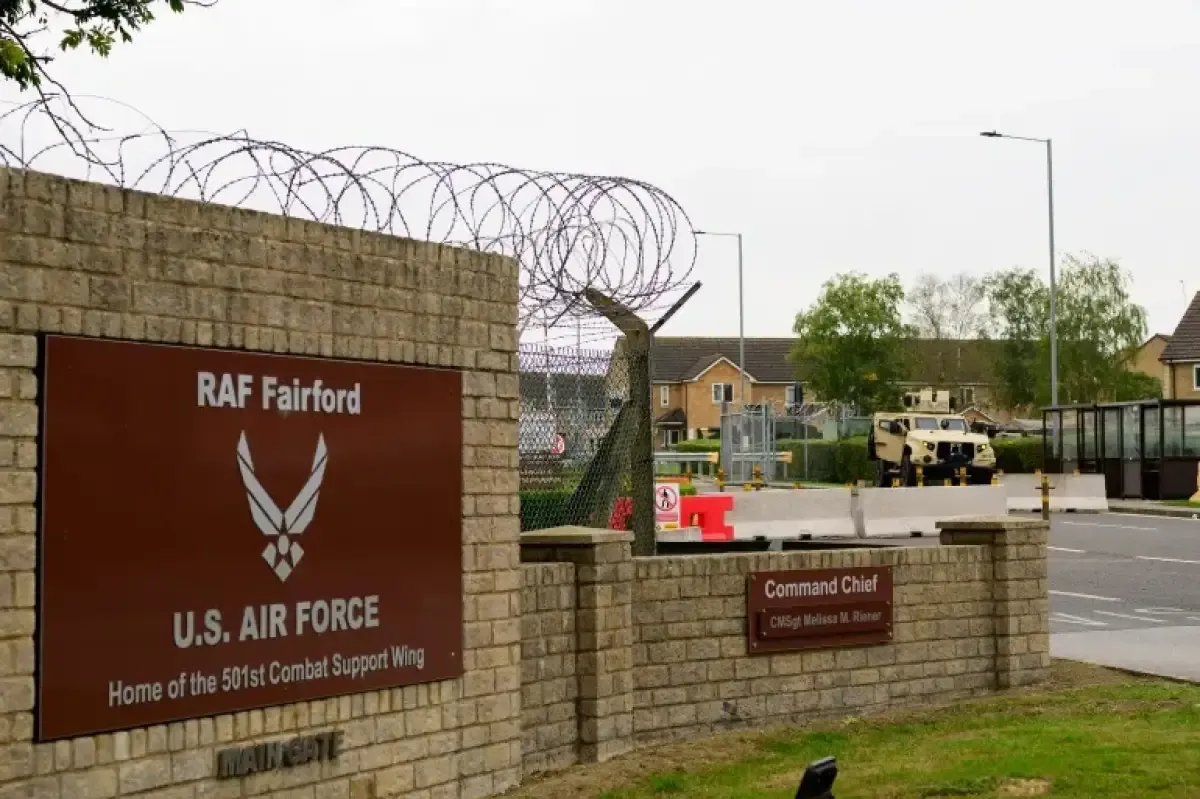
The United Kingdom has escalated its rhetoric towards Iran following a security incident near RAF Fairford, a base utilized by U.S. forces in Britain, with Prime Minister Andy Burnham stating that British assessments indicate the event was likely coordinated within Iran and directed by the Iranian Revolutionary Guard Corps.
Burnham asserted in a statement to the House of Commons that the UK will not tolerate threats to its security. He vowed to confront Iran's use of criminal networks for hostile activities, pursue these networks and their funding sources, and impose further sanctions aimed at curtailing Tehran's and the Revolutionary Guard's capacity to operate within Britain or harm its interests. This stance signifies a shift from political warnings to more stringent security and financial measures in addressing threats attributed to Iran, particularly concerning allegations of employing domestic networks for external operations to exert pressure on adversaries without direct involvement.
In a parallel diplomatic move, the British government summoned the Iranian ambassador to convey its protest against what it described as persistent attempts to undermine the security of the UK and its international partners through criminal networks, Iran-linked groups, and state-sponsored activities. A joint statement, signed by over 25 countries including the United States, was issued by the Foreign Office supporting London's suspicions of Iranian involvement in the incident. This international backing lends a global dimension to the accusations and suggests a coordinated effort to pressure Tehran, rather than unilateral British actions.
These developments coincided with London's announcement of sanctions against Iranian nationals, one of whom is accused of involvement in activities related to threatening, planning, or executing attacks within Britain or a third country. These measures are part of broader efforts to tighten restrictions on Iranian activities, limit Tehran's access to the British financial system, expand trade embargoes, and impose flight restrictions on Iranian aircraft at British airports, with specific exceptions.
The incident began early on September 27, when five men in their twenties were arrested near RAF Fairford on suspicion of terrorism and explosives-related offenses. They were later released on strict conditional bail, without charges being filed at that stage. Police stated they were investigating the potential involvement of a foreign state, while U.S. officials, as reported by Reuters, spoke of a suspected Iran-linked plot to target the base using drones. President Donald Trump also indicated that a threat linked to Iran prompted Washington to withdraw B-1 bombers from Fairford. However, the suspicion of a plot does not confirm an attack, nor does the release of detainees without charges definitively establish their culpability.
The incident's significance is amplified by Fairford's role in U.S. air operations. If the alleged Iranian plot is substantiated, targeting a base used by U.S. forces on British soil would mark an escalation of threats linked to Tehran into military installations outside the Middle East. This presents a dual challenge for Britain: protecting its facilities and territory from potential threats while avoiding a wider direct confrontation with Iran. The alleged use of criminal networks or local operatives, if confirmed by investigations, would exacerbate European security agencies' concerns about such networks being exploited for cross-border operations.