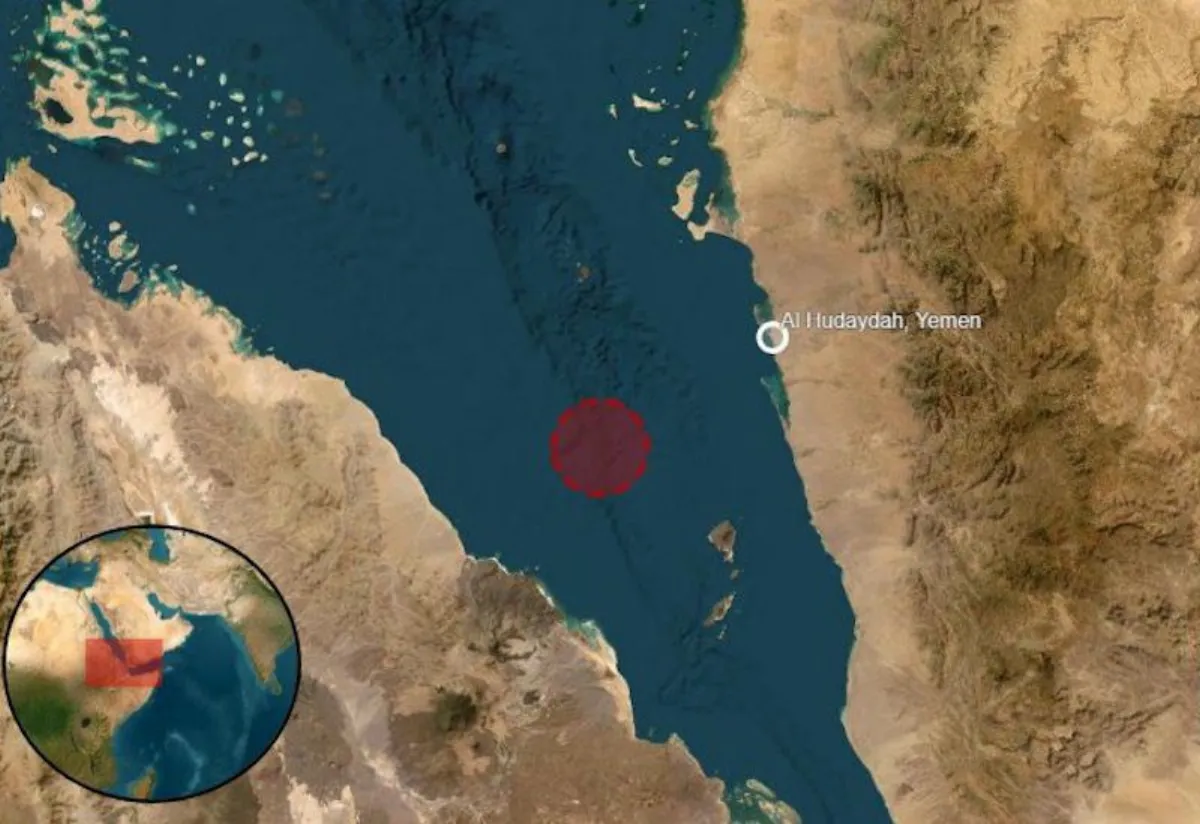
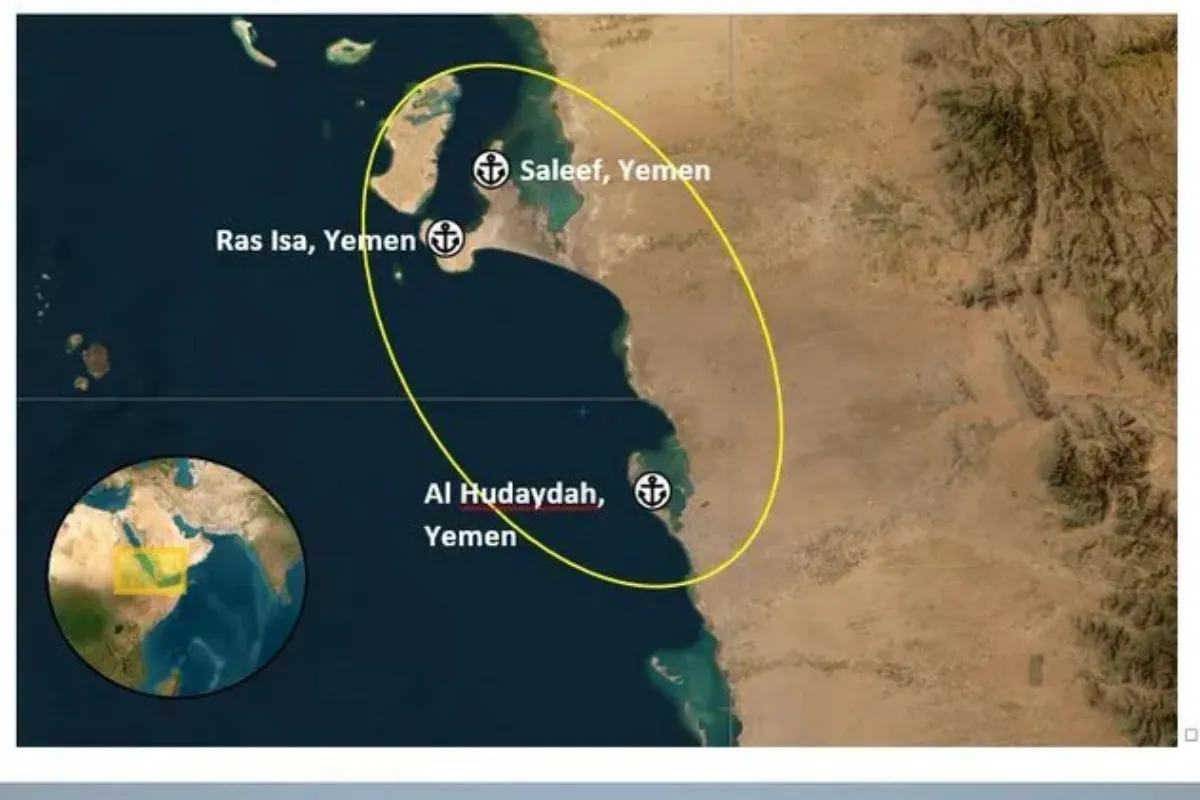
Iran denied having yet another ship filled with sophisticated weaponry intercepted during a joint US-Arab Coalition operation near Yemen in June, another piece of evidence pointing to the dangers of Iran's continuing relationship with the Houthis. And despite dealing with a series of explosions throughout IRGC military bases, and nuclear/power stations, Iran has shown no signs of slowing down in the implementation of this agenda and denied any external interventionism. The blasts are attributed to Israel, and to an opposition group known as "Cheetahs of the Homeland." The latest such incident took place to the West of Tehran, in the vicinity of additional IRGC bases and power stations.
Most of the P5+1 members are reluctant to follow US lead in renewith the arms embargo. Furthermore, there is evidence that where EUropean companies have turned away from profit due to the concern over losing access to the US financial system, China and Russia have stepped comfortably in, which means that with or without the arms embargo, Iran retains access to the components needed for the production of sophisticated weapons. A new deal inked between Beijing and Tehran reportedly grants China access to Iranian air force bases, while Iran essentially becomes a gas station for the Chinese Communist Party which has been suffering ongoing financial losses and reportedly has not been able to meet its "New Silk Road" /Belt-and-Road commitments.
Enter the HOuthis, who have been reportedly smuggling oil out of Southern Yemen and supplying Hezbullah and IRGC with a resource lifeline to complement access to Iraqi oil and the Chinese lease monopoly over Ahwazi petrochemicals. Yemen's internationally recognized government has downplayed the attacks on Safter oil pumping stations, but with the fall of oil output in Yemen since the HOuthi coup, access to natural resources has become an important rallying point for the Houthis. In exchange, Houthis are playing an increasingly central role in Iran's regional hegemony projects as Iraqi militias have attracted increasing US scrutiny and ire, with mass arrests following the liquidation of Qassem Soleimani and several important heads of Iran-backed Shi'a groups starting in January.
While the US and the Arab Coalition have succeeded in intercepting several ships providing weapons to Houthis as evidence of the close relationship, they have not been able to stop the smuggling altogether. And for every number of bomb-laden Houthi boats destroyed by the Arab Coalition, an unknown number of such operations succeeds, at least partially. Then there are rumors of the HOuthis exploiting security vulnerabilities and launching a deadly and destructive attack on a Saudi air force base in June 2020, among a series of missile and drone attacks aimed at Saudi cities, which, according to the Coalition, were intercepted by the Saudi missile defense systems. Those are just some of the most recent examples of Houthi attacks; during the course of the war, according to the Coalition spokesman Turki Al-Maliki, nearly 1700 attacks against civilian sites in Saudi Arabia had been launched by the HOuthis, and an unknown number of similar attacks against civilians in Yemen. In July, another quantity of drones was destroyed by the Coalition forces over Yemen.
These events show the limits of US diplomacy and political action, and in particular, the limits of the strategy exclusively targeting Iran, without taking into the account the subversive and increasingly powerful role of the HOuthis in the region. Of course, in the event of the non-renewal of the embargo, Iran will indeed become an international arms marketplace for the worst of rogue actors, but even now with the restrictions in place, it has evaded full accountability and has managed to sow mayhem and mischief with the help of its proxies and increasingly integrated regional relationships.
It, too, is important to note that much of Iran's assets lie outside Tehran. Therefore the approah of "cutting off the head of the snake", with anything short of complete regime change and destruction of the existing Iranian administrative infrastructure and financial architecture, is hardly the panacea for the Iranian assertion of control in the Middle East, without also severing the limbs that carry out its bidding, including, in particular the Houthis.
And that is the argument that was heard in detail by a gathering of international experts during a series of meetings held by the Coalition of Organizations for Peace in Yemen on the sidelines of the Human Rights Council, session 44.
The first seminar focused on the HOuthi role in the shelling of Yemeni and Saudi cities.Seminar of Houthi shelling of cities:
Violation of the armistice and non-compliance with international agreements
Moderator: Dr. Arwa Al-Khattabi, an academic and human rights activist
The first speaker, Engineer Khaled Al-Afif, head of the German-Yemeni Forum for Rights and Freedoms, member of European organizations allied for peace in Yemen, spoke about the Houthi breach of the armistice and the agreements and stated that the Houthi militias relied on the tactic of restoring breath and arranging the papers to pounce on the adversaries and their means were to deceive the tribes and the government and now the international community.and the truce announcement. Each time, the militias break the ceasefire agreements once their ranks are rearranged (this follows a model long adopted by another Iranian proxy, Hamas).
He mentioned that between 2004 and 2010, the Yemeni government fought six wars with the Houthi militias, and all these wars were stopped by ceasefire agreements with the involvement of mediation committees that the Houthis did not adhere to. On the contrary, for them it was a warrior's rest to arrange their ranks and when the army stopped the war because of the truce the Houthis rallied to crush the tribal sheikhs and the regions that supported the government and opposed their forces. After 2011, the Houthi militia took advantage of the youth revolution, political division, and the army's division to impose its complete control over the Saada governorate, and the first thing that it worked on was the displacement of the Dammaj sons after several armies and agreements that were not adhered to, and this is the first case of sectarian displacement in Yemen.
The militia expanded its military operations to Imran and held several rounds of talks through mediation committees that ended in neutralizing the tribes and swooping on anyone who opposed the HOuthis; the Houthis did not abide by any agreement or armistice with any party that did not accept their authority, but relied on terrorism and the scorched earth policy after all the armistice and additionally, relied on the bombing the homes of tribal elders. Before announcing the truce in Amran, the Houthis launched an armed attack on the governorate to control it. While the mediation committees led by the UN envoy bin Omar were moving to a cease-fire, the Houthis stormed the capital, Sanaa, and then a truce was established, or what was known as the peace agreement, one that the Houthis did not adhere to. The Houthis entered into a partnership agreement with the Congress Party and former President Ali Saleh, and they did not adhere to any provision of it. Rather, at the end of 2017, they launched armed operations against the party that ended with the killing of former President Saleh and collaborators, and threw thousands of supporters of the party, women and men, in prison.
Khaled Al-Afif further talked about the most prominent agreement that were brokered by the United Nations, which was Stockholm, which ended with the handover to the Houthis of the port of Al-Hadidah, strategically important both for humanitarian aid to the rest of the country and as a smuggling center for the delivery of Iranian weapons and other contraband. The Houthis violated the ceasefire hundreds of times and killed some members of the monitoring committees, including Colonel Muhammad Sharaf al-Sulayhi. In Naham, Al-Jawf, and Marib, more than a truce was held and announced, but the Houthis did not adhere to any truce.
On the contrary, they took advantage of the truces to arrange their ranks, and those areas were neglected, Al-Jawf and the military operations are carried out on a daily basis in Marib. In conclusion, he said: "A few days ago, the Houthis held a truce in Radman Al Bayda, through tribal mediation that the Houthis did not abide by, and ended in storming the Radman area and detonating many homes." Mr. Khaled talked about bombing and detonating property, raising terror and terrorizing citizens and residents, which is a systematic strategy for the Houthi militia, which started from the first six wars between 2004 and 2009 in Saada against all opposition figures, villages, and regions that rejected these militias, and this Houthi terrorism reached the zenith after their coup against the state in September 21, 2014 and their control grab over the weapons of the Yemeni army and the acquisition of experiences in developing weapons, booby traps and drones through Iranian experts and from the Lebanese Hezbollah, which was stated by Iranian officials and Hezbollah leader Hassan Nasrallah.
Since the beginning of its war to control the Yemeni governorates, the Houthi militia has deliberately bombed residential areas in cities and rural areas that refuse to submit to and surrender to the militia, and with every defeat this militia has been subjected to, indiscriminate shelling of residential neighborhoods and hospitals to terrorize people, the resistance and the army to surrender. In Taiz, among the 20 hospitals and health centers, 18 hospitals were suspended due to the bombing of the Houthi militia or the siege they struck on the city of Taiz, and only two hospitals remain operational.
Despite this, the militias bombed the main revolution hospital in Taiz, according to human rights organizations, and the Houthi missiles destroyed the part The largest of the hospital was mass destruction concentrated in the intensive care department. Where the victims of indiscriminate shelling in Taiz between 2015 and 2018, nearly 3,000 civilians, including 630 children and 371 women. Taiz is at the forefront of the number of injured people in Yemen, and the pain of the wounded is compounded by the Houthi siege imposed on the city of Taiz, which exacerbated their tragic situation in an unprecedented way, as the number of wounded reached 16 thousand and 402 civilians, including 1756 children and girls and 249 women.
7070 went missing due to kidnapping and enforced disappearance, and in 2019, approximately 186 citizens were killed, 54 of which were indiscriminate shelling of residential neighborhoods, 18 snipers, 41 as a result of landmines, 3 under torture, and one of extrajudicial executions. The total destruction resulting from indiscriminate shelling was 2,320 buildings, 452 of which were public property, 338 buildings were partially destroyed, and 18 of the 20 hospitals in the city were destroyed due to the constant shelling.
At the level of cities and governorates, entire neighborhoods in Aden Governorate, from Khor Maksar, Tawahi and the northern regions of the governorate were destroyed as a result of the war launched by the Houthi militia in an attempt to occupy Aden and the center of Lahj and Abyan Governorate. Most public property and a large part of private property were destroyed and the effects of the destruction are still prominent to today. It also bombed a water tank in the Al-Duraimi district in Al-Hodeidah, which is one of the hot spots where water is not easily available. The Houthi militia bombed the Al-Isayad port, in Hodeidah, killing 14 people and wounded 30, most of them civilians.
The Houthi militia also boasted more than 73 torrential bridges and streams of mines linked to rockets and missiles in major roads linking Hodeidah directorates to destroy roads and bridges in the areas they lost and to hinder the progress of the Yemeni army and prevent the return of citizens. Since the signing of the Stockholm Agreement, the Houthi militia has continued to violate the ceasefire by attacking cities under the control of the Yemeni government, blowing up bridges and destroying roads in crimes aimed at passing humanitarian aid to people in need outside its control areas.
The systematic militia destruction of cultural objects and historical monuments of Yemen occurs, either through the trade and sale of antiquities and manuscripts, or their use as military barracks and military sites, and Yemen has joined the countries whose antiquities are sold in public auctions after being looted by gangs and smugglers. Because assaulting or harming antiquities and manuscripts is a crime in accordance with national legislation and an explicit violation of international agreements, militia leaders have added to their crimes against the Yemenis an additional crime by committing hostilities against the historical and artistic works that constitute the cultural heritage of peoples.
Cairo's ancient castle, on of the most prominent monuments in Taiz and Yemen, was severely damaged as a result of its use by the militias as a military barracks, which were bombing the city and its residential homes, which was subjected to bombing by the resistance to preserve the lives of innocent people. Hundreds of them were killed and injured from the bombing of a tank that was inside The castle destroyed the militias, blew up 7 archaeological monuments in the Dhamar governorate, and before their departure from Aden they looted and destroyed the Aden Museum. Also, the monuments in the governorates of Shabwah and the outskirts of Marib and in Abib were looted and tampered, and large quantities of rare artifacts were smuggled out and only revealed when they were placed. An auction to sell antiquities on the internet.
In Al-Jawf, the militias destroyed 63 archaeological monuments and historical cities that have become almost completely destroyed, including Nashan, Kamana, Haram, Anba, and Nasq, in addition to the well-known and well-known cities such as Baraqish, Qarnaw, Al-Kharba al-Bayda, and Khirbet Al-Aswad. And the bombing of villages and areas of the Hajjur tribes in the district of Keshr, northeast of Hajjah, was mentioned by ballistic missiles, after more than 40 days of the humanitarian blockade.
The author, presenting at this event, said: "I noticed that we have a strange situation that although the international community has extensive information documenting the extent of Iran's assistance to the Houthis in attacks on civilians and the supply of weapons used in attacks on Yemeni and Saudi cities, as well as oil tankers, oil sites, and airports, no However, the evidence of Iranian interference is increasing. Many attacks on various Saudi cities from Jizran and Abha to Riyadh show evidence of advanced missiles and drones loaded with bombs that could not be produced in Yemen without Iran's help. The media failed In documenting general violations of human rights by the Houthis, as well as the deteriorating humanitarian situation.
Houthi launched a deadly attack on Aden, killing 32 members of the Yemeni military parade while targeting high-ranking officials. And that's just one such well known attack against Yemeni cities; the experts have documented attacks against Yemeni civilians that have not been covered by Western media, but which have gone more lethal and precise over time, according to the experts, as the Houthis gained additional access to increasingly more sophisticated Iranian weapons.
Indeed, the international community is well aware that Iran's interference precedes the ongoing five-year long civil war. These weapons have been secretly replenished with consistency going back decades, while the international community turned a blind eye to the Houthi smuggling of contraband through the Oman borders, excusing it as regular crime rather than a precursor to a coup. Since then, Iran has developed various routes for smuggling weapons, posing a threat to international maritime security.
Report: As US pushes Iran arms embargo renewal, Houthi missile attacks are a global danger, must be recognized as terrorism, experts hear
6 years ago