Al-Qaeda, Arabic al-Qāʿidah, broad-based militant organization founded by Osama bin Laden in the late 1980s.
Al-Qaeda began as a logistical network to support Muslims fighting against the Soviet Union during the Afghan War; members were recruited throughout the Islamic world. When the Soviets withdrew from Afghanistan in 1989, the organization dispersed but continued to oppose what its leaders considered corrupt Islamic regimes and foreign (i.e., U.S.) presence in Islamic lands. Based in Sudan for a period in the early 1990s, the group eventually reestablished its headquarters in Afghanistan (c. 1996) under the patronage of the Taliban militia.
Al-Qaeda merged with a number of other militant organizations, including Egypt’s Islamic Jihad and the Islamic Group, and on several occasions its leaders declared holy war against the United States. The organization established camps for militants from throughout the world, training tens of thousands in paramilitary skills, and its agents engaged in numerous terrorist attacks, including the destruction of the U.S. embassies in Nairobi, Kenya, and Dar es Salaam, Tanzania (1998), and a suicide bomb attack against the U.S. warship Cole in Aden, Yemen (2000; see USS Cole attack). In 2001, 19 militants associated with al-Qaeda staged the September 11 attacks against the United States. Within weeks the U.S. government responded by attacking Taliban and al-Qaeda forces in Afghanistan. Thousands of militants were killed or captured, among them several key members (including the militant who allegedly planned and organized the September 11 attacks), and the remainder and their leaders were driven into hiding. (1)
Here, we presents profiles of some of al-Qaeda's most lethal leaders:
-Iran-based Egyptian Saif al-Adel:
Saif al-Adel, an Iran-based Egyptian, has become the head of Al-Qaeda following the July 2022 death of Ayman al-Zawahiri, according to the US State Department.
"Our assessment aligns with that of the UN – that al-Qaeda's new de facto leader Saif al-Adel is based in Iran," a state department spokesperson said.
The United Nations report released in 2023 said that the predominant view of member states is that Adel is now the group's leader, "representing continuity for now."
But the group has not formally declared him "emir" because of sensitivity to the concerns of the Taliban authorities in Afghanistan, who haven't wanted to acknowledge that Zawahiri was killed by a US rocket in a home in Kabul last year, according to the UN report. (2)
Adel, 62, (His real name is Mohammed Salah El-Din Zidan) is a former Egyptian special forces lieutenant-colonel and figure in the old guard of Al-Qaeda.
He helped build the group's operational capacity and trained some of the hijackers who took part in the September 11, 2001 attack on the United States, according to the US Counter Extremism Project.
He is considered in al-Qaeda circles as a leading military strategist and has a wealth of knowledge as well as a long operational experience. The senior fellow at FDD Thomas Joscelyn stated that "the presence of Saif al-Adel in Iran signifies a new flexibility for al-Qaeda. This allows al-Adel to freely move between Afghanistan and Iran and be less concerned about potential US drone attacks that are unlikely to be carried out in Iran".
Al-Adel had strong ties form any years with the Iranians and Hezbollah. İn the early 1990s he travelled to Lebanon and Iran to rain and gain knowledge on warfare, explosives devices assembly and more. (3)
Al-Adel traveled to Saudi Arabia in 1989. He also traveled with Osama bin Laden to Sudan in 1992 and then to Somalia and Yemen before returning to Afghanistan in 1996.
He is among the leaders who were briefed on the attacks of September 11.
Al-Adel was arrested in Iran while escaping from the chasing of the American forces. Several years ago, the Taliban arrested Iranian diplomats and exchanged them for al-Adel, but he decided to stay in Iran.
In the late 1990s, al-Adel kept moving between Afghanistan and Iran, which enabled him to establish relations with security officials in Tehran.
After the US invasion of Afghanistan, al-Adel took on the responsibility of hosting jihadist leaders in Iran. In 2002, he was able to enter into an official agreement with the (IRGC), according to which he was able to provide a safe haven for jihadist leaders to live inside Iranian territory.
Al-Adel stands behind the implementation of a number of external terrorist operations, most notably the Riyadh bombings in May 2003.
In 2008, al-Adel began providing some advice to al-Qaeda branch in Yemen, especially with regard to foreign operations.
-Khaled Batarfi the AQAP's Emir:
Khaled Omar Saeed Batarfi 53 (aka, Abu al-Miqdad al-Kindi), took over the leadership of the AQAP in 2020, succeeding Qasim al-Rimi, who was killed in a US drone strike, due to his great influence on the tribal society in southern Yemen and his role in increasing al-Qaeda activity.
In 2010, Batarfi was arrested by the security forces in Taiz governorate, and remained in the central prison in Mukalla for four years. However, he fled with 300 other prisoners when al-Qaeda militants stormed the central prison in Mukalla in 2015.
Batarfi is considered one of the al-Qaeda's trusted elements and a link between the terrorist organization and its secret partners around the world.
-Yemen-based Egyptian Khaled Saif al-Adel: -
Khaled Saif al-Adel, 32 (aka, Mansour Abu Al-Yusr - Ibn Al-Madani - Abu Tayseer Al-Masry - Mohammed Al-Hadrami), is the son of the Iran-based Egyptian Saif al-Adel. He is considered one of Al-Qaeda's most dangerous leader in Yemen. His mother, Asmaa Mustafa Hamed (daughter of al-Qaeda leader Mustafa Hamed - Egyptian nationality). His sister, Mona Mohammed Salah El-Din Zaidan - married to al-Qaeda leader Abu Yusuf al-Kuwaiti - lives in Marib).
Yemeni intelligence sources believe that he lives between the governorates of Hadramout and Marib. He works as a special representative of the AQAP's Emir Khaled Batarfi.
Agreement between Houthis and Yemen's al-Qaeda
The Houthis had concluded an agreement with Yemen's al-Qaeda, under the auspices of Iran and Saif al-Adel. Yemeni tribal and intelligence said.
The sources said that Tehran released a number of al-Qaeda leaders in exchange for their release of the Iranian cultural attaché in Sanaa. Eight of al-Qaeda leaders in Yemen were executed for opposing the agreement with Iran-Houthis. The sources added.
Terms of the agreement include:
Al-Qaeda's non-participation in the war against the Houthis;
Not to carry out any suicide operations in Houthis controlled-areas;
Suspending any participation in the fight against the Houthis on various battlefronts;
Yemen's al-Qaeda focuses on recruiting, training and arming;
Expanding al-Qaeda's control in the liberated Yemeni areas; And
Targeting the interests of Saudi Arabia and UAE as America's allies.
Khaled al-Adel, who was residing with his father in Iran until 2015, witnessed the first prisoner swap deal between Iran and Yemen's al-Qaeda, according to which Tehran released a number of al-Qaeda leaders detained in Iran, in exchange for al-Qaeda releasing the cultural attaché at the Iranian embassy in Yemen, Nour Ahmed Nakbakht, who was kidnapped in 2013. Regional intelligence sources said.
This was the first launch of the alliance between the (IRGC) and Yemen's al-Qaeda. It was thanks to Iran-based Egyptian Saif al-Adel who was the engineer for the success of this deal, through his son Khaled, after he moved from Iran by sea to Yemen in mid-2015, after AQAP took control of the city Mukalla and a number of Hadramout districts. According to Yemeni intelligence sources, Khaled al-Adel moved from Iran to Yemen, accompanied by the leaders of al-Qaeda, who were released by Iran in the prisoner swap deal:
Mubasher al-Qahtani - Saudi nationality;
Abu Youssef Al-Kuwaiti - Kuwaiti nationality - married to the sister of Khaled Saif al-Adel;
Ahmed bin Abdullah Al-Zahrani (aka, Abu Mariam Al-Azdi) - Saudi nationality - he was executed on charges of espionage; And
Al-Zubair al-Maghribi.
Intelligence sources believe that Khaled al-Adel’s transfer to Yemen came after the agreement that took place between his father and the (IRGC). Saif al-Adel sent Khaled’s daughter to Yemen to carry out the task of persuading the higher leaders of al-Qaeda of the need to work to implement the agreement.
These new changes were clearly reflected in the activities of Yemen's al-Qaeda on the ground since 2017, when Yemen's al-Qaeda suspended fighting the Houthis on various battlefronts, and also suspended any terrorist operations in the Houthi controlled-areas.
On the contrary, al-Qaeda has been intensively targeting the forces and leadership supported by the Arab Coalition, in addition to attempting terrorist operations against US interests in the region, including planning to target American ships and vessels in the Arabian Sea and the Gulf of Aden.
In 2016, after AQAP withdrew from Mukalla, Khaled al-Adel moved with the leadership of the organization to al-Jawf governorate and settled there with his family. In 2020, he moved to Hadramout. During the first five years, Khaled worked in several sectors of the organization. He worked in the security wing of the organization, led by Ibrahim al-Banna (an Egyptian national). He also worked as a coordinator in the organization's Shura Council and was part of the organization's foreign operations committee. In addition, he worked in the organization's media committee. According to the intelligence sources.
During this period, Khaled al-Adel was practicing his work near the leadership pyramid of the organization, represented by the Emir, members of the Shura Council, and committee officials. This allowed him to access many secrets and hidden aspects of the organization, gaining him valuable leadership experience. He also had the opportunity to get to know many leaders, including prominent ones such as:
Ibrahim al-Banna - (in charge of the security wing);
Khaled Batarfi - (in charge of the media committee);
Abdullah al-Mubarak - (in charge of the Sharia and Judicial Committee).
He was able to persuade Ammar al-San'ani (the military wing leader of AQAP from 2015-2022) and also worked on establishing a direct communication channel between al-San'ani and his father, Saif al-Adel, as the latter was able to convince al-San'ani not to carry out any suicide operations, bombings, or assassinations in Houthi controlled-areas, as well as not to participate in any armed confrontations against the Houthis on all battlefronts in Yemen.
Execution of opponents
Intelligence sources said that Khaled al-Adel is also behind the execution of many important leaders in al-Qaeda from 2016 to 2020. Through the security wing of Yemen's al-Qaeda, he directed accusations towards those opposed to the agreement with Iran, claiming they were spying for international intelligence agencies. Most of those executed were Yemeni and Saudi leaders who believed that al-Qaeda's priority should be fighting against the Houthis. The executions were carried out in coordination between the head of the security wing and the judicial and legal committee of the organization, under the orders of the Saif al-Adel. This has led to the growing influence of the Saif al-Adel faction within the organization in Yemen.
Prominent leaders of al-Qaeda who were executed:
Hamza al-Karbi - aka/Hamza Al-Sharuri - Saudi nationality. He used to work as a financial official in Hadramout Governorate. He was executed in al-Qaeda camp in Al-Khasf area in Al-Jawf Governorate in 2017;
Abdullah al-Salami - aka/Abu Amer - Saudi nationality - worked as a military leader in al-Qaeda in al-Baydha. He was executed in al-Qaeda camp in al-Khasif area in al-Jawf in 2017;
Abu Omar al-Shehri - Saudi nationality - was a military leader in al-Qaeda in al-Baydha . He was executed in al-Qaeda camp in al-Khasif area, al-Jawf, in 2018;
Mohammed Othman - aka/ Abu Turab al-Sudani - Sudanese nationality - worked as a leader in the financial sector of al-Qaeda in Yemen. He was executed in al-Khasif area in al-Jawf in 2017;
Hussam al-Khalidi - Saudi nationality - worked as a military leader in Hadramout. He was executed in one of al-Qaeda shelters in the city of al-Shihr, Hadramout in 2016;
Zain Allah Al-Sayari - He was a leader in al-Qaeda in Hadramout. He was executed in al-Qaeda camp in al-Khasif area of al-Jawf in 2017;
Rashid al-Habashi - a field leader in al-Qaeda who was executed in one of al-Qaeda camps, in al-Musina'a area of Shabwa Governorate in 2019; And
Abd al-Rahman Jamil - aka/Abu al-Hassan al-Ta'ezi - a military leader of al-Qaeda in Abyan, who was executed in one of the organization's camps in Abyan in 2018.
Link Between Iran and al-Qaeda
According to regional intelligence sources, Khaled al-Adel is considered the link between al-Qaeda leadership in Yemen and his father, who is currently in Iran. He also serves as a connection between al-Qaeda leadership in Yemen and terrorist organizations in Somalia, Iraq, and Syria. Since 2016, he has been coordinating with the leadership of terrorist organizations in Syria and Iraq to transfer several mid-level al-Qaeda leaders from Yemen (those with relevant experience) to Syria to participate in leading some of the terrorist organizations established there, such as "Hurras al-Din".
In 2020, after the defeat of terrorist organizations in Syria, Khalid al-Adel coordinated the operations to repatriate many leaders and members of these terrorist organizations (from various Arab and foreign nationalities) who were in Syria and Iraq, and transported them to Yemen, where he worked on forming a team to receive and accommodate them.
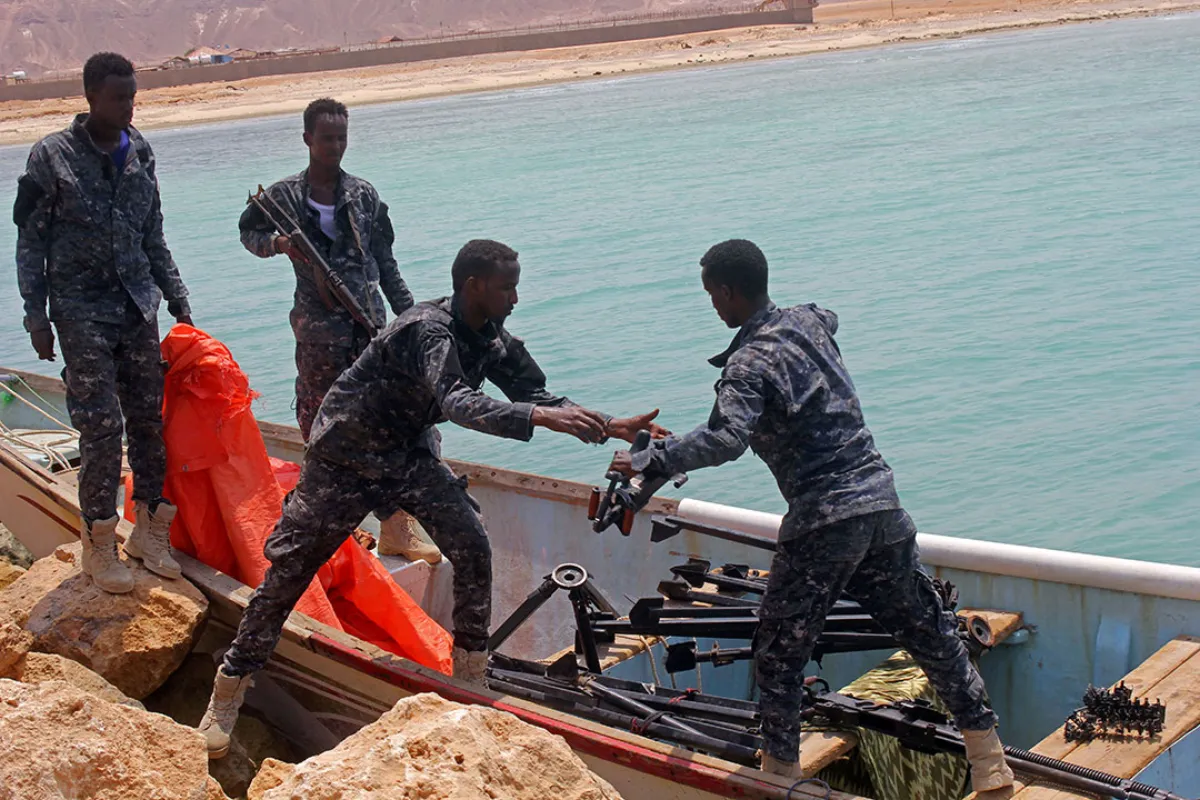
Khaled al-Adel is also coordinating with terrorist organization leaders in Somalia to transfer weapons, explosives manufacturing materials, manufacturing experts, and training. Additionally, he is involved in transporting and smuggling individuals returning from Syria to Yemen through Somalia. He also played a significant role in facilitating Khalid Batarfi's rise to the leadership of AQAP after the death of Qasim al-Rimi, despite strong objections from many authorized leaders to the Emir's selection.
After Khalid Batarfi took over the leadership of AQAP, Khalid al-Adel exploited the targeting of al-Rimi to get rid of some opposition leaders within the organization in Iran. He pushed the security wing of the organization, led by Ibrahim al-Banna, to accuse a number of senior leaders in AQAP of being behind the targeting of al-Rimi. They were arrested and transferred to one of the organization's hideouts in Hadramout and referred to the judicial side of the organization, led by Abdullah al-Mubarak (the organization's religious judge), who proceeded to hold their trial and issue a death sentence for a group of key leaders who opposed the growing influence of Saif al-Adel within the AQAP.
Some of the key leaders who were executed in relation to al-Rimi's assassination are:
Saeed Shaqrah - State official;
Fayyadh al-Hadhrami - Senior leader; And
Ahmed bin Abdullah al-Zahrani, aka/ Abu Maryam al-Azdi - Senior leader - Saudi nationality.
These executions had led to the defection of many leaders and members from AQAP and the formation of a new organization called "Ansar Al-Tawhid", led by Abu Omar al-Nahdi. They settled in Marib and Hadramout for two years, but they did not engage in any activities during this period.
Possible Candidate to Succeed Al-Zawahiri
In late 2022, Saif al-Adel emerged as the leading candidate to assume leadership of the global organization of al-Qaeda, succeeding al-Zawahiri. In order to achieve this, Khalid al-Adel worked on forming a team of leaders, who conducted movements between the provinces of Marib, Hadramawt, and Shabwah, holding meetings with the leaders with the aim of convincing them to pledge allegiance to Saif al-Adel, as the leader of al-Qaeda's global organization. However, this attempt was met with strong rejection from the Saudi terrorist leaders, particularly Hamad al-Tamimi, also known as Abu Abdulaziz al-Adnani, a member of the organization's Shura Council, in charge of the organization's committees and external operations. Al-Tamimi holds significant influence within the organization, and this rejection hindered the allegiance.
Iranian-Saudi Conflict
As a result of Saif al-Adel's failure to achieve his ambitions in controlling the leadership of al-Qaeda, a struggle for influence has erupted within the organization between the Iranian faction represented by Khalid al-Adel and the Saudi faction represented by Hamad al-Tamimi. Intelligence sources said that the US drone strikes carried out against AQAP since the beginning of this year, which resulted in the death of senior leaders, including Hamad al-Tamimi, Hassan al-Hadrami, and Abdulwahid al-Najdi, were orchestrated by leaders within al-Qaeda's wing affiliated with Saif Al-Adel.
The sources also said that after Hamad al-Tamimi refused to pledge allegiance to Saif al-Adel for the leadership in late 2022, the Iranian-affiliated leaders made the decision to assassinate him. Therefore, Khalid al-Adel and al-Nahdi monitored al-Tamimi by recruiting agents close to him and passing intel through an intelligence agency belonging to a regional country in order to eliminate him.
How Iran Controls Over Yemen's Al-Qaeda
In February, a US drone strike targeted Hamad Al-Tamimi, dealing a major blow to the dissenting faction's control over the organization in Yemen. This operation enabled the faction of Saif al-Adel and its backers in Iran to gain absolute control over AQAP, turning the organization into a mere tool in the hands of Tehran. Iran now directs the organization's activities and operations to target its enemies abroad. This is in contrast to Iran's previous use of al-Qaeda to execute the agenda of the Houthi movement in Yemen. This role has become apparent through recent movements by leaders in the security and intelligence apparatus affiliated with the Houthi movement. They have been coordinating with al-Qaeda leaders to form terrorist cells consisting of members (both Gulf nationals and Yemenis), training them, and deploying them to some Arab Gulf countries, especially Saudi Arabia, to carry out terrorist acts and assassinations.
Joint Terrorist Operations in Bab Al-Mandeb
On the other hand, for months, Khalid al-Adel has been holding meetings between the leaders of the AQAP and terrorist organizations in Somalia. These aim to coordinate and collaborate in carrying out operations targeting American and their allies interests in the region during the upcoming phase, as well as threatening the international shipping lane in the Bab al-Mandeb and the Gulf of Aden.
According to sources, Khalid al-Adel is leading efforts to merge the AQAP with terrorist organizations in Somalia under one entity, similar to the integration process carried out by late Yasir al-Wahishi in 2009, when he merged the organization's branch in Yemen with the branch in Saudi Arabia under the name Al-Qaeda in the Arabian Peninsula (AQAP).
Atrracting the terrorist "Tawheed Group"
According to intelligence sources, Khaled al-Adel has managed to attract Saeed Awad Bin Sha'ab - known as Abu Omar al-Nahdi - and convinced him to activate the activities of a group called the "Tawheed Group" and recruit hundreds of individuals. He also ensures the provision of support and funding for the activities and movements of al-Nahdi and his group. Additionally, he exerts significant efforts to reintegrate al-Nahdi and the dissident members of the group into the ranks of al-Qaeda.
Among the most prominent leaders close to Khaled al-Adel, whom he is currently meeting with:
Saeed Awad bin Sha'ab - aka/ Abu Omar al-Nahdi - Emir of "Tawheed Group" (dissident from al-Qaeda);
Akram Hussein al-Qulisi - aka/ Owais Al-Sana'ani - Emir of al-Qaeda in Marib Governorate);
Yasser al-Sana'ani - Deputy in charge of the security wing;
Samir Belkadi - aka/ Rayan al-Hadrami - the former Emir of al-Qaeda in Marib;
Basheer al-Iraqi - one of the most prominent military leaders of al-Qaeda in Marib - is currently working in charge of camps in Marib;
Abu Yusuf al-Kuwaiti - Khaled al-Adel's son-in-law;
Muhed al-Najdi - one of the leaders of the security wing;
Suhaib Al-Sana'ani - electronics engineer;
Miqdad al-Moradi; And
Jawad Alaibi
Traveling Between Iran and Yemen
According to the intelligence sources, Khaled al-Adel is known to be moving between areas where al-Qaeda leadership is present in the provinces of Hadramout, Shabwah, Marib, and Abyan, with most of his presence being in Marib and Hadramout. He has made several visits to Iran by sea from the coasts of Hadramout to Iranian coasts, accompanied by al-Qaeda leaders in Yemen during those visits.
*References
(1) https://www.britannica.com/topic/al-Qaeda
(2) https://www.france24.com/en/middle-east/20230216-us-says-iran-based-egyptian-saif-al-adel-is-new-al-qaeda-chief
(3) https://ict.org.il/wp-content/uploads/2022/11/Barak_Nominating-a-New-Al-Qaeda-Leader_2022_11_29-3.pdf