The United States has introduced tougher stipulations into a draft agreement with Iran, significantly complicating ongoing negotiations aimed at de-escalating military tensions. President Donald Trump's demand for stricter terms, particularly concerning Iran's nuclear program and maritime security in the Strait of Hormuz, signals Washington's insistence on enhanced guarantees despite recent positive diplomatic overtures.
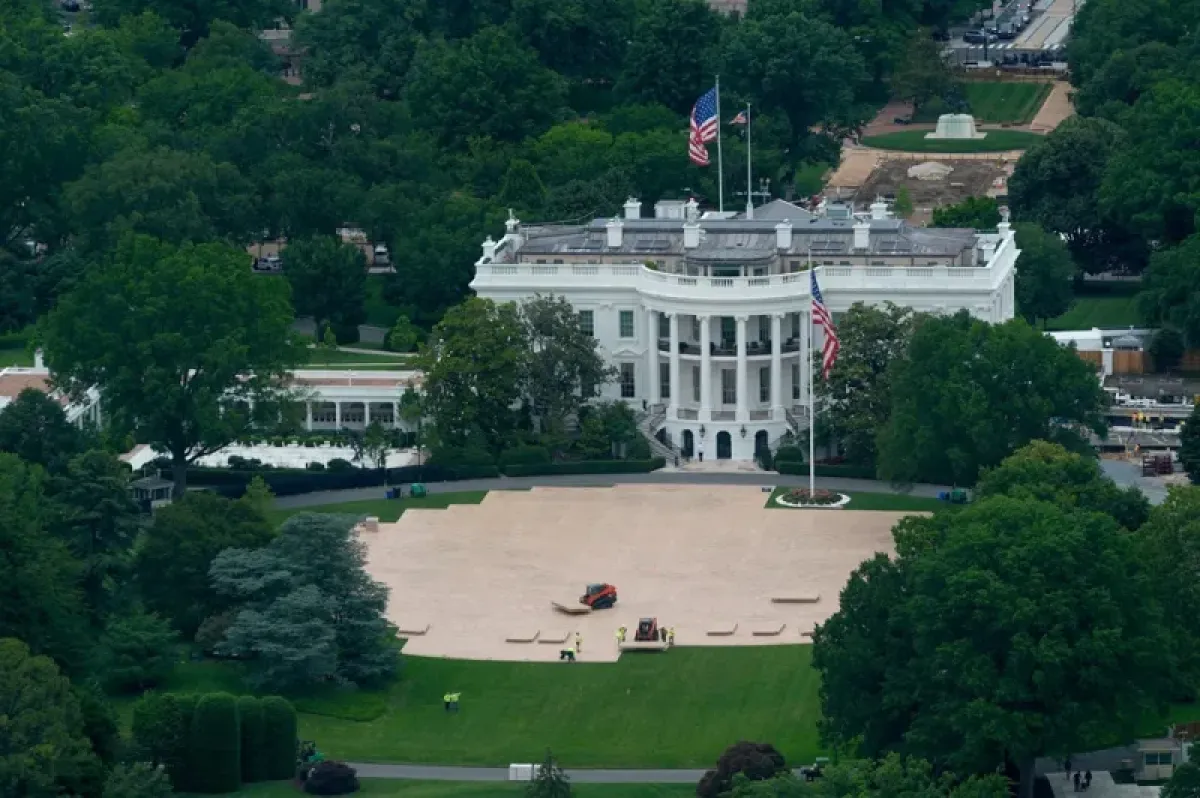
According to Axios, President Trump convened a meeting at the White House with senior national security officials to review the draft agreement. He reportedly directed a revision of several clauses that had previously seen initial consensus between the American and Iranian delegations. The President is seeking more stringent controls on Iran's nuclear materials and detailed information on oversight mechanisms for its enriched uranium stockpile.
US officials indicated that while the President remains keen on finalizing an agreement swiftly, he will not proceed without clearer and more precise assurances. This includes preventing any future reactivation of Iran's nuclear program or exploitation of loopholes that could facilitate the development of military-capable technology.
The revisions also encompass provisions related to the Strait of Hormuz, a critical global energy transit route. Trump has requested a redrafting of understandings concerning this vital waterway, which has been a focal point of recent tensions, including Iran's previous threats to close it and subsequent US naval actions.
The New York Times reported that the US administration has already submitted an amended draft to Iran containing more stringent conditions than those discussed previously. This move suggests the White House aims to leverage perceived recent military and political gains to secure a deal that aligns with its long-term strategic objectives regarding Iran. President Trump has also expressed reservations about releasing frozen Iranian assets, emphasizing that no financial commitments will be made until Iran fully implements the terms of any agreement. He has also voiced dissatisfaction with Iran's slow responses during indirect talks mediated by regional partners, including Pakistan.
President Trump stated in comments to Fox News that Iran has pledged not to acquire nuclear weapons through manufacturing or purchase. He clarified that initial assurances against manufacturing were followed by further confirmation that Iran would not seek to purchase them either. Trump stressed that his administration is not operating under time pressure, stating, "We are not in a hurry. Slowly but surely, we are getting what we want, and if we don't get what we want, things will go in a different direction." These remarks indicate a strategic intent to maintain military and economic leverage throughout the negotiation process.
Conversely, Iran's Parliament Speaker and chief negotiator, Mohammad Bagher Ghalibaf, asserted that Tehran will not accept any agreement that does not guarantee "the rights of the Iranian people." This implies Iran's continued demand for sanctions relief, the release of frozen funds, and an end to military and economic pressures. Iran seeks the release of billions of dollars in assets held in the United States; however, Trump announced that any financial transfers are on hold "until further notice," highlighting a significant gap between the two nations' positions.
Despite ongoing diplomatic engagement, military developments continue to influence the negotiations. US Secretary of Defense Pete Hegseth confirmed the possibility of renewed military operations against Iran should current talks fail. Reports indicate that US forces disabled a vessel bound for an Iranian port, while Iranian media cited continued US restrictions on Iranian commercial shipping. The Iranian Revolutionary Guard Corps announced the downing of a US drone allegedly preparing for "hostile operations" within Iranian territorial waters, underscoring the fragile security situation and the potential for escalation.
Observers identify three primary obstacles to a final agreement: Iran's nuclear program, the future of navigation in the Strait of Hormuz, and the issue of frozen Iranian financial assets. Washington seeks stringent guarantees against Iran's nuclear ambitions, while Tehran prioritizes tangible economic gains and sanctions relief. The Strait of Hormuz remains a particularly sensitive issue due to its direct impact on global energy security and major powers' strategic interests. With the commencement of new negotiations following President Trump's requested amendments, the prospects for an agreement remain, albeit contingent on the parties' ability to bridge deep-seated disagreements that extend beyond technical formulations to broader regional power dynamics and the future of US-Iran relations.