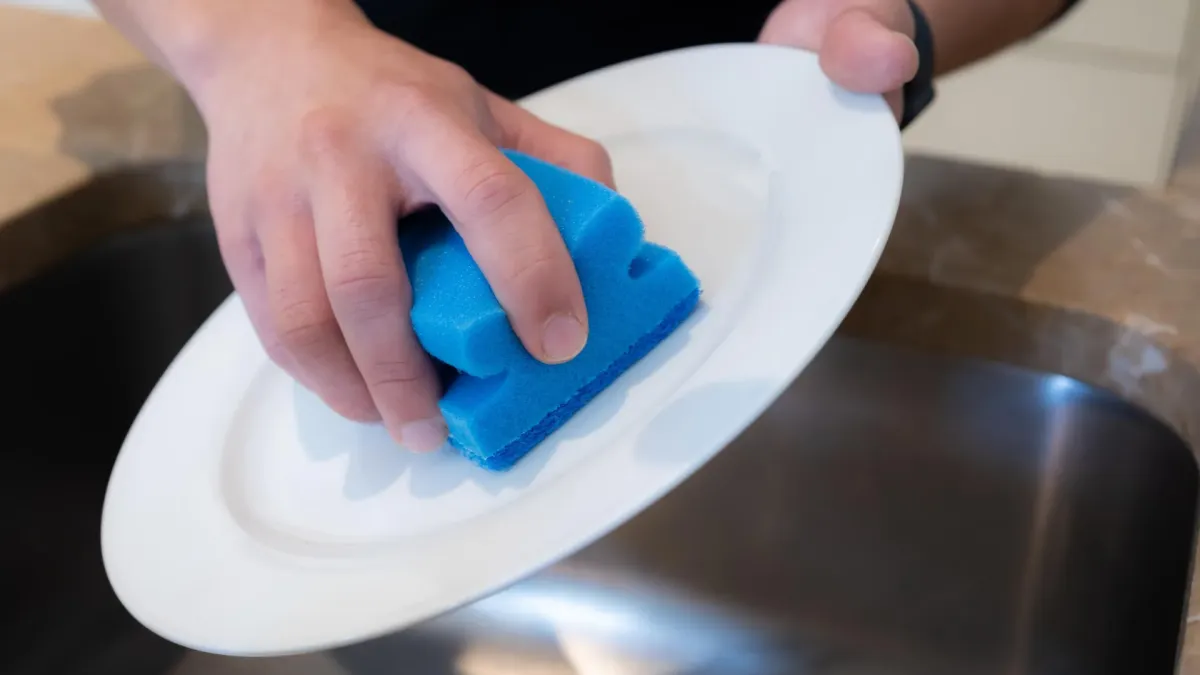
Your kitchen sponge might be a sneaky source of microplastic pollution. A new study reveals that everyday dishwashing sends tiny plastic particles into our environment, but there's a surprising bigger culprit when it comes to eco-impact.
Researchers from the University of Bonn teamed up with citizen scientists to measure just how much plastic sheds from sponges during typical use. They combined lab experiments using a gadget called "SpongeBot" with real-world data from households in Germany and North America. Volunteers used different types of sponges in their daily routines, and scientists tracked material loss over time.
The findings are clear: every sponge tested released microplastics. Depending on the sponge's material, individuals could be contributing anywhere from 0.68 to 4.21 grams of microplastics annually. Sponges with less plastic content naturally shed fewer particles. The citizen science aspect was key, ensuring the data reflected actual dishwashing habits.
While the numbers sound concerning, especially when scaled up to entire countries (potentially hundreds of tons of microplastics annually from one sponge type alone), the study's life cycle assessment pointed to a much larger environmental issue: water consumption. Washing dishes by hand racks up about 85 to 97 percent of its total environmental impact from the water used, dwarfing the contribution from microplastic emissions.
So, while reducing microplastic shedding is a good goal (opt for sponges with lower plastic content!), the most significant way consumers can lighten their environmental footprint when cleaning dishes is by conserving water. The research, published in Environmental Advances, highlights that smart choices about water usage have a far greater positive impact on the planet than solely focusing on the sponge material itself.