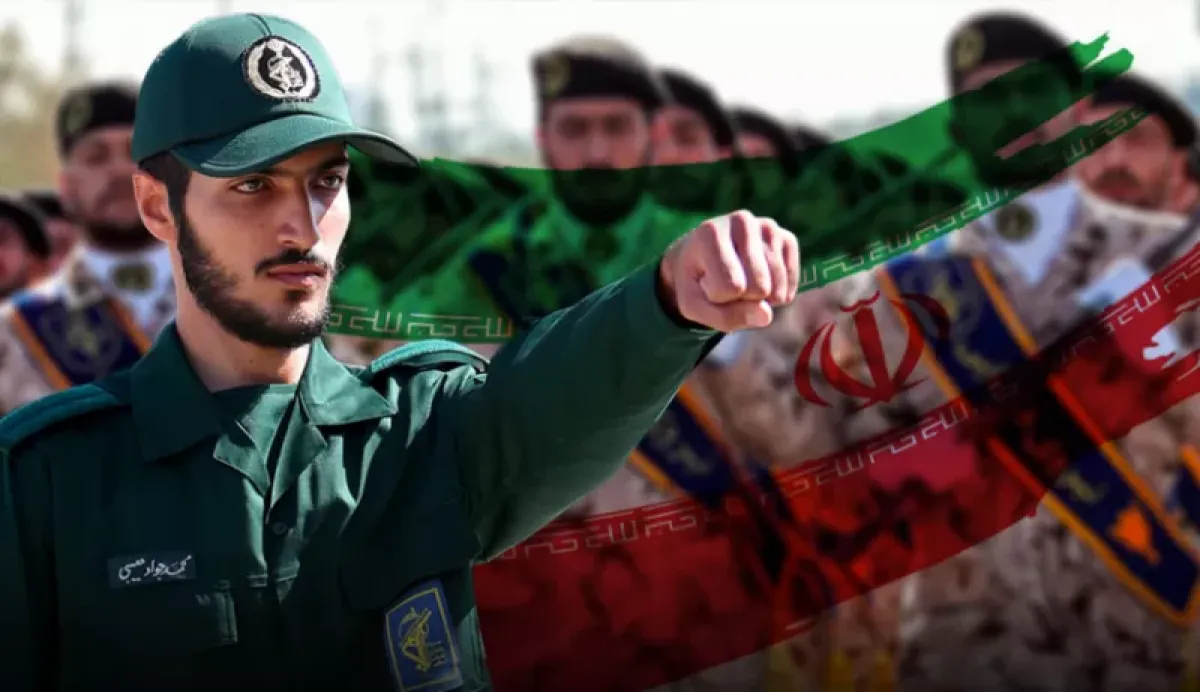
A recent analysis published by the Middle East Forum questions the United Kingdom's persistent refusal to designate Iran's Islamic Revolutionary Guard Corps (IRGC) as a terrorist organization, despite mounting evidence of its destabilizing activities in the Middle East and threats to international navigation.
The analysis, authored by Iranian affairs specialist Botkin Azarmhar, critiques what it describes as a duality in British policy. Political parties often adopt hardline stances against the IRGC while in opposition, but seemingly abandon these commitments upon gaining power.
The report notes that nearly all major British political parties have included a ban on the IRGC in their recent election manifestos, presenting themselves to voters as more stringent in confronting Iranian threats. However, these pledges have reportedly remained unfulfilled once in government.
The author highlights the Labour Party's approach under Keir Starmer as a clear example of this political paradox. The party, which frequently criticized the Conservative government's hesitancy to label the IRGC a terrorist entity, has reportedly continued the same policy trajectory after coming to power.
This perceived inconsistency raises fundamental questions about the influence of economic interests and diplomatic considerations on national security decisions, particularly concerning Iran. During the Conservative government's tenure, the Foreign Office justified its stance by stating that the IRGC's significant control over Iran's economy would complicate economic and diplomatic dealings with Tehran if the group were designated a terrorist organization.
However, the analysis argues that this justification reveals a deeper dilemma: the prioritization of economic and diplomatic interests over security considerations, leading to a hesitant British policy compared to its Western allies. Azarmhar asserts that this traditional British rationale has weakened significantly following substantial shifts in European attitudes in 2026.
In February, the European Union made the definitive decision to include the IRGC within its counter-terrorism sanctions framework. This development effectively nullified the argument that Britain could not act unilaterally for fear of economic disadvantage compared to other European nations.
The analysis points out that Brussels' decision was not merely symbolic but a practical legal and security measure, enabling European countries to pursue IRGC-related activities within the continent. Months after the designation, Europol led an operation across 19 countries, dismantling an electronic network linked to the IRGC and removing over 14,000 accounts and platforms used for propaganda and influence expansion.
The author contends that this operation provided tangible evidence of the importance of legal designation, granting European security agencies broader powers to act against Tehran-linked networks. The ongoing debate in Britain, the analysis suggests, overlooks the reality that the IRGC has evolved into a transnational network managing political, security, intelligence, and financial operations globally, extending beyond its role as a military force within Iran.
The IRGC is identified as the primary overseer of Iran's regional proxy network, including militias in Yemen, Iraq, Lebanon, and Syria, which have been used to target Western interests and threaten international trade and energy routes. The continuation of London's separation of these activities from the issue of terrorist designation raises questions about the seriousness of Britain's approach to Iran-related threats.
The analysis starkly describes the United Kingdom as having become the "weakest link" in the Western counter-terrorism framework. It warns that Tehran has become aware of a chronic British hesitation in addressing IRGC activities, granting it greater maneuverability compared to other European nations that have adopted more stringent policies. This is supported by statements from former French Military Intelligence Director Christophe Gomart, who reportedly considered London a significant hub for Islamist extremist networks, alongside other countries often linked to discussions of ideological and financial influence by militant groups.
Despite the gravity of these statements, the analysis notes their limited discussion in the British media, reflecting, according to the author, a state of disregard or hesitation in confronting sensitive issues related to internal security and foreign relations. The continued refusal by the UK to designate the IRGC carries implications beyond its bilateral relationship with Iran, sending a contradictory message to Western allies moving towards tighter controls on Tehran's activities.
While Western governments emphasize the need to counter transnational threats and cut off funding and propaganda for Iran-linked groups, London appears to maintain a political and legal distance that prevents it from taking steps similar to Brussels. The author concludes that the question is no longer about the existence of legal or political justifications for designation, but rather about the persistent absence of political will to make the decision. The longer Britain hesitates, the more convinced Tehran becomes that it can exploit this loophole, potentially weakening collective Western efforts to counter Iranian influence and transforming the United Kingdom into an exception within a Western front that is ostensibly unified against the IRGC and its transnational activities.