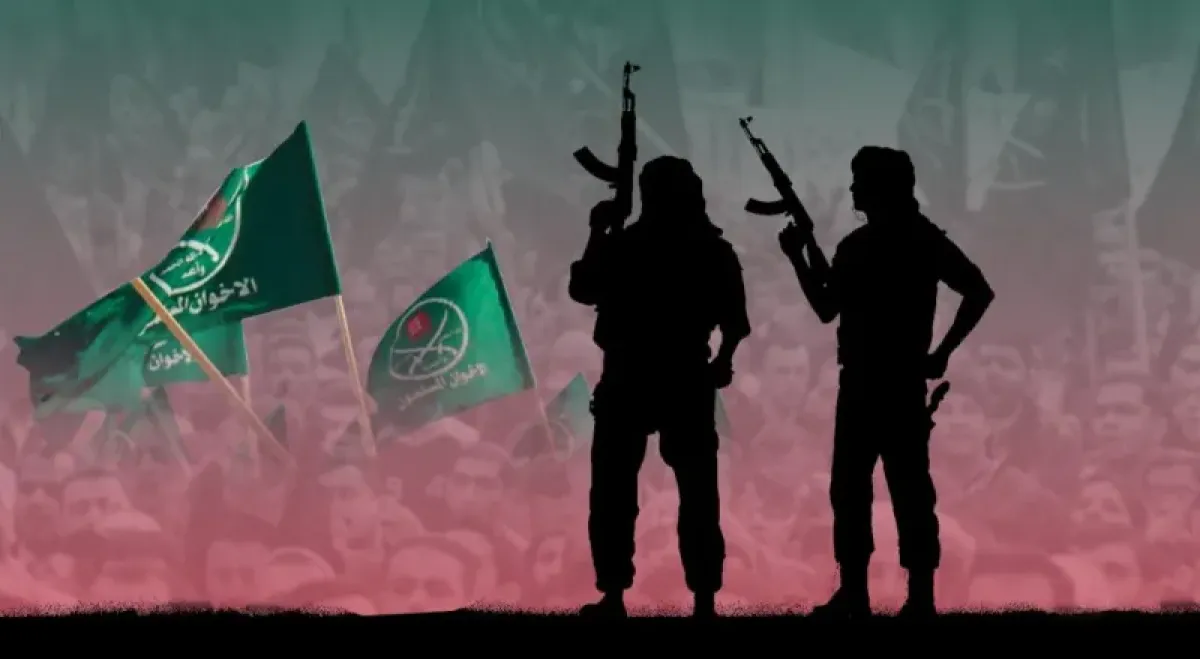
Over nearly a century, the Muslim Brotherhood has remained one of the most controversial Islamic movements globally. While presenting itself as a religious and political entity seeking societal and governmental reform based on Islamic principles, researchers and experts in extremist movements contend that the group has, directly or indirectly, fostered an intellectual and organizational environment that contributed to the emergence of some of the world's most dangerous organizations in recent decades.
As waves of terrorism have increasingly impacted various regions across the Middle East, Africa, Asia, and Europe, the debate surrounding the relationship between Brotherhood ideology and the organizations that have evolved from or been influenced by its ideas, most notably Al-Qaeda and ISIS, has been reignited. This also extends to numerous armed groups that have adopted rhetoric centered on excommunication, exclusion, and the use of violence to achieve political and doctrinal objectives.
Specialists believe that understanding modern terrorism necessitates examining the ideological and organizational roots that laid the groundwork for these groups. Extremist organizations have not appeared in isolation from prior intellectual and organizational contexts but rather are the result of a long trajectory of schisms and ideological shifts within Islamic movements since the early 20th century.
Ali Baker, an expert on extremist groups at the Trends Research & Advisory center, stated that extremist thought is not new to human history, but recent decades have witnessed an unprecedented expansion and reproduction of its spread through diverse organizations with varying names and methods. He explained in an analysis published by "Sky News Arabia" that a distinct characteristic of the post-Muslim Brotherhood era is the phenomenon of "extremist fragmentation," where currents and groups emerged from within the Brotherhood, deeming it no longer representative of the Islamic project as they envisioned it. This led to the formation of more hardline organizations with more radical perspectives.
Baker added that each new organization sought to prove its superior adherence to the core idea and its greater capacity to achieve its objectives, resulting in a continuous competitive dynamic among extremist groups in recruitment, expansion, and the execution of armed operations. Researchers point to a long history of ideological and organizational schisms within Islamic movements, with numerous groups diverging from the Muslim Brotherhood or being influenced by its literature before adopting more violent paths.
In the 1960s and 1970s, groups emerged espousing more hardline ideologies, drawing on concepts of divine sovereignty, excommunication, and rejection of existing political systems, which later evolved into transnational armed movements. The Afghan war against the Soviet Union in the 1980s provided an opportunity for these ideas to spread, leading to the formation of international jihadist networks composed of fighters from various countries, ultimately paving the way for Al-Qaeda as the first global organization with a transnational agenda.
The early 2000s marked a more complex phase for extremist movements with the rise of ISIS, which exploited security vacuums and regional conflicts to establish an armed entity, declaring a "Caliphate" and attracting thousands of fighters worldwide. Baker noted that the most dangerous aspect of extremist groups is their persistent ability to reconstitute themselves despite military and security setbacks. He explained that the fall of an organization or the elimination of its leaders does not necessarily signify the end of its underlying ideology, as new groups often emerge with the same ideas but under different names and with more sophisticated methods.
He further highlighted that extremist organizations share a belief in being the sole legitimate representative of Islam and possessing absolute truth, compelling them to excommunicate or declare apostates those who disagree, whether governments, societies, or other Islamist groups. This conviction, he stated, is a primary driver of violence, justifying the use of force against anyone perceived as an opponent or enemy.
Experts emphasize that extremist groups thrive not in stable environments but in countries plagued by war, division, and weak institutions. The greater the state's diminished capacity to provide security and essential services, the more scope armed organizations have to infiltrate societies and recruit individuals. In many conflict zones, these groups have succeeded in presenting themselves as alternatives to official authority by offering protection, services, or financial support, capitalizing on political and security vacuums. Sectarian and ethnic conflicts also play a crucial role in bolstering the influence of these groups, as they exploit societal divisions to recruit followers and justify armed actions under slogans of defending identity or protecting social components.
Baker cited the experience of Jama'at Nusrat al-Islam wa al-Muslimeen in the Sahel region as a clear example of how some local movements transform into groups affiliated with international terrorist organizations. He pointed out that certain tribal and ethnic groups, initially with local grievances, found that joining Al-Qaeda or adopting jihadist rhetoric provided greater funding and enhanced capacity for mobilization and expansion. He added that tribal and familial ties offer these groups significant operational advantages, including safe havens, secure supply lines, and facilitated recruitment.
In another aspect of his analysis, Baker posits that the Muslim Brotherhood's most significant impact extends beyond ideology to organizational structure. He explained that most extremist organizations have replicated the hierarchical organizational structure of the Brotherhood, characterized by centralized decision-making and absolute obedience to leadership. He noted that the concept of the "Guide" within the Brotherhood evolved into the "Emir" within Al-Qaeda and "Amir al-Mu'minin" (Commander of the Faithful) within the Taliban, while the fundamental principle of granting leadership broad religious and organizational authority remained. This model, he indicated, links organizational adherence with religious duty, empowering leaders to exert significant control over followers and maintain organizational cohesion even under challenging circumstances.
Observers conclude that contemporary terrorism is not the result of a singular event or a circumstantial anomaly but rather a product of decades of accumulated ideological and organizational developments. This process began with the emergence of political Islamist movements and evolved through waves of schisms and radicalization, leading to a vast network of organizations that, despite differing names and slogans, share a common intellectual foundation based on exclusion, monopolization of truth, and the justification of violence as a means to achieve their objectives.