A year after a significant federal immigration raid at Ambiance Apparel in Los Angeles, many former workers continue to face profound economic instability, emotional trauma, and ongoing legal challenges. The June 6 raid, which saw the detention of over 40 workers, many from Indigenous Zapotec communities, has left lasting impacts on individuals and their families, prompting calls for state support and systemic change.
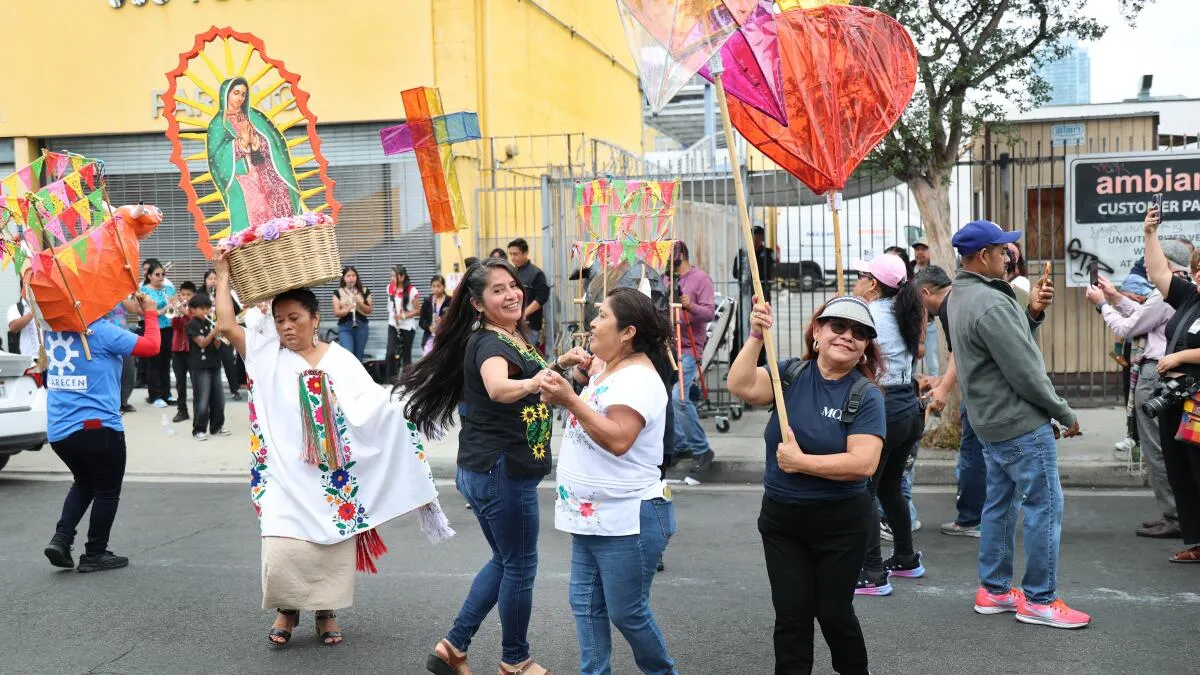
The anniversary of the raid was marked by a press conference outside the fashion company, where former detainees shared their experiences. Lazaro, a member of the newly formed Lucha Zapoteca, described the event as a "nightmare" and highlighted the family separations that occurred. Lucha Zapoteca was instrumental in raising over $300,000 and securing legal representation to free 11 individuals held at the Adelanto ICE Processing Center. Despite these efforts, many former workers remain deported, entangled in immigration proceedings, or dealing with the lingering emotional and financial consequences.
The father of four, who requested anonymity due to his pending immigration case, revealed that his two sons are undergoing therapy for trauma stemming from the raid. Unable to work, he relies on his older children to support the family, having recently borrowed money to cover rent and bills. "My hands are tied. I can’t really do anything for my family," he stated, expressing the unfair burden placed on his young children. Similarly, Yurien, daughter of a detained Ambiance worker, recounted the traumatic experience of witnessing her father's arrest, emphasizing the long-term emotional and mental toll on her family, including her younger brother with a disability.
Advocates, including the California Network for Immigrant Worker Justice (CNIWJ), are urging the state to establish a $500 million emergency relief fund for workers impacted by such raids. Veronica Alvarado of CNIWJ criticized the governor's focus on the rainy day fund, arguing that the immigration situation constitutes an immediate emergency requiring financial aid for affected families. She stressed that these communities contribute significantly to the economy and should not be left solely to family support systems.
According to the Department of Homeland Security, Ambiance Apparel came under scrutiny following a workplace audit initiated in February of the previous year, which found that 46% of its workforce was undocumented. Ambiance's legal representative maintained that the company adheres to all hiring laws. However, the raid resulted in the arrest of over 40 individuals, a figure Homeland Security did not confirm. David Huerta, president of SEIU California, who was arrested for obstruction during the operation and awaits trial, also shared his story of detention and trauma, describing his current situation as being "confined" and dependent on his children.
Despite being released on bond after three months, Huerta, like many others, faces the inability to work while his immigration case proceeds. His daughter has stepped into his role as the primary provider, a responsibility she undertakes willingly to support the family. His younger children are also receiving therapy to cope with the ongoing uncertainty. As many await immigration hearings, the sentiment of being in limbo persists, with fears of deportation and separation from family. Lucha Zapoteca vows to continue its advocacy for those still in detention, asserting that their resilience and fight for freedom will endure.