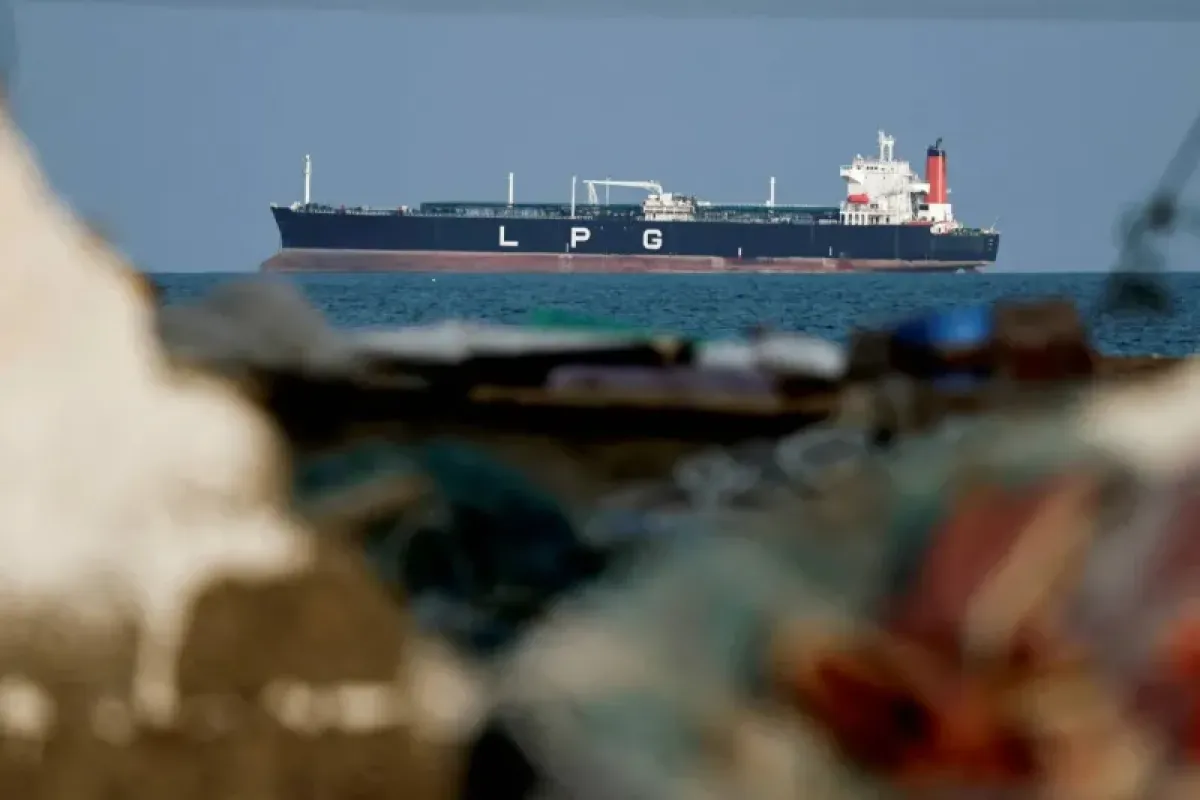
A recent US report highlights that the global economy is confronting a significant challenge of "weaponization" following the recent crisis in the Strait of Hormuz, revealing underlying vulnerabilities despite efforts toward energy diversification and supply chain restructuring.
The standoff in the Strait of Hormuz between the United States and Iran, which threatened to disrupt global maritime traffic, underscored the fragility of the international economic system. According to a report published by The Wall Street Journal, the crisis was not merely a threat to oil flow through a critical global chokepoint but exposed deeper structural flaws in the global economy that could take years to rectify.
Even with a fragile ceasefire in place, the repercussions of the Hormuz crisis have prompted governments and major corporations to reassess economic security and energy strategies. There are growing concerns about nations leveraging their geographical positions or control over vital resources as instruments of political and economic leverage. The report posits that the world has entered a new phase of international conflict characterized by the "weaponization of economic interdependence," where military power is no longer the sole decisive factor. Control over sea lanes, supply chains, and strategic raw materials has become a fundamental aspect of global influence.
Admiral Giuseppe Cavo Dragone, Supreme Allied Commander Europe of NATO, acknowledged this growing challenge, stating that the world faces an escalating threat of economic interdependence being used as a geopolitical weapon. He emphasized the need for unprecedented coordination among governments, security institutions, and the private sector to counter these increasing risks. The Strait of Hormuz, through which a substantial portion of the Gulf's oil and gas exports passes, serves as a clear example of how a nation with a strategic geographical location can influence global markets and threaten international economic stability. Iran's successful utilization of the strait as leverage against superior U.S. military power, despite the significant power disparity, demonstrates this principle effectively.
Beyond naval chokepoints, the concept of "economic weaponization" extends to other domains. The report points to China and the United States as prime examples. The U.S. has historically used the dollar's dominance in the global financial system to impose sanctions and isolate adversaries. Conversely, China has built influence through its control over rare earth mineral supply chains, crucial for advanced technology, semiconductors, jet engines, and clean energy. Western nations have expressed alarm over Beijing's potential to wield these resources as political and economic leverage, especially given the global reliance on modern technological industries. In response, the U.S., Japan, and European countries have invested billions in new mining and refining projects outside China to reduce dependence, though progress remains limited, reflecting the complexity of reshaping global supply chains.
The core problem, as detailed in the report, is that current global trade networks are the product of decades of economic integration and industrial specialization, not a few years. Gaurav Ganguly, Head of International Economics at Moody's Analytics, described disentangling and reshaping these linkages as an exceedingly complex process requiring substantial time and investment. The transition to more secure alternatives is not proceeding as swiftly as governments might desire. Japan, for instance, despite initiating efforts in 2010 to reduce its reliance on Chinese rare earth metals, still depends on China for approximately 60% of its needs, illustrating the challenges of restructuring global supply chains. Political economists note that the challenge extends beyond diversifying supply sources to avoiding new dependencies. Europe's shift away from Russian gas has led to increased reliance on U.S. natural gas supplies, while China continues to dominate strategic sectors like batteries, solar, and wind power.
Abraham Newman, a researcher, warns that efforts to eliminate one vulnerability may inadvertently create new ones susceptible to future exploitation, making the objective of building a more independent and resilient global economic system exceptionally difficult. The Wall Street Journal's report concludes that the Strait of Hormuz crisis was not an isolated incident but a revelation of deeper structural issues within the global economy. Despite ongoing efforts to redistribute supply chains and diversify energy and raw material sources, the world remains dependent on a limited number of maritime routes and strategic resources that can be weaponized at any moment. As geopolitical competition and conflicts escalate, creating a more resilient and independent global economy is a long-term endeavor demanding substantial investment and sustained political will, with tangible results likely years away.