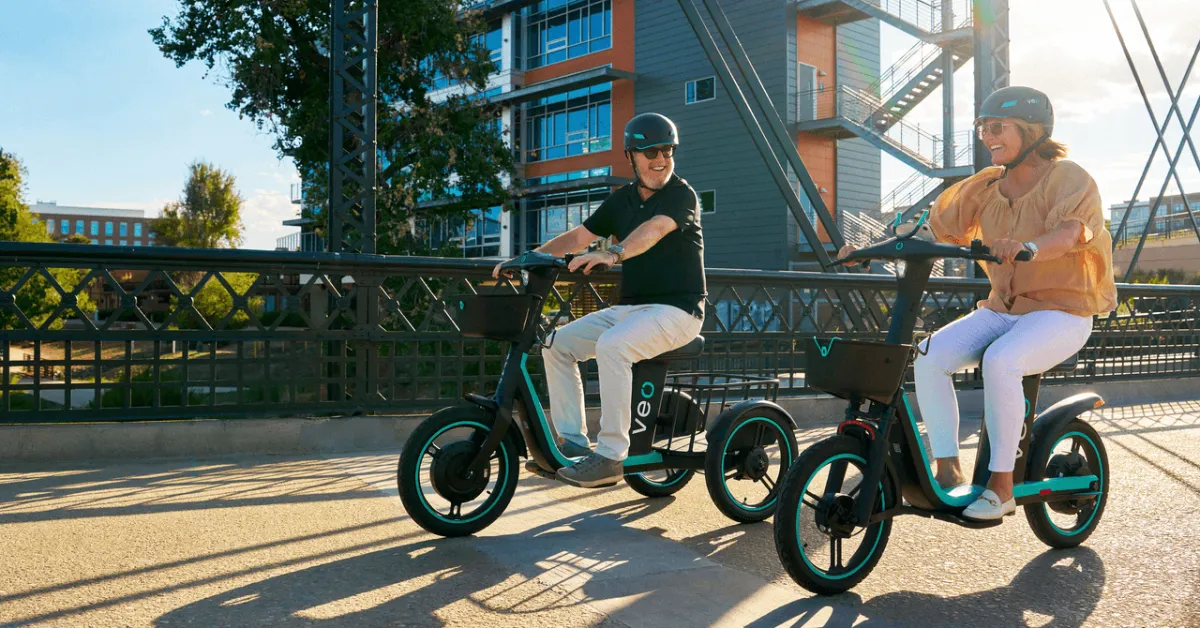
Shared micromobility is getting a new three-wheeled contender as Veo officially launches its electric tricycle, dubbed the Rover, aiming to boost accessibility and offer a novel ride option in cities.
Unveiled in Denver, where Veo holds an exclusive contract to supply the city's shared bikes and scooters, the Rover is designed for street use, fitting comfortably within standard bike lanes. It operates much like a typical shared e-scooter or bike: users unlock it via the Veo app and pay for their ride. The trike caps out at a slower 10 mph for safety, a deliberate choice by Veo, which also boasts a 45-mile range per charge and a rear cargo basket capable of holding up to 100 pounds.
The Rover is positioned as a key accessibility play for Veo, which is a smaller player in the micromobility market, operating in about 60 smaller US cities. Three-wheeled vehicles inherently offer better stability than two-wheeled options, addressing city requirements for accessible transport. This move mirrors efforts by competitors like Lime and Bird, which have also introduced accessible vehicle programs to cater to riders with specific needs.
Veo collaborated with disability advocates, including the Disability Mobility Initiative and Parkinson's Foundation, along with organizations like AARP, to ensure the Rover appealed to a broad user base, especially older adults. The self-balancing design means riders don't have to worry about the trike tipping over, simplifying the boarding process.
Beyond its physical design, the Rover incorporates AI-powered features, including a voice assistant for navigation and updates, and lidar technology to help prevent sidewalk riding. Veo also collects anonymized ride data to understand usage patterns and inform future expansion plans for the electric trikes in other markets.
While electric bikes are popular, and electric tricycles already exist from companies like Lectric, Veo is betting that the Rover's unique blend of accessibility, convenience, and potential fun will attract a wide range of riders. "Our goal is to make sure that no rider has to be treated differently in order to go through more barriers to enter the system," said Alexander Keating, Veo's vice president of policy and partnerships. The company is eager to see Denver's reception to gauge whether the trike will indeed become a hit for "everyone."