A new study suggests that ultraheavy atomic nuclei, rather than lighter particles like protons, could be the source of the universe's most energetic cosmic rays, potentially solving the decades-old mystery behind particles like the "Amaterasu particle."
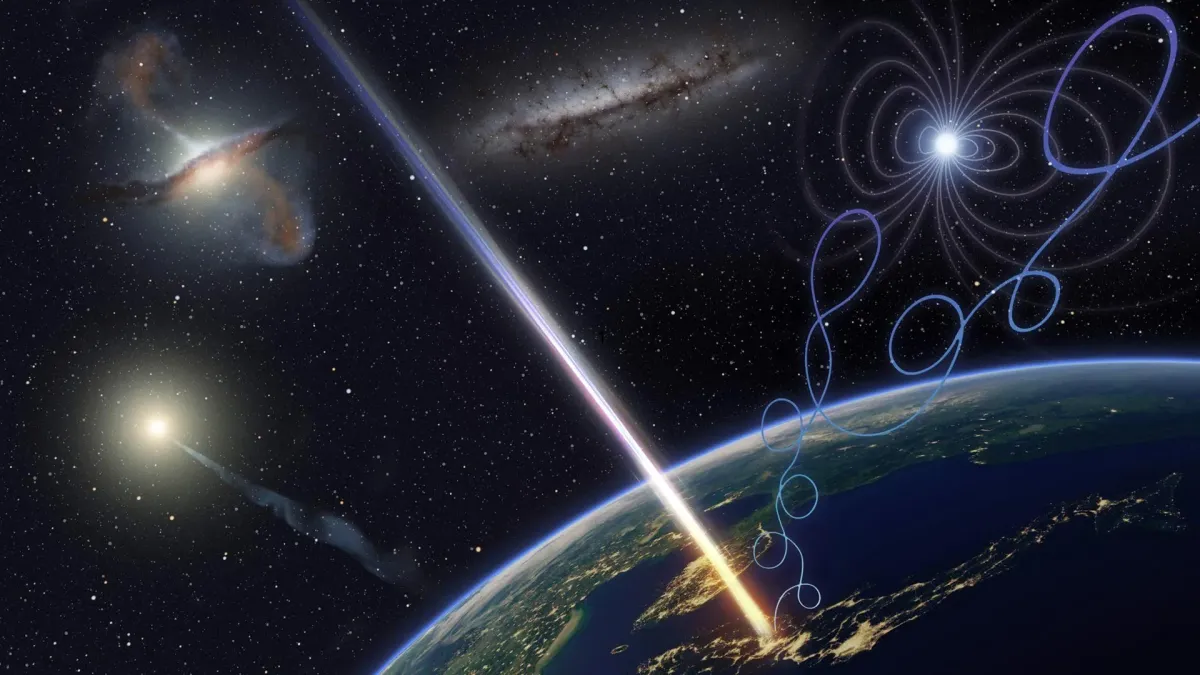
The Amaterasu particle, detected in 2021, slammed into Earth with an energy level comparable to a fast-moving tennis ball, making it one of the most powerful cosmic events ever observed. Its origin has baffled scientists, especially since its trajectory points to a seemingly empty region of space, leaving no obvious cosmic accelerator behind.
Research led by Penn State, published in Physical Review Letters, proposes that atomic nuclei heavier than iron might be responsible. These ultraheavy nuclei could lose energy more slowly as they traverse vast intergalactic distances compared to lighter particles. This resilience allows them to retain their extreme energy levels by the time they reach Earth.
"Ultrahigh-energy cosmic rays can only be accelerated by some of the most powerful sources in the universe," explained Kohta Murase, a lead researcher on the project. "When we detect individual cosmic-ray particles such as the Amaterasu particle here on Earth, we can often use their energies, arrival directions and expected magnetic deflections to infer their possible cosmic sources."
Computer simulations conducted by the team indicate that these heavier nuclei are better equipped to survive the journey. This finding could redefine how scientists search for the origins of these extreme particles, pointing towards cosmic phenomena like colliding neutron stars or collapsing massive stars as likely sources.
Future observatories like AugerPrime and the Global Cosmic Ray Observatory could help verify these theories by searching for predicted signatures. The research team, including collaborators from Japan and Virginia Tech, believes that understanding these violent cosmic events is key to pinpointing where these ultrahigh-energy cosmic rays are born.