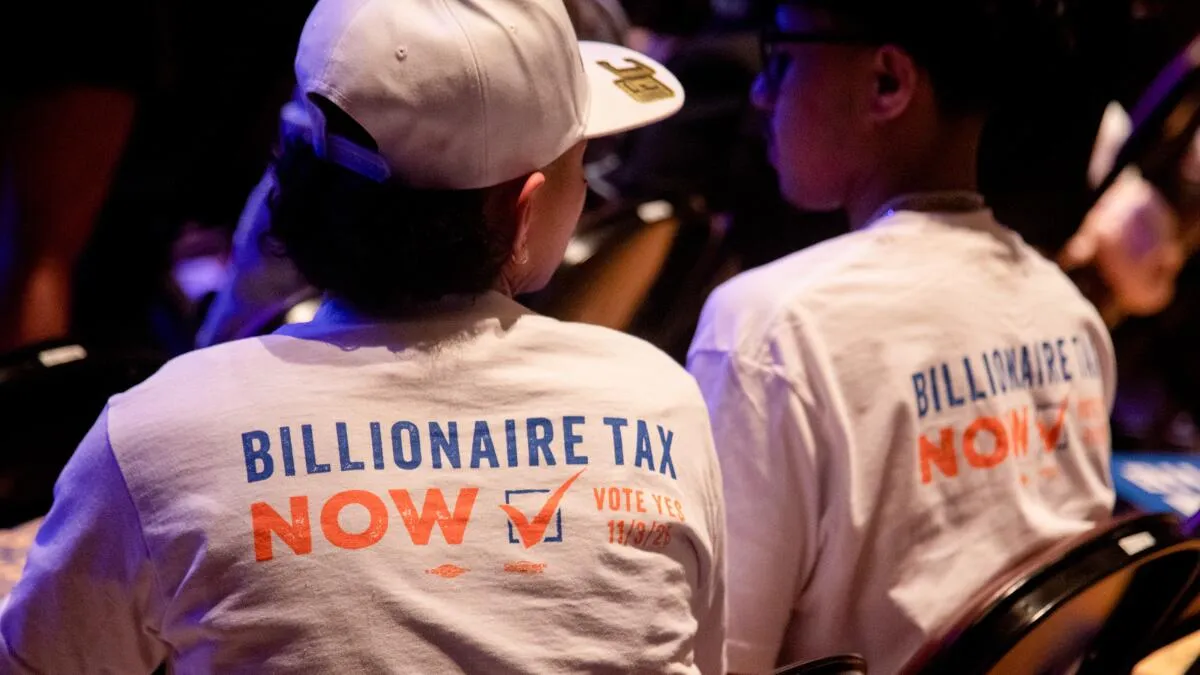
A contentious proposal to impose a tax on California's billionaires to fund healthcare has tentatively qualified for the November ballot, signaling a significant and potentially costly political battle over taxing the ultra-wealthy in the state.
Proponents argue the tax is essential to offset anticipated cuts in federal healthcare funding, enacted by President Trump's administration and the Republican-controlled Congress, which they contend will negatively impact millions of vulnerable Californians. Supporters submitted nearly 1.6 million signatures in April, more than double the threshold required for qualification. The California Secretary of State's office confirmed on Wednesday that sufficient valid signatures had been collected. The initiative will officially be placed on the November 3 ballot on June 25, provided proponents do not withdraw it prior to that date.
The proposed initiative would levy a one-time tax of up to 5% on individual taxpayers and trusts possessing assets exceeding $1 billion, with certain exemptions, notably for real estate. This tax could be paid over a five-year period. Ninety percent of the generated revenue would be allocated to healthcare programs, with the remaining funds directed toward food assistance and education initiatives. If approved by voters, the measure is projected to generate approximately $100 billion from the state's wealthiest residents.
Opponents contend that the proposal is an ineffective response to the long-term consequences of healthcare funding reductions and could adversely affect California's economy and budget. They point out that the state's budget is already substantially reliant on income taxes from high earners, making revenues susceptible to volatility from investment gains, executive bonuses, and stock offerings, and thus challenging to predict.
The proposal has ignited a sharp debate, highlighting the economic disparities within California. While the Service Employees International Union-United Healthcare Workers West and other supporters assert the tax will raise $100 billion to cover healthcare cuts and fund education and food assistance, they face formidable opposition from wealthy individuals. Tech executives and business leaders have voiced strong opposition, threatening to relocate to other states. Governor Gavin Newsom has publicly expressed concerns about potential capital flight, although figures such as U.S. Representative Ro Khanna and Senator Bernie Sanders have backed the initiative, advocating for the wealthy to contribute more to essential services.
Business executives have reportedly invested millions in organizations opposing the billionaire tax or advocating for alternative approaches to wealth inequality. According to data from the Secretary of State's website, tech executives and venture capitalists have contributed approximately $118 million to a nonprofit named Building a Better California, with significant funding from Google co-founder Sergey Brin. Other executives from prominent companies have also made contributions. Conversely, PayPal and Palantir co-founder Peter Thiel has contributed $3 million to the California Business Roundtable, an organization opposing the tax, alongside a $1 million donation from former Google CEO Eric Schmidt.
A December letter from the state legislative analyst's office suggested that while California might collect tens of billions from a wealth tax, it could also experience a loss of other tax revenues. The office noted the difficulty in precisely estimating the revenue due to fluctuating stock prices and other factors impacting billionaire wealth. The ballot measure would affect California billionaires who were residents of the state as of January 1. Some wealthy individuals have publicly announced plans to move out of state, with venture capitalist David Sacks and Peter Thiel's firm announcing new offices in Texas and Miami, respectively, on December 31.