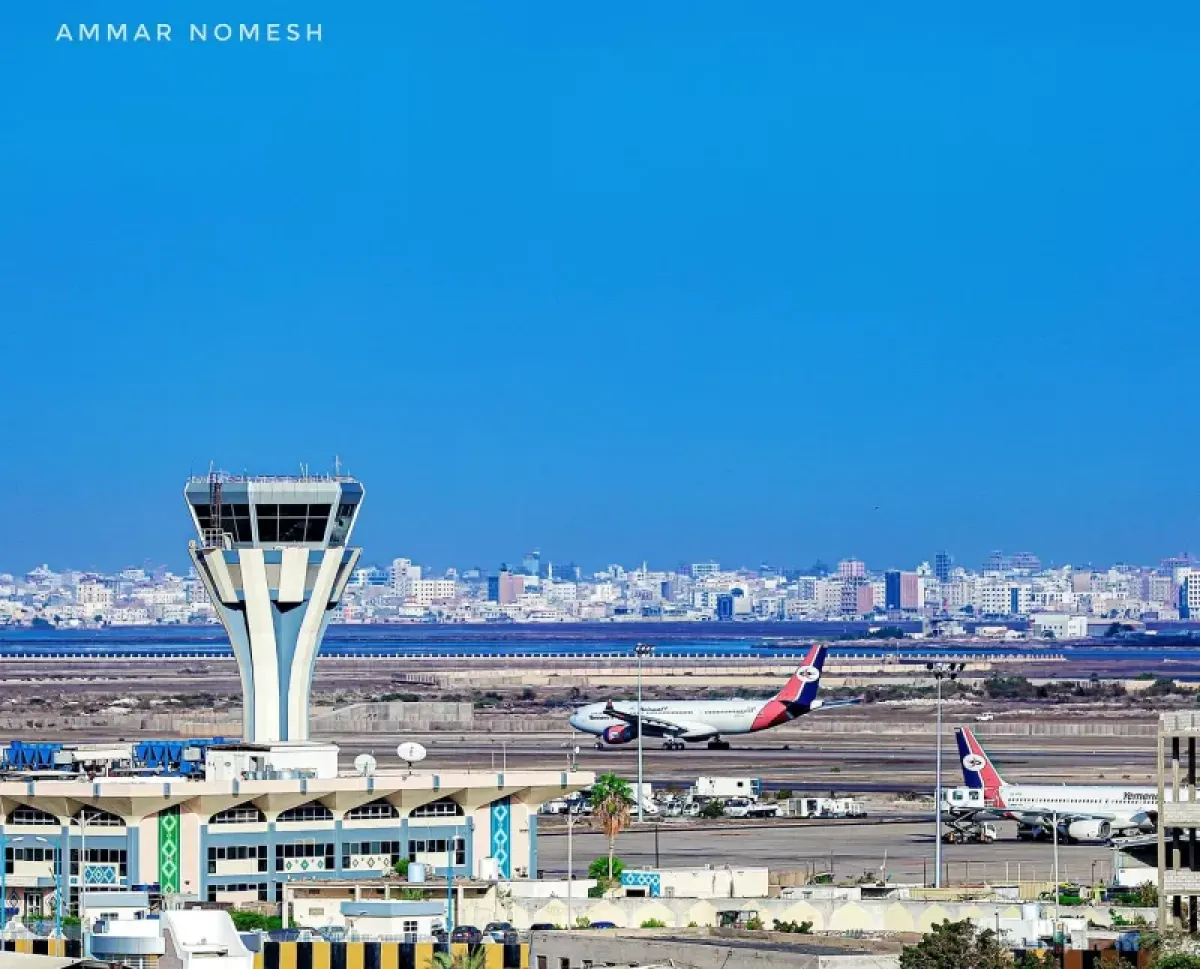
The Yemeni government has announced the reopening of Yemeni airspace to Arab, regional, and international airlines, urging carriers to resume flights to Aden International Airport. However, this initiative faces significant challenges that complicate the return of international carriers, as operational environments for global airlines are influenced by factors beyond airport readiness or official directives.
The primary obstacles include the prevailing political and security instability in the country, which directly impacts the decisions of airlines and international civil aviation authorities. These bodies rely on stringent criteria related to safety, security, and operational sustainability when evaluating potential destinations.
While Aden International Airport maintained minimal activity during the war years, international airlines consider the broader Yemeni landscape. Their assessments encompass the general security environment, potential risks to air traffic, and the stability of political and military conditions, not just the status of a single airport.
Insurance is a major hurdle, as Yemen remains classified as a high-risk area by global insurers. This dramatically increases insurance costs for aircraft, crews, and flights, diminishing the economic viability of regular air services and leading many companies to postpone their return or limit operations severely.
Recent regional security developments, including threats to maritime and air navigation, have heightened the caution among international airlines, making them more reserved about expanding into markets with unstable political or security challenges. Beyond security, commercial and economic considerations are crucial. Airlines seek stable markets with long-term profitability, while the Yemeni market grapples with economic downturns, reduced purchasing power, and uncertain future demand for international flights.
Rebuilding trust in the international aviation sector requires sustained effort, including enhancing air safety standards, upgrading airport infrastructure, modernizing navigation systems, and fostering cooperation with international aviation organizations. Providing practical security and operational guarantees is essential to instill confidence for airlines to return and invest in the Yemeni market.
Experts suggest that attracting airlines will depend not only on official pronouncements but on cultivating a stable environment that mitigates the risks perceived by these companies, which is the decisive factor in their decision-making process. The aspiration for international flight resumption is legitimate, aimed at alleviating citizen and expatriate hardship and boosting trade and investment. However, achieving this goal hinges on the state's capacity to address the security, political, and economic challenges that currently impede Yemen's return to the regional and international air transport map.
Ultimately, international trust, which is not gained through decrees alone but built on sustainable stability and practical assurances of a safe and viable operating environment, remains the most critical challenge in bridging the gap between the ambition for open skies and the realities on the ground.