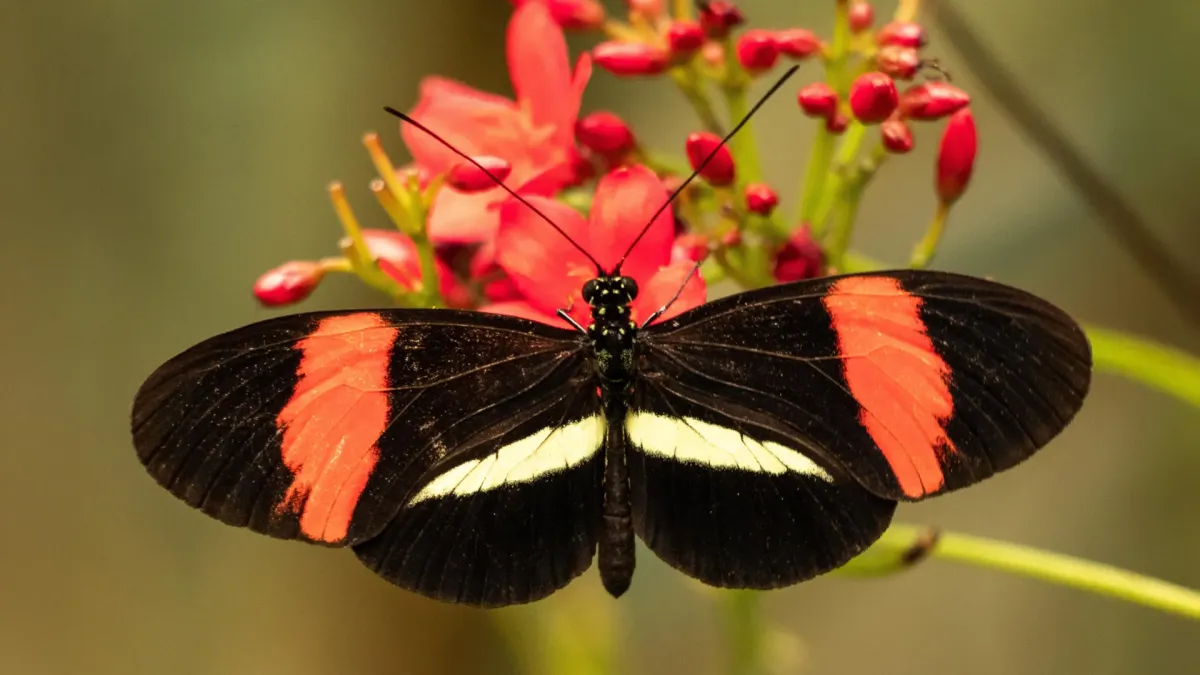
Tropical butterflies from the Heliconius tribe might have unlocked the secret to a longer, healthier life by naturally slowing down the aging process itself. A study led by the University of Bristol suggests these insects, found in Central and South American rainforests, are among the longest-lived butterflies ever recorded and could become a key model for understanding longevity.
While most butterflies only live for a few weeks as adults, some Heliconius species can survive up to three times longer, with certain individuals reaching nearly a year. For example, Heliconius hewitsoni has been documented living for 348 days, a stark contrast to its close relative Dione juno, which only lives about 14 days. This significant difference suggests the Heliconius tribe has developed a unique strategy for extending lifespan, potentially offering new insights into how aging is slowed in nature.
Further research revealed that at least one species, Heliconius hecale, shows minimal to no physical decline as it ages. Using a grip strength test, scientists found that older H. hecale butterflies performed as well as younger ones, with no apparent signs of deterioration. In comparison, a shorter-lived relative, Dryas iulia, exhibited clear age-related physical decline, indicating that Heliconius butterflies may largely bypass the typical physical breakdown associated with aging.
Scientists have long been aware of the unusual longevity of Heliconius butterflies, with their rare ability to feed on pollen as adults being a leading theory. While pollen feeding appears to contribute, removing it from the diet of H. hecale did not eliminate its lifespan advantage, suggesting both nutritional factors and evolutionary adaptations play a role.
The study highlights that long-lived species offer crucial insights into the mechanisms of healthy aging. Heliconius butterflies, with their extended lifespans and apparent slower aging, present a promising natural experiment for researchers. Dr. Jessica Foley, the study's lead author, stated, "By comparing long-lived Heliconius butterflies with their short-lived relatives, we have a natural evolutionary experiment that can help reveal how lifespan is extended, making them a highly promising new model for research into the biology of aging and longevity."