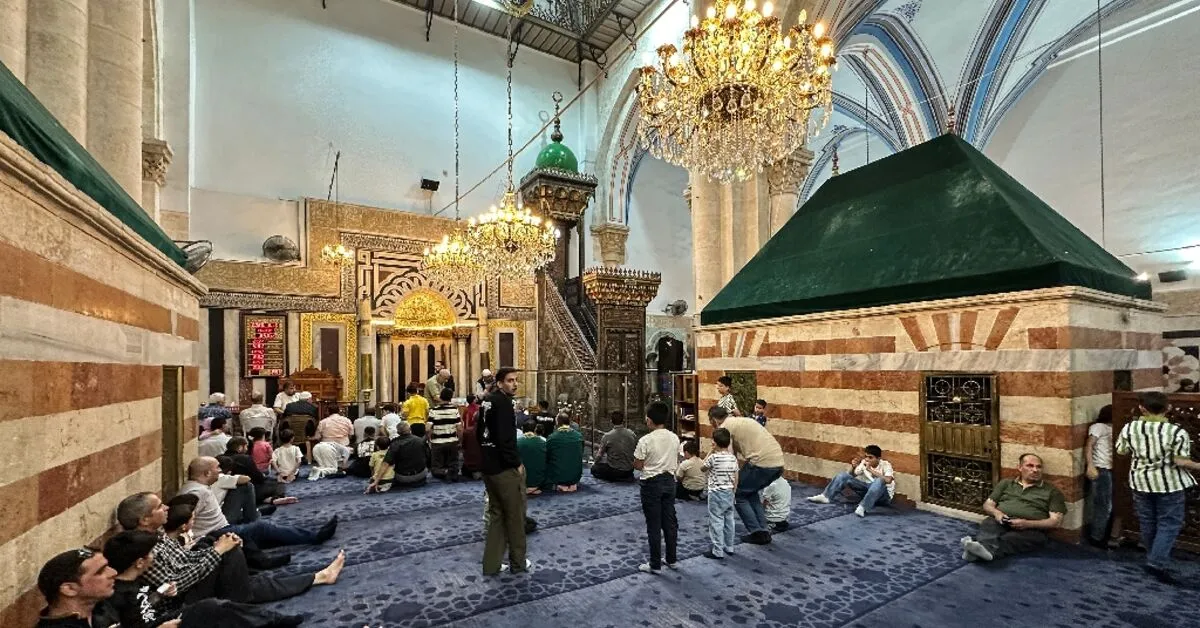
Hebron's Cave of the Patriarchs, a site holy to Jews, Muslims, and Christians, has become a focal point of the deep-seated conflict between Israeli settlers and Palestinians, particularly following a recent Israeli government decision to transfer administrative control of the shrine.
The shrine, known to Muslims as the Ibrahimi Mosque and believed by Jews to be the burial place of biblical figures, is situated in Hebron, the largest city in the Israeli-occupied West Bank. This religiously significant location underscores the competing claims that define the city, where approximately 40,000 Palestinians coexist with about 200 Israeli settler families under a complex system of separate movement and security controls.
Recent directives from Israeli Finance Minister Bezalel Smotrich indicate a significant shift in the shrine's administration, granting Israeli authorities enhanced powers over its planning and construction. This move has alarmed Palestinians, who view it as an escalation of Israeli control, while settlers have welcomed it. Nitzan, an Israeli settler from the nearby Kiryat Arba settlement, described the shrine as a site for "all of humanity" and a place where Israelis "visit our parents."
However, for many Palestinians, the shrine and its surrounding area symbolize the tightening grip of Israeli occupation. Activist Issa Amro described living in Hebron as akin to being in a "big jail," with checkpoints severely restricting movement and deterring visitors. The once vibrant Old City has seen many Palestinian shops close, leaving its thoroughfares largely deserted. Amro also reported instances of harassment by settlers and Israeli soldiers, including alleged attempts to intimidate him from his home.
The Oslo Agreements of the 1990s delineated areas of control in the West Bank. Hebron's H2 zone, encompassing the Cave of the Patriarchs, has been under direct Israeli military control since 1997, making it unique among Palestinian cities. The holy site itself is partitioned for Jewish and Muslim worship, with separate entrances. Historically, Jewish presence in Hebron dates back centuries, though it was disrupted by periods of violence and evacuations, most notably after 1929 and the 1936 Palestinian uprising. The site was also the scene of a massacre in 1994 when Israeli-American settler Baruch Goldstein killed 29 Palestinian worshippers.
Excluding East Jerusalem, over 500,000 Israelis reside in settlements across the West Bank, considered illegal under international law. In Hebron, some settler representatives advocate for full Israeli control, envisioning a scenario like a "Chinatown within the broader Israel." Conversely, Palestinians fear displacement and the erosion of their cultural and religious identity. Moatz Abu Snena, director of the Ibrahimi Mosque, characterized the recent administrative changes as a "gradual takeover" and a "Judaisation of the place." Amro stated that the situation constitutes "apartheid, more segregation, more theft, more ethnic cleansing," highlighting the disparity between Israeli civilian law and Palestinian military law in the city.