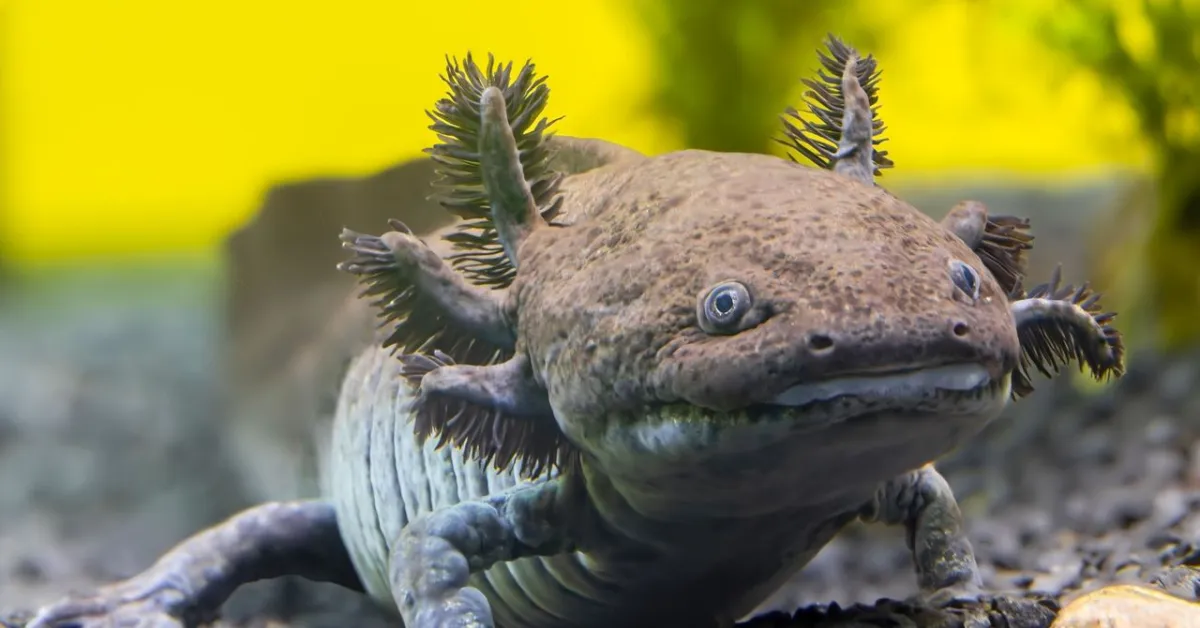
Scientists have officially identified a brand-new fossil species of axolotl in Mexico, marking a significant discovery for understanding the evolution of this iconic amphibian. Dubbed Ambystoma quetzalcoatli, it's the first fossil salamander species ever formally described in Mexico and the oldest known record of the Ambystoma genus in the country.
The fossils were found in Hidalgo, a region once home to a vast freshwater lake system. This ancient environment has been a treasure trove for fossils, revealing remnants of plants, insects, and fish, but amphibian fossils remained largely undescribed until now. Researchers from the National Autonomous University of Mexico (UNAM) meticulously examined over a dozen fossil specimens collected decades ago.
Using advanced techniques like CT scanning and detailed anatomical comparisons with living species, a research team led by Jorge Herrera Flores and María Patricia Velasco de León confirmed the fossils represented an entirely new species. Ambystoma quetzalcoatli differs from modern axolotls in several key anatomical features, including distinct skull and skeletal characteristics. Notably, it possessed 17 trunk vertebrae, whereas modern axolotls typically have 16 or fewer.
The study, published in Palaeontologia Electronica, suggests that Ambystoma quetzalcoatli, like many of its living relatives such as the Xochimilco axolotl, exhibited neoteny – retaining juvenile traits into adulthood. This life-history strategy is common in stable, isolated aquatic environments and indicates that this evolutionary path was established in Mexican axolotls millions of years ago during the Pliocene epoch.
This groundbreaking discovery reinforces the idea that the axolotl lineage boasts a much deeper evolutionary history in Mexico than previously understood. UNAM highlighted that the finding "shows that the axolotl lineage has a much older evolutionary history than previously thought, with a presence in Mexico dating back to the Pliocene and an early diversification linked to ancient lake systems." It underscores the profound, ancient roots of Mexico's rich biodiversity.