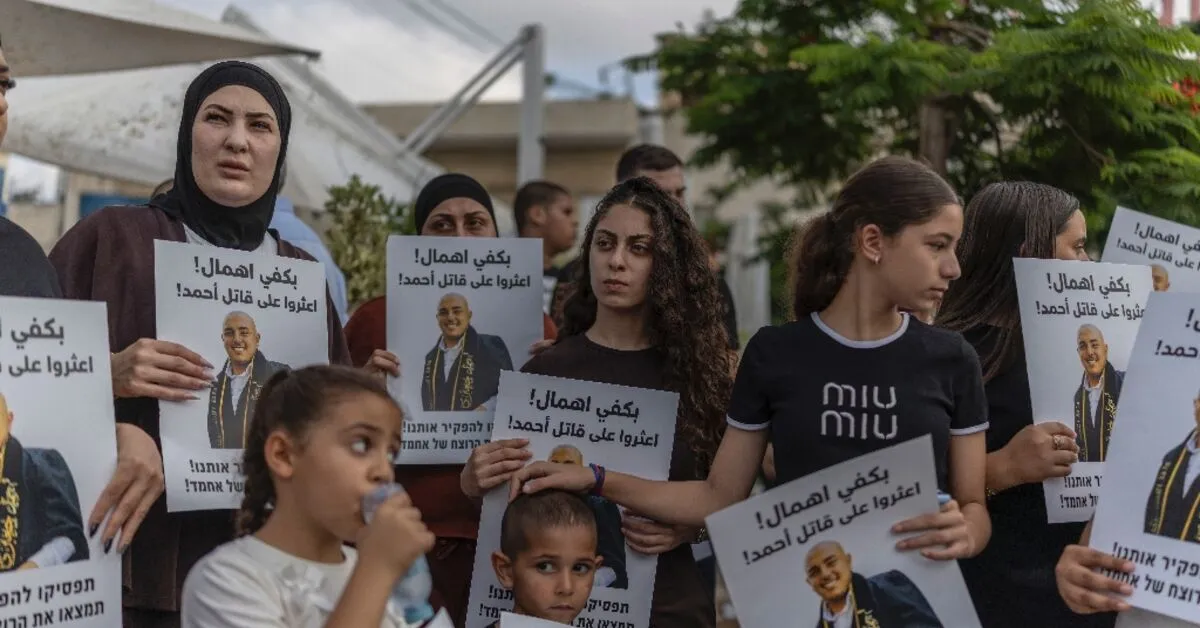
Scores of young people in Israel's Arab minority community are struggling with the devastating impact of escalating violent crime, predominantly fueled by criminal gangs, family feuds, easy access to firearms, and a perceived lack of police enforcement. This pervasive issue has led to profound grief and long-lasting consequences for families.
This year alone, over 140 Arab citizens of Israel have been killed in such violence, according to the Abraham Initiatives coexistence organization. This represents a 12 percent increase over the same period last year, and if the rate continues, the community will surpass the record 252 killings recorded in 2023. For young people, the loss of a parent due to this violence has profound effects. Hadar Kess, founder and CEO of Sunflowers, an organization supporting bereaved youth, noted that over 232 children lost a parent last year in Arab society due to crime and violence.
The consequences for children who lose a parent are significant. Kess stated that in Jewish Israeli society, such children are four times more likely to be arrested and 13 times more likely to drop out of school. In Arab society, the risk of falling into crime is considerably higher due to factors such as general poverty and the particularly high murder rate that can drive cycles of revenge.
Many within Israel's Arab minority, who constitute about 21 percent of the country's population, feel discriminated against by the Jewish majority and accuse Israeli authorities of inadequate investigation into the violence. Data from the Abraham Initiatives indicates that between January 1 and June 26, only 16 indictments were filed in killings, representing merely 12.3 percent of cases. The Israeli police, when contacted by AFP, stated they are treating all incidents with the utmost seriousness, have established specialized joint task forces, and are meeting with community leaders. They emphasized that complex criminal investigations require time and a coordinated national effort.
Recent incidents highlight the severity of the situation. Last Sunday, car bombings and gun attacks claimed the lives of five Arab-Israelis, attributed by authorities to a mix of criminal incidents and family disputes. This followed the fatal shooting of 17-year-old Ahmed Jabari days earlier while he was working at a supermarket in Jaffa. Community members expressed solidarity and sorrow at a vigil, with the chairman of Jaffa's Muslim Council, Abed Abu Shehadeh, stating that these events are perceived by some as part of Israeli policies toward the Arab community.
Organizations like AJEEC are working to foster a brighter future by promoting youth engagement and professional development, aiming to break the cycle of violence. Through youth programs, they encourage participants to become active community members and access opportunities like higher education. Bayan, a 19-year-old participant from Kafr Qasim, believes that circumstances and environment have led to violence and crime becoming a reality, but asserts, "this is not who we are." She links the violence to a sense of not belonging, rising living costs, and unemployment, questioning the value of studying in a country where one might face such a fate. Community organizers like Najeb Abu Bnaeh in the Negev report that individuals drawn into crime are becoming younger, with discussions shifting from age 16 to 14 or 13. He calls for state intervention, stating, "The state must make a decision that enough is enough. The violence must stop."