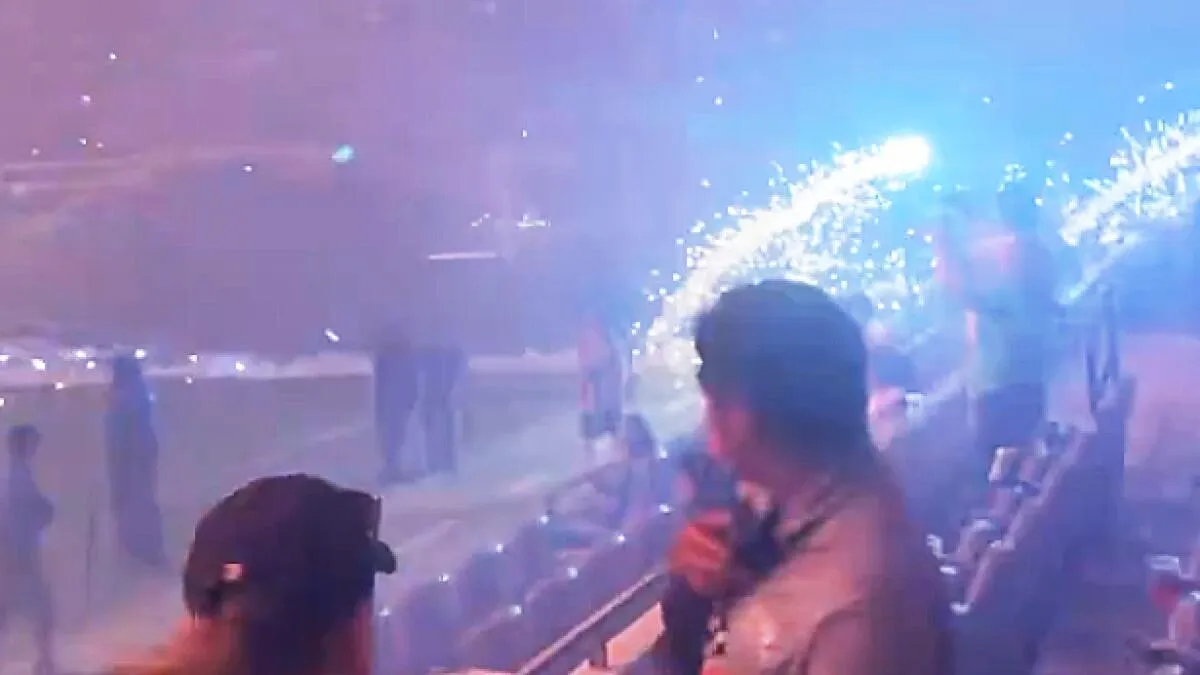
Southern California is experiencing a worsening air quality situation, exacerbated by intense heat following Fourth of July celebrations. The high-pressure system driving record temperatures is inhibiting the normal dispersal of particulate matter, trapping pollutants closer to the ground.
Meteorologist Carol Ciliberti of the National Weather Service explained that the current heatwave's associated high-pressure system is suppressing air pollution. This means that soot and particulate matter, including residual fallout from fireworks, are not dispersing as effectively, leading to elevated concentrations near the surface.
"If there’s a layer where there’s smoggy or particle stuff, then it’s suppressed closer to the ground, so that makes the situation worse," Ciliberti stated. Typically, a consistent onshore flow of air from the west or southwest pushes pollution away from the coast. However, weaker winds in the region are currently preventing this natural dispersal mechanism from functioning optimally.
"If we had stronger onshore flow, that would help to disperse some of the fine particle pollution," Ciliberti noted. "That’s not happening." While some minor fireworks celebrations might continue, their impact is expected to be significantly less than that of the main holiday.
The current air quality concerns are compounded by a recent large warehouse fire in Boyle Heights, which released substantial amounts of soot and smoke across Los Angeles County. This incident's pollution levels have been compared to those generated by major wildfires from the previous year. The South Coast Air Quality Management District had issued an alert for hazardous air quality due to fireworks-related soot and particulates, which concluded Sunday afternoon for several affected counties, including Los Angeles, Orange, Riverside, and San Bernardino.
Historically, July 4th and 5th are among the days with the poorest air quality in the region, according to the South Coast AQMD.