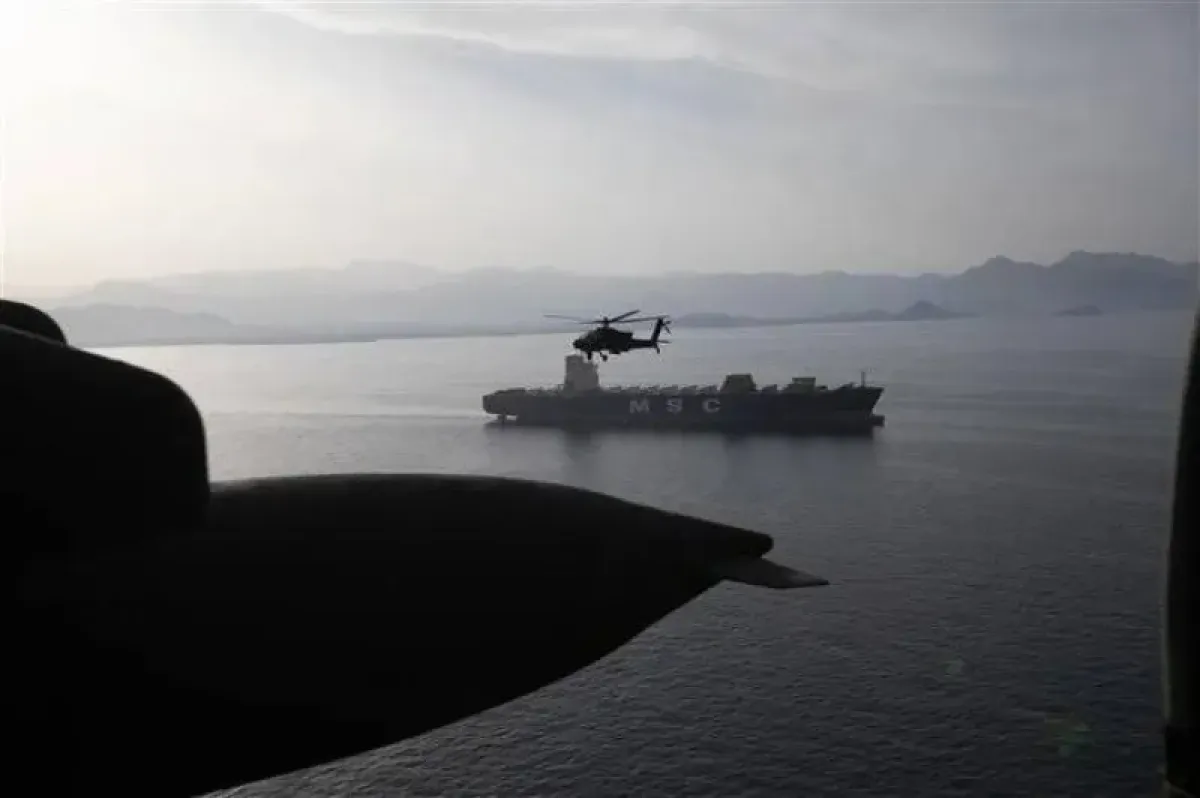
The United States has escalated military confrontation with Iran, launching a significant offensive against over 80 Iranian military sites and naval facilities in response to attacks on three commercial vessels transiting the Strait of Hormuz. This development places the fragile truce between the two nations under severe strain and reintroduces a critical global maritime corridor to a state of heightened risk.
The strikes coincided with stern warnings from U.S. President Donald Trump, who declared that America would retaliate forcefully against Iran if it continued to violate the interim agreement. He indicated the possibility of further strikes and did not rule out seizing the strategic island of Kharg or reimposing a naval blockade on Iran. Speaking on the sidelines of the NATO summit, President Trump stated that U.S. forces had destroyed dozens of Iranian vessels and threatened to target more Iranian military capabilities and infrastructure if necessary, reiterating accusations of Tehran's non-compliance with the interim agreement and its continued evasiveness regarding its nuclear program.
According to a senior U.S. official cited by Axios, the recent military operation was four to five times larger than previous U.S. strikes, both in terms of force size and the number of targets. The U.S. Central Command (CENTCOM) confirmed that the operation targeted over 80 sites using precision-guided munitions, including air defense systems, command and control networks, coastal radars, anti-ship cruise missile launch sites, and drone facilities. It also reported the destruction of more than 60 Revolutionary Guard Corps vessels in and around the Strait of Hormuz. CENTCOM stated the operation aimed to degrade Iran's capacity to target commercial shipping and ensure freedom of navigation in a vital global waterway.
The U.S. escalation followed a series of attacks on three commercial vessels, including a Marshall Islands-flagged tanker, the Saudi oil tanker "Wadiyan," and the Liberian-flagged tanker "Scythian Prosperity." The Qatari liquefied natural gas tanker "Al Rekayyat" also sustained an attack causing an engine room fire, necessitating crew evacuation. This incident prompted Doha to hold Iran legally responsible and summon the Iranian envoy to protest.
While Tehran denied responsibility for the vessel attacks, Washington characterized them as a "blatant violation" of the ceasefire and vowed to hold Iran accountable for continued threats to international navigation. Beyond military actions, the U.S. Treasury Department announced the revocation of oil waivers that had permitted Iran to export a portion of its oil, a move interpreted as a return to a "maximum pressure" policy aimed at depriving Tehran of a key financial revenue source. Iran condemned the decision, deeming it a breach of understandings between the parties, and its Foreign Ministry stated that the response to the U.S. strikes would be "decisive," accusing Washington of violating existing agreements.
Concurrently, the U.S. Navy-led Joint Information Center raised the threat level in the Strait of Hormuz from "significant" to "severe," warning of potential further hostile actions against commercial vessels. These warnings carry substantial weight, given that the Strait of Hormuz is a critical global energy artery, through which approximately 20% of the world's oil and gas exports passed prior to the current crisis. Data from Kepler indicates that maritime traffic remains below normal levels, with only 16 vessels transiting the strait in a single day, compared to a daily average exceeding 120 before the conflict. Oil prices and maritime shipping costs rose immediately following the announcement of the U.S. strikes.
This latest round of escalation underscores the fragility of the understandings that had temporarily halted the confrontation between Washington and Tehran. The targeting of vessels, coupled with the rescission of oil waivers, the extensive U.S. strikes, and subsequent Iranian threats of retaliation, signals a potentially the most sensitive phase of the crisis since its inception. Observers suggest that the expansion of U.S. targets to include Iranian defense and naval infrastructure indicates a shift from a limited response policy to a strategy aimed at diminishing Iran's capabilities to threaten international navigation. The future of the truce now hinges on the nature of Iran's response and the extent of reciprocal escalation in the coming days. Amidst unprecedented U.S. strikes, Iranian threats of revenge, and rising security risks in the Strait of Hormuz, the region appears to be entering a new phase that could redefine the rules of engagement in the Gulf and pose unprecedented challenges to global energy security and freedom of navigation.