Iran is employing a high-risk, paradoxical strategy by conducting defiant strikes on commercial ships, aiming to bolster its long-term deterrence while anticipating that President Trump will ultimately avoid a full-scale war. Experts suggest Iran believes this approach can elevate its leverage, particularly concerning control over the vital Strait of Hormuz, without provoking a wider conflict that could destabilize global oil markets and alienate voters ahead of U.S. elections.
The recent actions, including attacks on at least three commercial vessels, are seen by analysts as Iran's assertion of authority over the Strait of Hormuz, a critical chokepoint for approximately one-fifth of the world's oil supply. Alex Vatanka, a senior fellow at the Middle East Institute, stated that Iran's "bottom line" is the recognition of its control over the strait, a demand that has superseded its previous uranium enrichment activities as its primary leverage against the West.
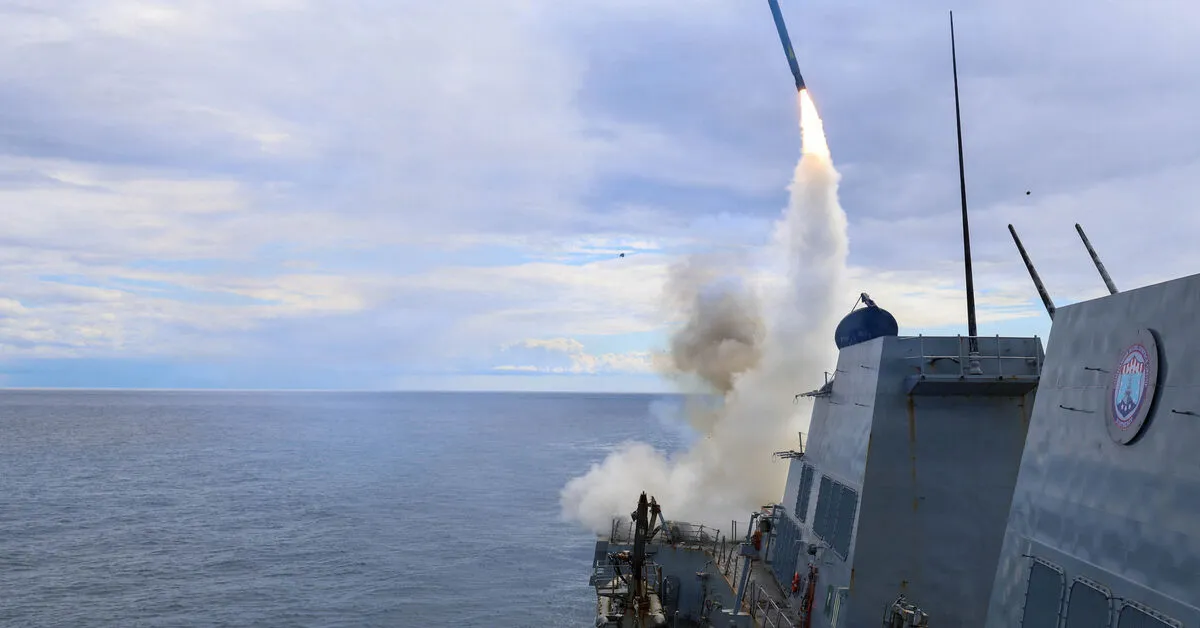
Iran's leadership appears to be gambling that time is on its side, believing it can endure greater pressure than the United States and its Gulf allies. This calculation comes despite President Trump's condemnations and vows of strong retaliation, tempered by his expressed reluctance for an extended war. The United States has responded with significant strikes, and Trump has declared the ceasefire "over," though he also indicated he was not seeking a protracted conflict, which has contributed to fluctuating oil prices.
While Iran agreed in a ceasefire memorandum to facilitate passage through the strait, it is also signaling its intent to remain the dominant force, opposing unilateral U.S. escorts. Negar Mortazavi, a senior fellow at the Center for International Policy, explained that Iran seeks to avoid another large-scale war but believes that inaction would project weakness and invite further pressure. She posited that Iran's strategy involves calibrated, limited escalation to restore deterrence without crossing the threshold into total war.
The Iranian government may feel it has little to lose from renewed, targeted strikes, especially after significant losses in previous conflicts and having recently suppressed domestic protests. However, this strategy carries substantial risks, including the unpredictability of President Trump, who has made dire threats against Iran in the past. Additionally, Israel, less averse to military action and facing its own political pressures, could be granted leeway for renewed attacks.
The oil-rich Gulf Arab monarchies are bearing the immediate brunt of these tensions, with Iran targeting U.S. bases in Kuwait and Bahrain, viewed as accessible and low-cost pressure points. Hamad Althunayyan, an assistant professor of political science at Kuwait University, noted that these actions allow Tehran to project power and test the resolve of the U.S. and the Gulf Cooperation Council. Despite the rhetoric, Ali Vaez, Iran project director at the International Crisis Group, expressed doubt about a return to all-out war, citing the significant economic and military costs for the U.S. He emphasized that Iran considers its control over the strait a hard-won achievement it will not relinquish.