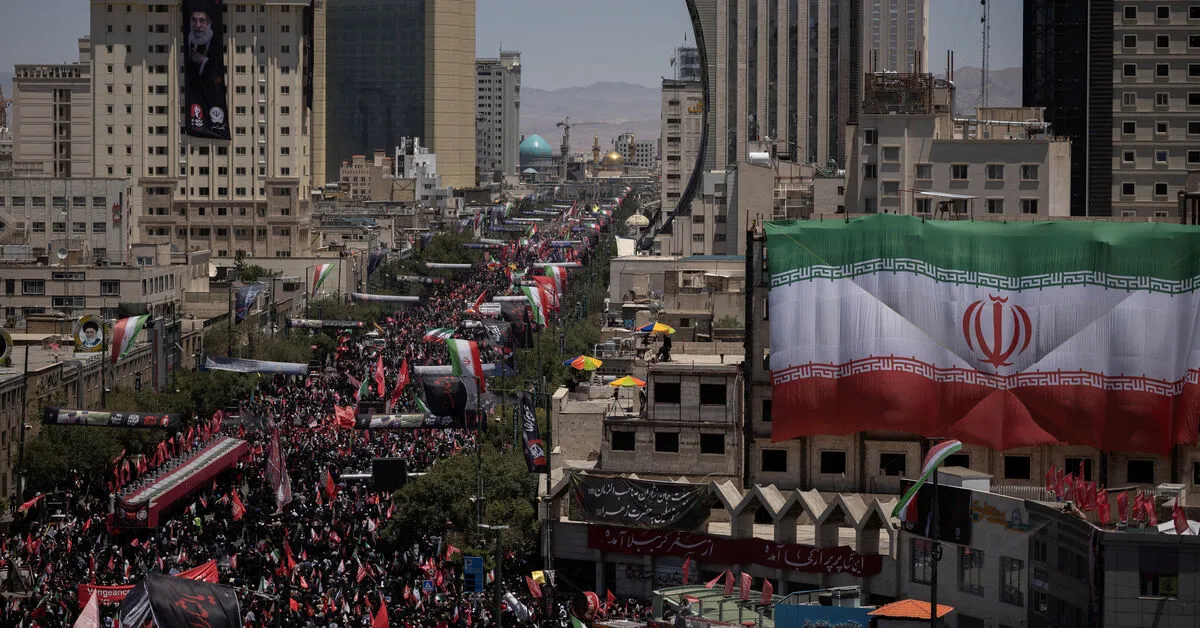
Ayatollah Ali Khamenei, Iran's Supreme Leader, is being laid to rest on Thursday at the holiest shrine in Mashhad, marking the culmination of a week of extensive funeral processions and mourning ceremonies. The burial occurs against a backdrop of heightened conflict with the United States and continued mystery surrounding the whereabouts of his son and designated successor, Mojtaba Khamenei, who was reportedly disfigured in the same strike that killed his father.
Crowds gathered in Mashhad, waving Iranian flags and placards with revolutionary slogans, as the nation observed the funeral. Over the past week, clerical leaders have encouraged massive public participation in funeral events across Iran and Iraq, aiming to project the strength and ideological fervor of their theocratic state. Despite surviving significant conflict with major adversaries, Iran grapples with substantial internal challenges and a deeply contested legacy of Khamenei's 37-year rule.
The status of Mojtaba Khamenei, who was reportedly proclaimed Supreme Leader by a clerical assembly following his father's death, remains unknown to the public. He has not been seen since the strike on February 28 that claimed Ayatollah Khamenei's life. While written statements have been issued, no visual or audio evidence of Mojtaba has been released. Sources indicate he sustained severe injuries in the attack, including facial disfigurement, and is still recovering. Security services are reportedly limiting his public exposure due to ongoing threats of further attacks.
Chants demanding retribution against U.S. President Donald Trump echoed through Mashhad as the funeral cortege approached, with some demonstrators holding placards that read "Kill Trump." Khamenei's remains, along with those of four family members killed in the attack, have been paraded through major cities including Tehran, Qom, Najaf, and Karbala. These public displays have been met with large gatherings, accompanied by Shi'ite laments and revolutionary slogans, tapping into the central role of martyrdom within Shi'ite theology and the political tradition of the Islamic Republic.
The funeral marks a pivotal moment for Iran, closing a chapter of nearly four decades under Khamenei's leadership. This period concludes amidst widespread internal dissent, including mass nationwide protests against the Islamic Republic earlier this year, which were suppressed with significant force. Analysts suggest that while Iran has emerged from the recent conflict strategically resilient, with control over the Strait of Hormuz maintained, the nation has also endured considerable damage contributing to existing economic difficulties.
Ayatollah Khamenei assumed the position of Supreme Leader in 1989, a decade after the Islamic Revolution. During his tenure, he progressively consolidated political, economic, and military authority within his office. This centralization increasingly marginalized elected officials and was executed in conjunction with the Islamic Revolutionary Guard Corps, whose influence grew substantially throughout his rule. Mojtaba Khamenei's appointment was reportedly supported by the Guards, who are now considered a dominant force in Iranian political and strategic decision-making.