Residents of Sinjil in the occupied West Bank have formed a volunteer group to defend their town against increasing Israeli settler attacks, citing a lack of protection from Israeli military and Palestinian authorities.
The volunteer group, part of a broader trend in the West Bank, monitors the surrounding valleys for signs of settler aggression. Members express a feeling of abandonment, stating they are forced to protect their community due to government-backed settler actions. Fadi Alwan, a volunteer, highlighted the dire situation: "We have been left on our own. You are facing settlers supported by their government."
The Israeli government has recently approved numerous settlement expansions and outposts, which Palestinians argue often serve as bases for violence that has displaced thousands. While most of the international community deems Israeli settlements in the West Bank illegal, Israel disputes this classification. Palestinians claim that official responses to their calls for help are either delayed or favor the settlers. The Israeli military has stated that troops respond to confrontations but that Israeli police are responsible for civilian actions.
Defensive measures in Sinjil include using searchlights to scan hillsides and coordinated patrols, all communicated through community WhatsApp groups. Volunteers are mobilized to confront any settlers approaching homes. One volunteer, Alwan, recounted a recent assault where he was beaten by a settler while harvesting wheat and described an incident where live bullets were fired at a volunteer tent, which he alleges was later dismantled by Israeli troops.
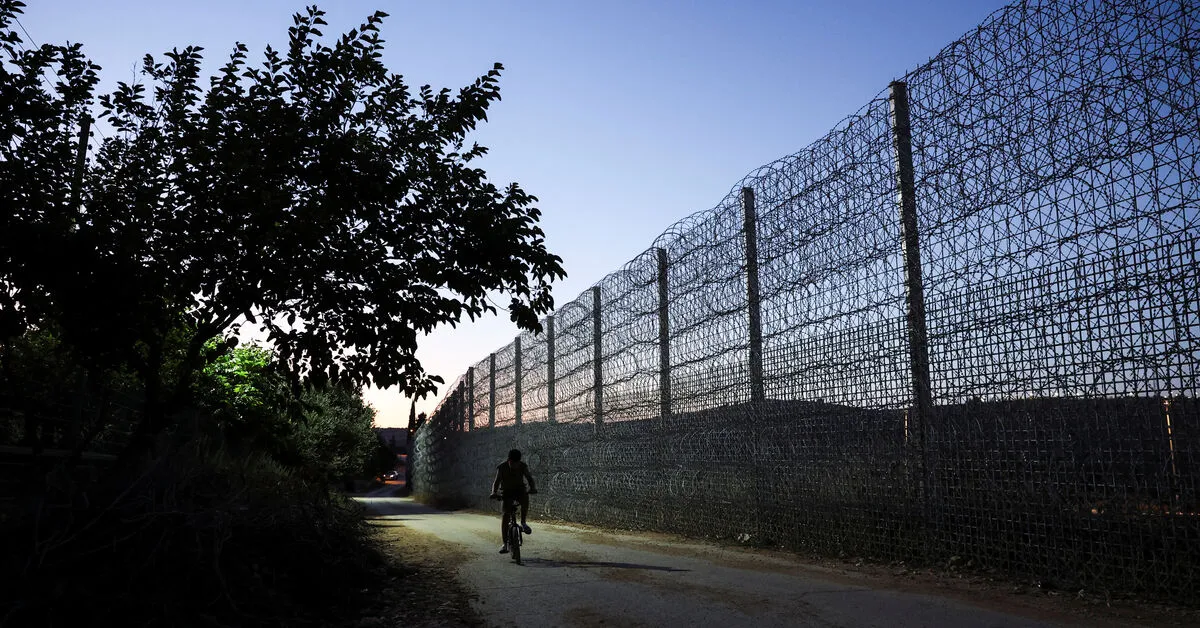
Sinjil, situated between Ramallah and Nablus, faces restricted access due to military closures of its entrances and a barrier isolating significant agricultural land. The town's municipality has taken a leading role in community protection, particularly since October 2023, when settler attacks intensified. These attacks have resulted in casualties and significant displacement of both Bedouin communities and town residents.
Some residents credit these community-led initiatives for their safety. One resident recounted an incident where a Molotov cocktail was thrown into his home, and the town's WhatsApp network was instrumental in coordinating a rescue effort, even with initial obstacles from the Israeli military. The community's efforts reflect a growing reliance on self-protection amidst escalating conflict and perceived official neglect.