Popular protests have intensified in Yemen's southern governorates of Aden and Shabwa, opposing the inclusion of individuals accused of assassinations and terrorist bombings in an anticipated prisoner exchange deal between the Yemeni government and Houthi militias. These demonstrations highlight demands from human rights groups and citizens to separate prisoner files from criminal cases, thereby preventing those accused of murder from becoming parties in political settlements.
In Aden, the capital, a protest took place on Thursday in front of the International Committee of the Red Cross headquarters. Participants, including citizens and victims' families, voiced their rejection of any arrangements that would lead to the release of individuals they claim are implicated in terrorist attacks and bombings that resulted in civilian and military casualties. Demonstrators held signs demanding the exclusion of defendants in criminal and terrorist cases from exchange lists, emphasizing that achieving peace should not come at the expense of victims' rights or serve as a cover for impunity.
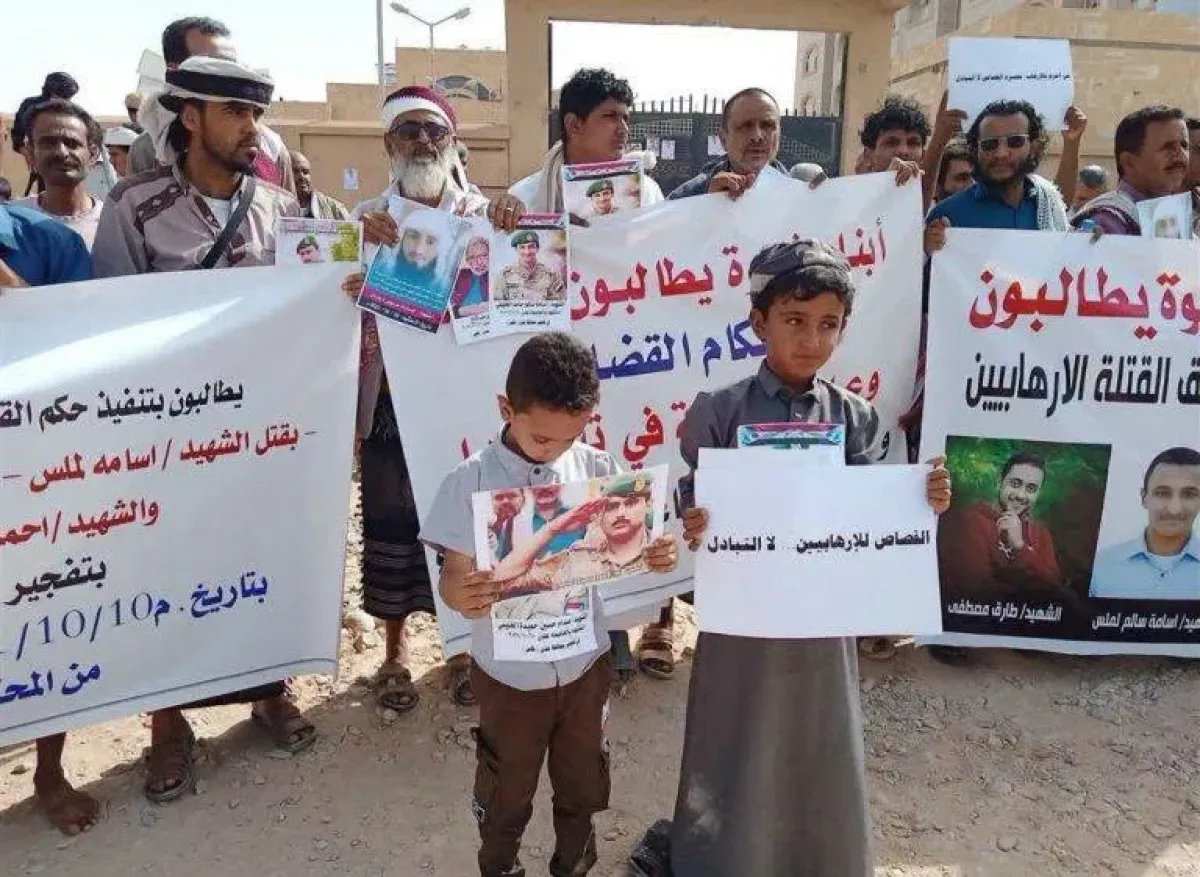
Similarly, in Shabwa Governorate, the families of martyrs and victims staged a protest outside the Public Prosecution office in the city of Ataq. They rejected the inclusion of individuals accused of murder and assassinations in the prisoner exchange lists. The protesters asserted that those facing criminal charges should be subject to judicial proceedings, distinguishing their cases from those detained in the context of the conflict, and stressed that victims' and their families' rights cannot be part of any political understandings.
A statement issued by the Shabwa protest called on relevant authorities to review the exchange lists and exclude anyone against whom a judicial ruling has been issued or who faces charges of murder and terrorism. The statement warned that their inclusion in such deals could constitute a violation of the rule of law and undermine public confidence in justice institutions. These protests are occurring amid ongoing preparations for a large-scale prisoner exchange deal between the Yemeni government and the Houthi militia, brokered by the United Nations.
The protesters argue that prisoner files related to the armed conflict should not be conflated with criminal case files. They cautioned that releasing individuals accused of murder or bombings outside the judicial framework could exacerbate the suffering of victims' families and foster a sense of injustice. The popular escalation in Aden and Shabwa presents a significant challenge for the involved parties, balancing the need to finalize humanitarian agreements with increasing demands to ensure that individuals accused of serious crimes are not included in these exchanges.
The Alliance of Sons and Tribes of Shabwa has declared its rejection of including any individuals convicted of murder and terrorism in prisoner exchange deals, warning that their release would override judicial rulings and the rights of victims' families. The alliance stated that the crimes these individuals were convicted of were committed against civilians, not combat prisoners, and that treating them as prisoners of war conflates military matters with criminal cases. The alliance reaffirmed its support for victims' families and urged official and judicial bodies to adhere to final rulings, emphasizing that peace should not be achieved at the expense of justice or the rights of next of kin.