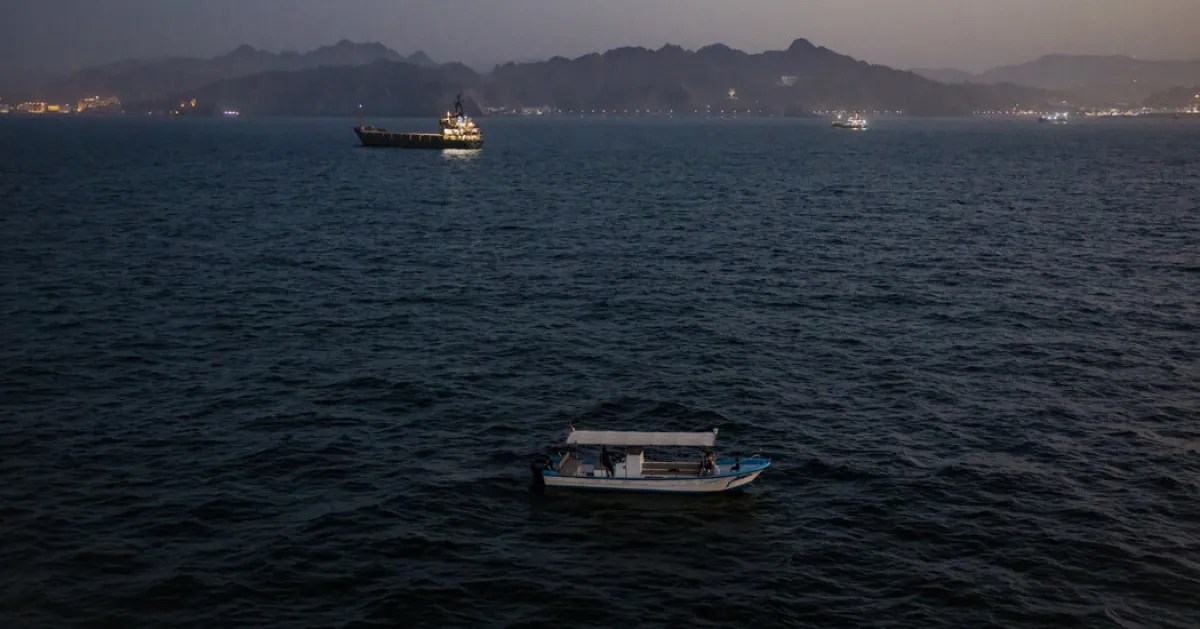
U.S. officials stated Friday that they anticipate Iran will soon issue a public declaration confirming that all passages through the Strait of Hormuz are open and that Iranian forces will cease targeting vessels transiting the critical waterway.
These officials, speaking anonymously to reporters, warned that any failure by Iran to issue and adhere to such a statement would result in unfavorable consequences for the nation.
During a 30-minute briefing, the officials revealed that Iranian negotiators attributed the drone attacks on ships in the strait to rogue units of the Islamic Revolutionary Guards Corps, allegedly attempting to disrupt the preliminary nuclear accord finalized last month. However, the Trump administration intends to continue negotiations on a comprehensive, long-term agreement regarding Iran's nuclear program and will respond militarily to any further strikes on vessels.
Earlier the same day, President Trump posted on Truth Social, indicating that negotiations would persist but asserting that the ceasefire between Iran and the United States, a pivotal component of the 14-paragraph agreement from last month, had concluded.
One senior American official emphasized that a definitive nuclear deal is contingent upon Iran surrendering its "nuclear dust"—near bomb-grade uranium fuel largely stored at the Isfahan nuclear enrichment and conversion center—for dilution to render it unusable for weapons. However, the existing 14-point plan is ambiguous regarding the disposition of this fuel, with Iranian officials asserting it cannot leave their territory. It remains unclear whether the retrieval and dilution process would be undertaken by Iran, the United States, or a joint effort with the International Atomic Energy Agency.
The officials provided no indication of further discussions planned for the broader nuclear agreement. To meet the 60-day timeline stipulated in the June accord, a final resolution would need to be achieved by mid-August.