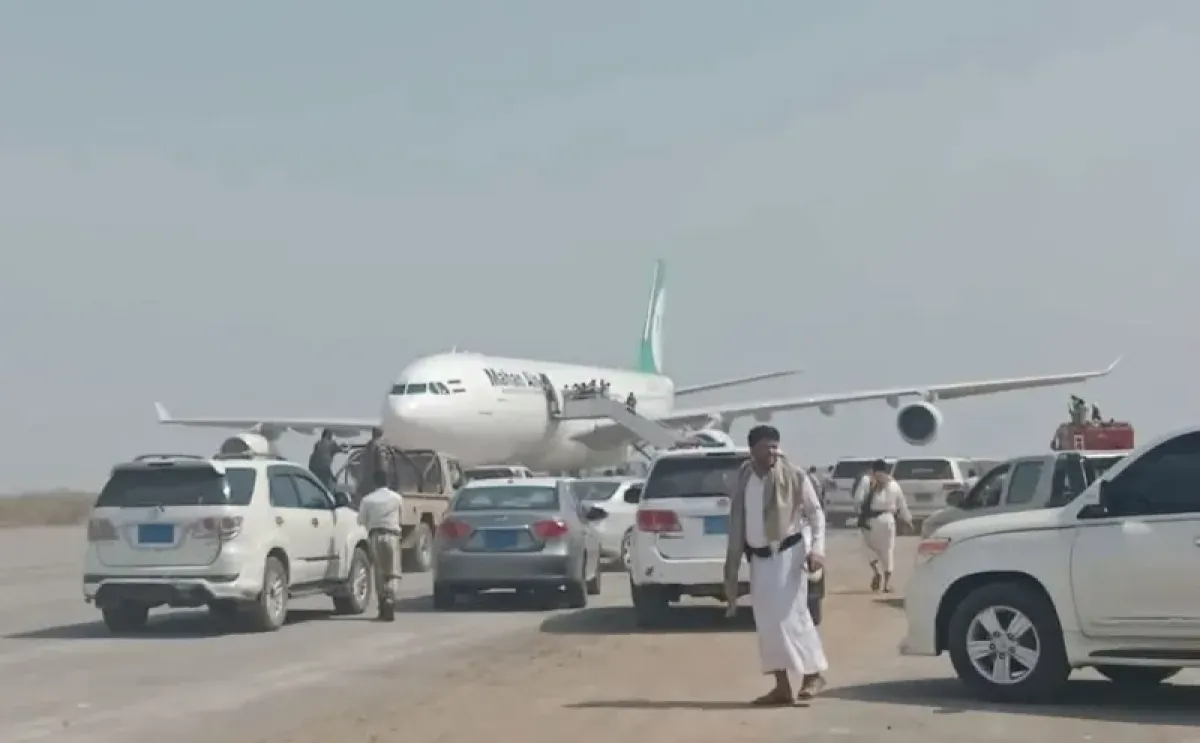
An Iranian aircraft carrying a Houthi delegation successfully landed in Hodeidah on the country's western coast, bypassing Sana'a International Airport which had been targeted. This incident has reignited debate regarding the Yemeni government's capacity to safeguard its airspace and sovereign entry points, as official responses have been limited to warnings and condemnations.
The Airbus A340, operated by Mahan Air, arrived at Hodeidah Airport hours after heightened tensions in Yemeni airspace. The flight was intended for a Houthi delegation and was rerouted after damage to the runway at Sana'a International Airport prevented its landing there.
The Houthi movement characterized the aircraft's arrival in their controlled territory as a "breach of blockade," aiming to leverage the event politically and present it as proof of their ability to circumvent imposed restrictions. Conversely, the Yemeni government views the flight as a violation of state sovereignty and a contravention of established civil aviation regulations.
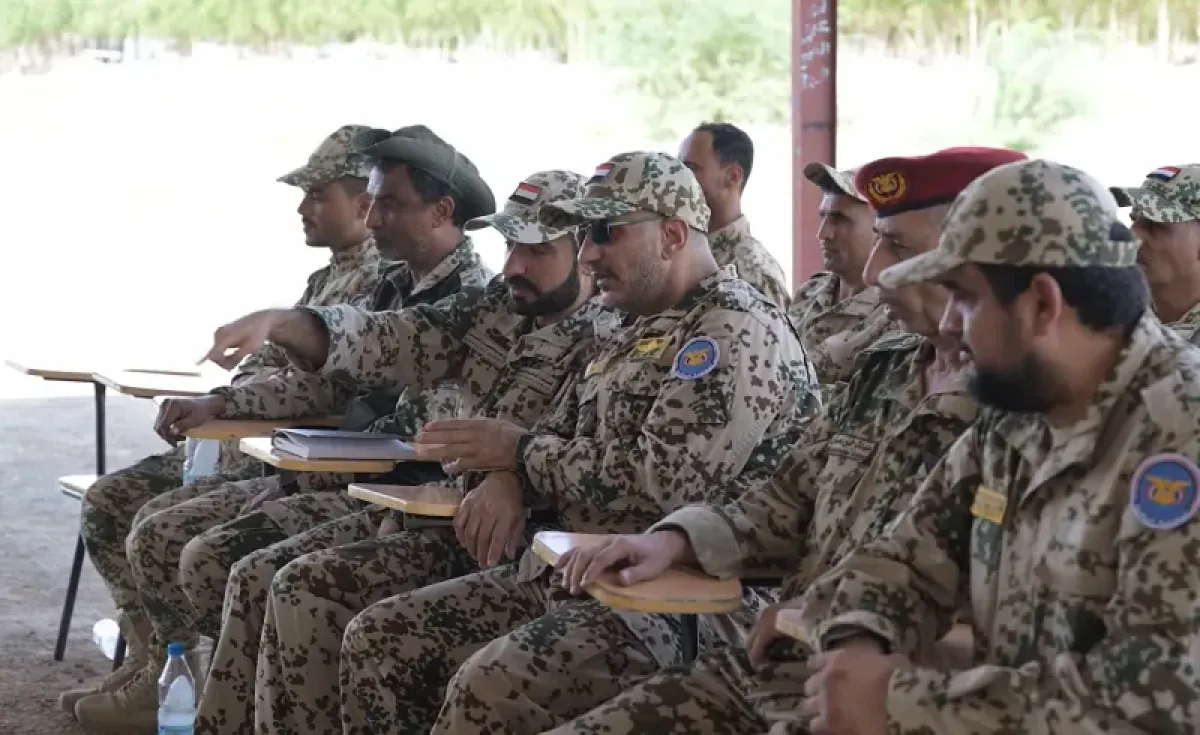
The Yemeni Ministry of Defense announced that the armed forces targeted Sana'a International Airport's runway to prevent the Iranian plane's landing. The ministry stated that the Houthi group had refused to permit national carriers access to the airport, insisting on receiving the flight from Iran, which prompted the military operation.
Defense Minister Lieutenant General Talal al-Aqaili indicated that the Yemeni government had exhausted legal and diplomatic avenues to dissuade Iran and the Houthi group from operating the flight. He described the incident as a continuation of what he termed violations of Yemeni airspace and sovereignty, assuring that the armed forces would confront any breaches with "all available means."
However, the aircraft's diversion to Hodeidah Airport has raised questions about the effectiveness of government measures. Observers suggest that official statements on airspace protection failed to prevent the plane's arrival, making the transition from warnings to practical actions a genuine test of the government's ability to assert its authority over ports and airspace.
Rashad al-Alimi, Chairman of the Presidential Leadership Council, accused the Houthi group of actively undermining state sovereignty and rejecting de-escalation initiatives. He affirmed that the reception of the Iranian flight occurred outside the legal frameworks governing civil aviation.
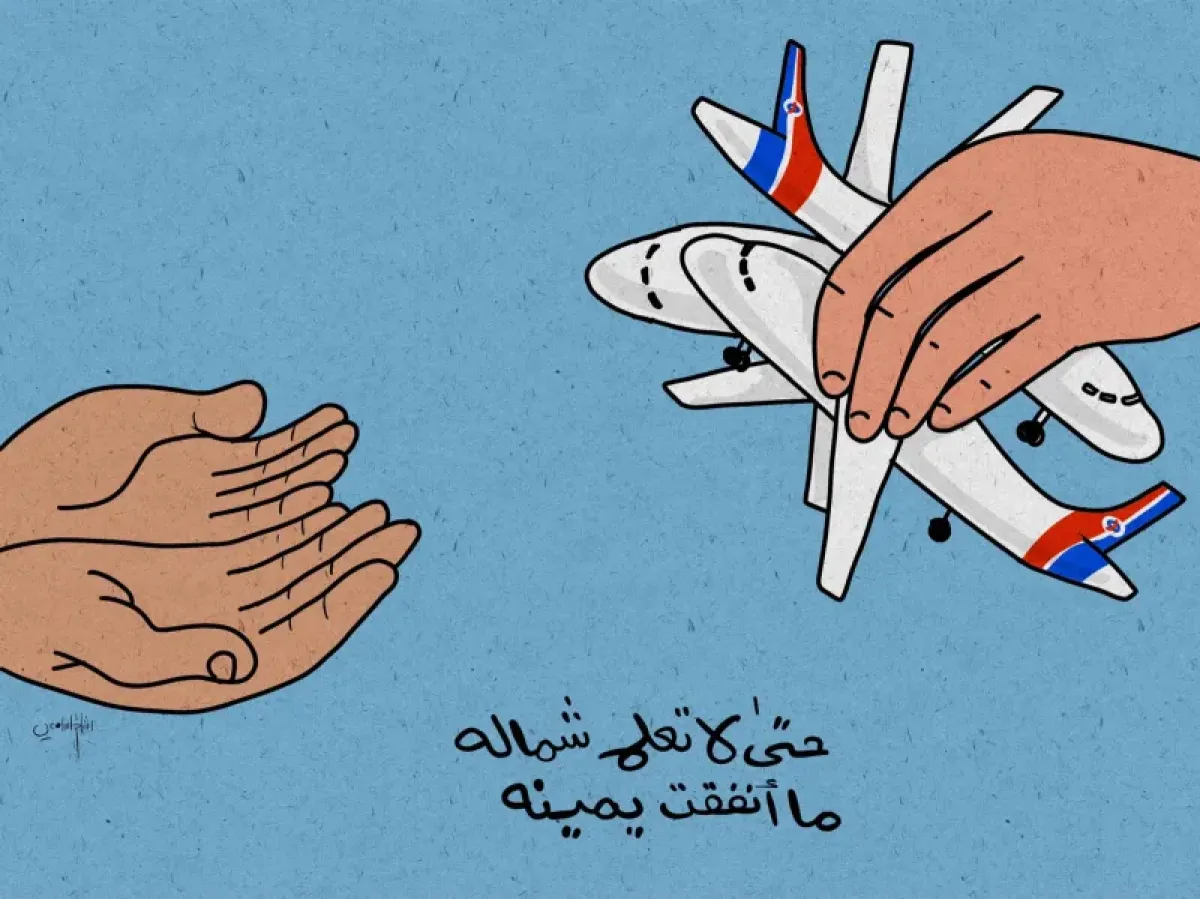
Al-Alimi clarified that the government had expressed readiness to resume civilian flights via Yemenia, the legally authorized national carrier, and had offered to facilitate the transport of Houthi elements from Tehran to Sana'a via a chartered company aircraft. However, the group reportedly rejected these arrangements.
The Presidential Leadership Council chairman emphasized that the Houthis' insistence on imposing a reality outside state institutions is not aimed at serving citizens or alleviating their suffering, but rather at consolidating division and undermining state institutions. He held the group and its supporters responsible for the ensuing security and political repercussions.
In response, the Houthi military spokesperson, Yahya Saree, accused Saudi Arabia of conducting raids on Sana'a Airport, labeling the targeting as "aggression" and vowing retaliation. Rhetoric has intensified between the parties following the Iranian aircraft's arrival.
The landing of the Iranian plane in Hodeidah presents the Yemeni government with a new challenge regarding its ability to protect airspace and ports under its control or within its legal responsibility, especially as the Houthis continue to utilize Iranian support to bolster their political and military presence.
While the government maintains its commitment to political, legal, and military actions to protect national sovereignty, the arrival of the Iranian flight in Yemeni territory, despite all warnings, signifies a new test of the state institutions' capacity to translate stated positions into field measures that prevent recurrence.